



Botanical tulips are a fantastic choice for gardeners who want spring color with a more natural, understated character. Unlike many large-flowered hybrid tulips, botanical types tend to have a compact appearance and often look at home among rocks, grasses, low-growing perennials, and other spring bulbs.
Their smaller stature makes them particularly useful in spaces where tall tulips may look out of proportion. Many botanical tulips also flower relatively early in spring, bringing color to the garden when the season is just getting started. Depending on the variety and growing conditions, they can be planted in rock gardens, borders, containers, raised beds, or informal naturalized areas.
From bright yellow flowers and delicate white blooms to pink, red, and violet shades, botanical tulips offer plenty of variety. The following 10 selections are worth considering when planning a compact and colorful spring display. Our gardening blog is a perfect place to find all the information you need!
What Are Botanical Tulips?
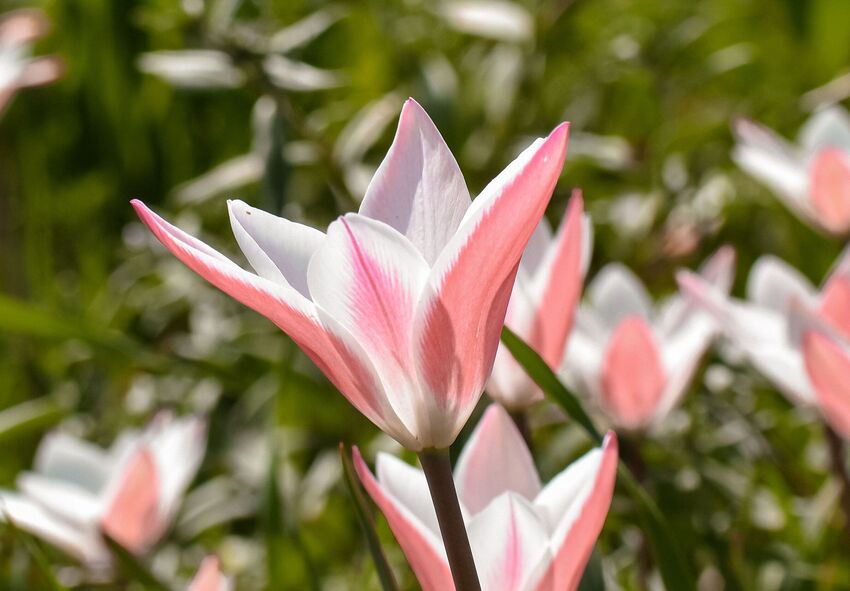
Botanical tulips are tulip species and selected forms or cultivars that generally retain many of the characteristics associated with wild tulips. They are often smaller and more naturally shaped than the large, showy hybrid tulips commonly used in formal spring displays.
Many botanical tulips have compact growth habits, relatively small flowers, and attractive foliage. Their proportions can make them especially effective in rock gardens, along pathways, at the front of borders, or planted among other low-growing spring plants.
Another appealing characteristic is their potential to return and multiply when planted in suitable conditions. Some botanical tulips are particularly well suited to naturalizing, allowing gardeners to create informal groups rather than planting bulbs in perfectly regular rows.
They generally perform best in a sunny location with well-drained soil. Good drainage is particularly important because botanical tulip bulbs can suffer when they remain in excessively wet soil. Their compact size also makes them useful for containers and smaller gardens where space is limited.
Top 10 Botanical Tulip Varieties
Botanical tulips come in a surprisingly wide range of colors, shapes, and growth habits. The following varieties each offer something different, from tiny early flowers to striking blooms with contrasting centers.
1. Tulip Little Beauty
Tulip Little Beauty is a compact botanical tulip valued for its charming flowers and small-scale growth. Its flowers combine pinkish-red outer petals with a contrasting bluish-purple center, creating an eye-catching appearance despite the plant’s modest size.
Its low-growing habit makes it particularly useful at the front of borders, in rock gardens, and in containers. It can also be planted in groups to create a stronger visual effect.
Like many botanical tulips, Little Beauty is well suited to informal planting. Rather than towering above surrounding plants, it can sit naturally among other small bulbs and low-growing perennials. Its compact character also makes it a useful choice for gardeners who want spring flowers without tall stems dominating the planting.
2. Tulip Lady Jane
Tulip Lady Jane is known for its elegant, elongated flowers, which combine white petals with distinctive pink to red coloration along the outer surfaces. The result is a refined two-tone effect that becomes especially noticeable as the flowers open.
The plants remain relatively compact, making Lady Jane suitable for rock gardens, sunny borders, containers, and other locations where smaller tulips can be appreciated up close.
Its slender flowers give it a particularly graceful appearance compared with some of the more rounded botanical tulips. Planted among other early spring bulbs, Lady Jane can contribute both color and a different flower shape to a naturalistic display.
3. Tulip Humilis Alba Coerulea Oculata
Tulip Humilis Alba Coerulea Oculata is one of the most distinctive botanical tulips on this list. Its flowers are primarily white, with a striking dark blue to violet center that creates a dramatic contrast.
The plants have a compact, low-growing habit and are particularly well suited to locations where their unusual flowers can be viewed from close range. Rock gardens, gravel gardens, raised beds, and the front of sunny borders are all useful settings.
The contrasting center gives this variety an appearance that is quite different from simple single-color tulips. It can work particularly well when combined with other small spring bulbs, allowing the dark-centered flowers to act as focal points within a low-growing planting.
4. Tulip Little Princess
Tulip Little Princess is a compact botanical tulip with warm orange-red flowers and a contrasting darker center. Its small stature makes it particularly suitable for planting where the flowers can be viewed from relatively close range.
It can be used in rock gardens, containers, raised beds, and the front of sunny borders. Because the plants do not take up much vertical or horizontal space, they can also be combined with other early spring bulbs without overwhelming them.
Little Princess works especially well in mixed plantings. Its warm flower color can provide contrast against white, blue, purple, or softer-colored spring flowers, helping create a more varied and dynamic display.
5. Tulip Clusiana var. Chrysantha
Tulip Clusiana var. Chrysantha has a more slender and elegant appearance than many compact botanical tulips. Its narrow flowers feature warm yellow coloring with reddish or orange tones on the outer surfaces, creating an attractive contrast.
The plants have a relatively upright, graceful habit while remaining smaller than many traditional garden tulips. Their distinctive shape makes them useful in sunny borders, rock gardens, containers, and informal bulb plantings.
This variety works particularly well in naturalistic combinations because its narrow flowers provide a different silhouette from rounded or star-shaped spring flowers. Pairing it with crocuses, Muscari, or other small bulbs can create a varied display of colors and forms.
6. Tulip Tarda (Dasystemon)
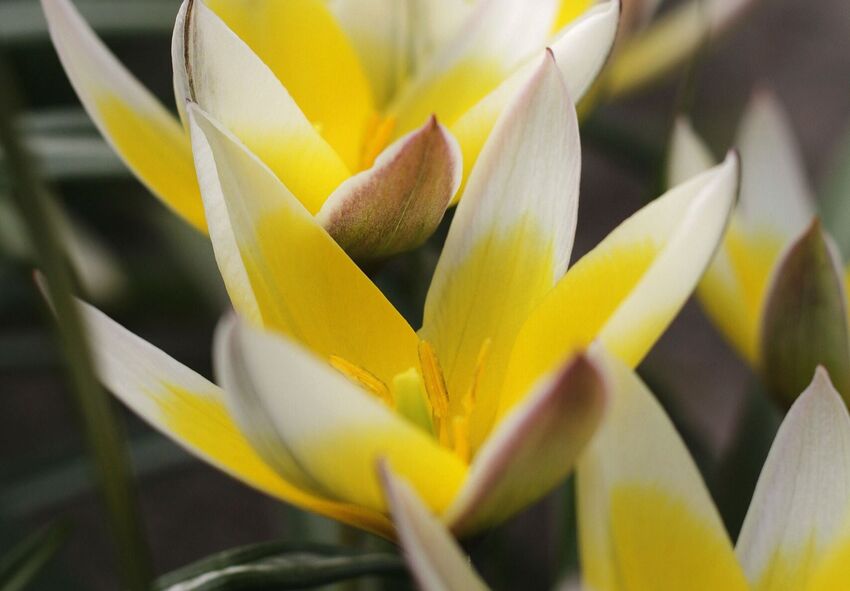
Tulip Tarda, also known as Tulipa tarda or Tulipa tarda Dasystemon, is a popular botanical tulip recognized for its cheerful yellow and white flowers. The petals are yellow toward the center and white toward the outer portions, producing a bright, star-like effect when the flowers open fully.
It is a low-growing variety and typically flowers early in the spring season. Its compact habit makes it especially attractive in rock gardens, gravel areas, borders, and naturalized plantings.
One of its biggest attractions is its suitability for natural-looking displays. When conditions are favorable, bulbs can return and gradually form larger groups, giving the planting a less formal appearance over time.
7. Tulip Red Hunter
Tulip Red Hunter brings strong red color to the spring garden while maintaining the compact character associated with botanical tulips. Its vivid flowers can provide a noticeable splash of color even when planted among smaller spring plants.
The variety is useful in sunny borders, rock gardens, containers, and other locations where compact tulips are preferred. Grouping several bulbs together can create a more substantial display while still retaining the informal character of botanical tulips.
Red Hunter can also be useful when designing a mixed bulb planting based around contrasting colors. Its red flowers can stand out against yellow, white, blue, or violet-flowering companions.
8. Tulip Lucca
Tulip Lucca is another attractive compact tulip suitable for gardeners looking to introduce strong color into a small-scale spring display. Its flowers have a warm, rich appearance that can bring visual depth to borders and mixed bulb plantings.
Its relatively compact growth makes it suitable for containers, rock gardens, border edges, and other locations where smaller tulips are advantageous. It can also be combined with botanical tulips that flower in contrasting colors.
For a naturalistic effect, plant Lucca in small groups rather than arranging individual bulbs in rigid rows. Combining it with other early spring bulbs can create a layered display in which different flower forms and colors appear together.
9. Tulip Violetta
Tulip Violetta offers attractive violet-purple coloring in a compact botanical form. Its cool-toned flowers can add depth to spring plantings and work particularly well alongside white, pink, yellow, or softer pastel flowers.
Its relatively small growth habit makes it useful in rock gardens, containers, border edges, and informal bulb groups. The flowers can be particularly effective when planted in groups large enough to create a visible patch of color.
Violetta also has value in mixed bulb displays. Pairing purple flowers with yellow or white spring bulbs creates natural color contrast, while combining several cool-toned flowers can produce a softer, more harmonious effect.
10. Tulip Pulchella Odalisque
Tulip Pulchella Odalisque is a compact botanical tulip with attractive pink to reddish flowers and an elegant appearance. Its relatively small size makes it a good choice for planting areas where taller tulips would be less suitable.
It can be grown in rock gardens, sunny borders, containers, and naturalistic spring plantings. Its flowers are particularly effective when several bulbs are planted together rather than scattered too widely.
One of its distinctive qualities is its combination of compact growth and refined flower appearance. It can therefore fit comfortably into both informal naturalized plantings and more carefully designed small-space displays.
How to Choose the Right Botanical Tulip
Choosing a botanical tulip is about more than simply picking a favorite color. Consider the size of the planting area, the amount of sunlight available, the soil conditions, and how the flowers will interact with other plants. Flower color and shape are useful starting points. Yellow and white varieties can brighten a spring border, while pink, red, purple, and multicolored flowers can add stronger contrast. You can also combine different flower shapes to make the display more visually interesting.
Plant height and habit are equally important. Low-growing varieties are particularly useful in rock gardens and at the front of borders, while slightly taller types can be mixed into larger spring plantings. Flowering time can help you create a longer-lasting display. By combining botanical tulips with different flowering periods and other early spring bulbs, you can avoid having the entire display appear and disappear at once.
Growing conditions should also influence your choice. Most botanical tulips prefer a sunny position and well-drained soil. If your garden has heavy or poorly drained soil, improving drainage may be more important than the particular variety you choose. Finally, think about where you want to grow the bulbs. Botanical tulips can be especially effective in rock gardens, informal borders, containers, and naturalized areas. Planting several complementary varieties together can create a succession of color, form, and texture throughout spring.
Botanical Tulips in Different Garden Styles
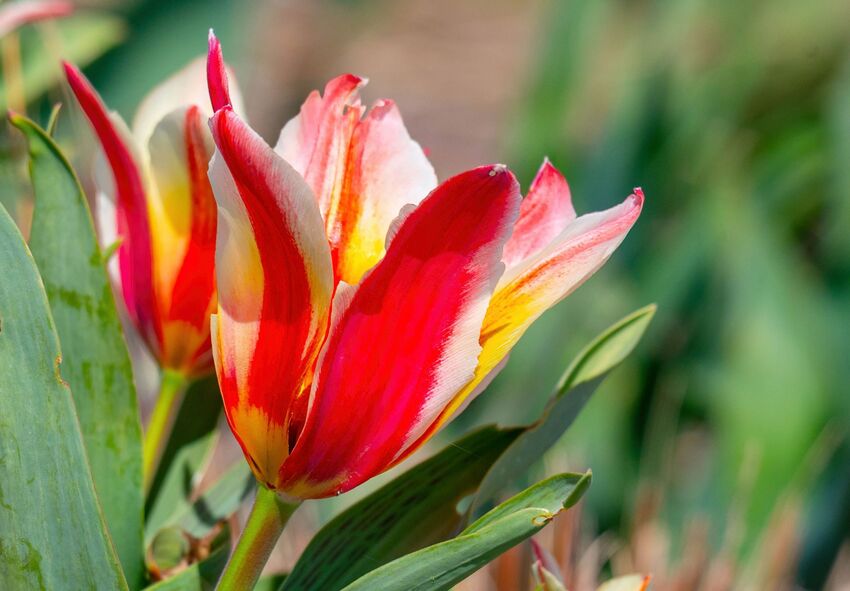
Botanical tulips are remarkably versatile because their compact size allows them to fit into many different garden designs:
- Rock gardens: Their small stature makes botanical tulips natural companions for rocks, gravel, and low-growing plants. Varieties with unusual flowers or strong color contrasts can become attractive focal points.
- Cottage-style borders: Botanical tulips can be planted among perennials and other spring bulbs to introduce early-season color before many larger plants reach their full size.
- Woodland-inspired plantings: In suitable sunny or lightly shaded locations, small spring bulbs can contribute to a relaxed, informal planting. However, always check the light requirements of the particular tulip variety.
- Naturalized lawns and informal areas: Some botanical tulips are suitable for naturalizing when planted in appropriate soil and allowed to remain undisturbed. Instead of planting them in straight lines, arrange bulbs in irregular groups for a more natural appearance.
- Containers and small gardens: Their compact growth makes botanical tulips excellent choices for pots and other containers. This is particularly useful for gardeners with limited space or anyone who wants to position spring color close to patios, entrances, or pathways.
Conclusion
Botanical tulips offer a different take on the classic spring tulip. Their compact growth, attractive flowers, and naturalistic appearance make them useful in gardens where large hybrid tulips might feel too formal or imposing.
When choosing botanical tulips, consider your garden’s sunlight, drainage, available space, and overall planting style. Combining several varieties with other early spring bulbs can create a more varied display, with different colors and flower forms appearing throughout the season.
With their small stature and strong visual character, botanical tulips are an excellent way to create compact, colorful, and natural-looking spring displays in everything from rock gardens and borders to containers and informal plantings.
Frequently Asked Questions (FAQs) about Botanical Tulips
1. What are botanical tulips?
Botanical tulips are species tulips and selected forms that generally have a more compact, natural appearance than many large-flowered hybrid tulips. They often produce smaller flowers on shorter stems and can be useful in rock gardens, borders, containers, and naturalized plantings. Many are also valued for their early spring flowering and ability to return under suitable conditions.
2. Can I order botanical tulips in your online store?
Yes, you can order botanical tulip bulbs in our online store Dutch-bulbs.com. Our selection may include different varieties with various flower colors, forms, and growth habits. Before ordering, check the individual product information for the specific botanical tulip, including its characteristics and planting requirements, so you can choose varieties suited to your garden.
3. Which botanical tulips are best for naturalizing?
Several botanical tulips can work well for naturalizing when planted in suitable conditions. Tulip Tarda, Tulip Little Beauty, and other species and selected botanical types can gradually form larger groups when left undisturbed. Good drainage, sufficient sunlight, and appropriate soil are important. Allowing foliage to mature naturally after flowering also helps bulbs replenish their reserves.
4. When should I plant botanical tulip bulbs?
Autumn is generally the best time to plant botanical tulip bulbs because the bulbs can establish roots before winter. Choose a sunny location with well-drained soil and plant the bulbs according to the depth recommended for the individual variety. Avoid areas where water remains around the bulbs, as excessive moisture can encourage bulb problems.
5. Can botanical tulips grow in containers?
Yes, botanical tulips are excellent choices for containers because their compact growth fits well into pots and other small spaces. Use a container with drainage holes and a well-drained growing medium. Place it where the bulbs receive suitable sunlight, and avoid keeping the growing medium constantly wet. Several varieties can also be combined for a colorful spring display.
Published: 19.10.2026