



Tulips are often associated with a relatively short spring flowering period, but careful selection of varieties can transform a flowerbed into a constantly changing display that remains decorative for almost two months. The key is to combine tulips that bloom at different times rather than planting varieties that all open simultaneously. When early, mid-season, and late-flowering cultivars are selected thoughtfully, one group gradually replaces another, creating a continuous succession of color and form.
This approach is especially useful for gardeners who want to maximize the decorative value of a flowerbed without constantly replacing plants. The wide range of tulip groups makes it possible to combine compact early varieties with medium-height mid-season cultivars and tall late-flowering tulips, while also creating attractive transitions between colors. Our gardening blog is a perfect place to find all the information you need!
How the Tulip Flowering Cycle Is Structured
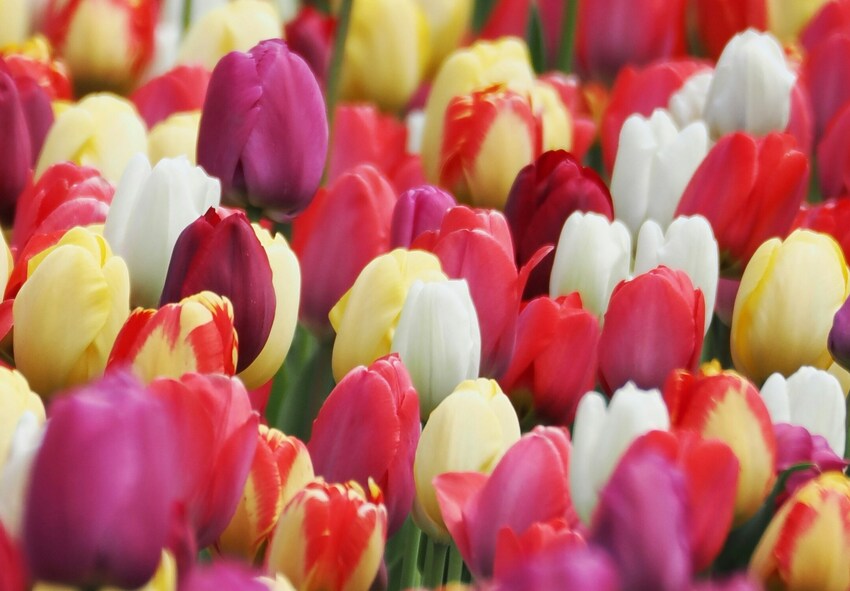
Tulip flowering times are not determined by variety alone. Weather, planting depth, soil temperature, sunlight, and the local climate all influence when flowers appear. Nevertheless, tulip groups have characteristic flowering periods that allow gardeners to plan a long-lasting display.
Early-Flowering Tulips
Early tulips are the first varieties to bring strong color to the spring garden. They generally bloom from the beginning to the middle of spring, depending on local weather conditions, and are especially valuable for starting the flowering sequence.
Shorter varieties such as Purple Prince and other early Triumph tulips are suitable for the front of flowerbeds, containers, and areas where their compact growth can be appreciated up close. Early double tulips can also add fuller, more decorative flowers to the first stage of the display. Because early tulips often have shorter stems, they work particularly well in the foreground or in combination with later varieties that gradually grow taller behind them.
Mid-Season Tulips
Mid-season tulips form the central stage of a continuous flowering design. Triumph tulips and many Darwin Hybrid varieties often provide the strongest display during this period, offering a broad selection of colors and flower shapes.
Cultivars such as Strong Love, Alibi, Dow Jones, and Pink Impression can create a powerful mid-season display with strong stems and classic flower forms. Their height and reliable flowering make them suitable for the central part of a border or for large groups across a mixed flowerbed. This stage is particularly important because it connects the early spring display with the later tulips, preventing a gap in flowering.
Late-Flowering Tulips
Late tulips extend the decorative season when many early varieties have already finished flowering. Darwin Hybrid, Lily-Flowered, Parrot, and many Extra-Double Late tulips can continue the display into the later part of spring.
Tall varieties such as Ballerina provide elegant, lily-shaped flowers, while La Belle Époque, Carnaval de Nice, and Blue Spectacle offer luxurious double blooms. Parrot tulips can add a dramatic final stage with unusual, heavily ruffled petals. Late tulips are often particularly valuable in larger flowerbeds because their height creates a strong background and maintains visual interest after the first waves of tulips have faded.
Why Combining Flowering Periods Extends Garden Interest
If only one flowering group is planted, the entire flowerbed may reach its peak at the same time and then lose much of its color within a short period. Combining different flowering periods creates a succession in which the appearance of the planting changes gradually.
Early varieties begin the season, mid-season cultivars provide the main display, and late varieties maintain the color until the end of spring. The result is not necessarily a completely uninterrupted display of individual flowers, since weather conditions can overlap flowering periods, but the overall decorative effect can be extended significantly.
How to Choose Tulips for Continuous Flowering
Creating a long-flowering tulip bed requires more than choosing one early, one mid-season, and one late variety. The selected cultivars should also work together in terms of height, color, and flower shape.
Selecting Varieties by Flowering Time
The first step is to identify the approximate flowering period of each selected variety. For example, Purple Prince can help begin the display, while Strong Love or Pink Impression can provide strong mid-season color. Later, Ballerina or La Belle Époque can extend the display with a completely different flower form.
It is useful to choose several varieties within each flowering period rather than relying on a single cultivar. This provides greater visual variety and reduces the risk that unfavorable weather will shorten the entire display.
Combining Plant Heights
Height is an important part of continuous-flowering design. Short early tulips are generally most effective near the front of a bed, while medium-height varieties form the central layer. Tall late tulips can be planted toward the rear or in groups that rise above earlier flowers.
For example, a composition can begin with compact purple tulips, continue with medium-height pink and red varieties, and finish with tall orange lily-flowered tulips or large double cultivars. This arrangement creates a layered effect even as the flowering sequence changes.
Creating Harmonious Color Transitions
Color transitions can be gradual or deliberately contrasting. A soft composition might begin with white and pale pink early tulips, move into stronger rose and purple shades during mid-season, and finish with lavender or burgundy late varieties.
For a more energetic effect, yellow early tulips can transition into orange and red mid-season cultivars before giving way to deep purple late tulips. Repeating one color in different flowering periods helps connect the composition and prevents the flowerbed from looking disjointed.
Ready-Made Tulip Combinations for Two Months of Flowering
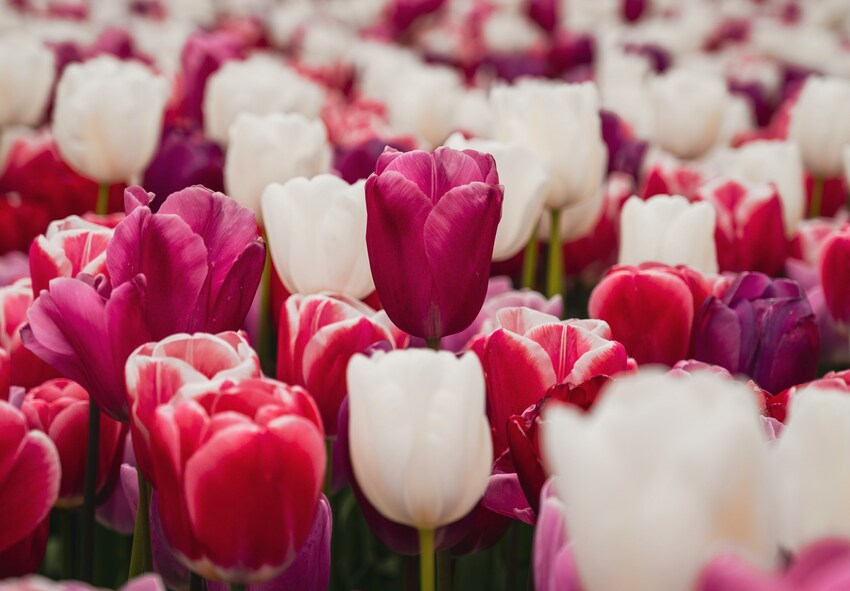
The following planting schemes demonstrate how different tulip groups can be combined to create a long and visually varied spring display.
Early, Mid-Season and Late for a Classic Layered Display
A classic combination can begin with Purple Prince or another early purple tulip, followed by Strong Love in the mid-season stage and finished with Ballerina as a late-flowering accent.
The rich purple, intense red, and warm orange tones create a strong color progression, while the differences in flower shape add further interest. Compact early flowers can occupy the front of the flowerbed, medium-height Strong Love can dominate the central area, and taller Ballerina can provide a final vertical accent.
A Pink and White Composition with Gradual Flowering
For a softer design, combine early white tulips with Pink Impression during the middle of the season and finish with La Belle Époque. The result is a romantic composition that gradually moves from clean, light shades to warm pink and apricot tones.
The changing colors create a gentle transition rather than a sharp contrast. This scheme is particularly suitable for cottage gardens, romantic borders, and flowerbeds near patios or seating areas.
A Purple, Blue and White Spring Combination
A cool-toned flowerbed can begin with early purple tulips, continue with Alibi in a rich lilac shade, and finish with white or lavender late tulips. The composition can be enhanced with muscari planted between the tulip groups to introduce additional blue tones.
This combination creates an elegant and calming effect. The varying heights of the tulips and the low-growing muscari also create a layered structure that remains attractive throughout the flowering period.
A Warm Yellow, Orange and Red Flowerbed
Gardeners who prefer vibrant displays can combine yellow early tulips with red mid-season varieties such as Strong Love, followed by orange late tulips such as Ballerina.
The color progression from yellow to red and then orange creates a warm, energetic effect. The arrangement is especially effective in sunny locations where the colors appear particularly vivid.
A Naturalistic Mixed Tulip Planting
A more informal flowerbed can combine several early, mid-season, and late varieties in irregular groups rather than arranging them in strict rows. Early botanical or compact tulips can appear among mid-season Triumph varieties, while tall Parrot or Extra-Double Late tulips emerge later in the background.
Varieties such as Pink Impression, Alibi, and Blue Spectacle can create a mixture of classic and unusual flower forms. Repeating several colors throughout the planting helps maintain unity while preserving a natural appearance.
How to Plan the Purchase of Tulip Bulbs
A continuous-flowering flowerbed requires more planning than a single-variety planting because bulbs must be selected according to different flowering periods.
Why It Is Better to Order Bulbs in Advance
The most popular tulip varieties can sell out quickly, especially premium cultivars and unusual colors. Ordering bulbs in advance makes it easier to obtain the desired combination of early, mid-season, and late varieties rather than choosing from whatever remains available at the end of the season.
Early planning also allows gardeners to calculate the total number of bulbs and create a balanced color scheme before planting begins.
How to Calculate the Number of Bulbs
The number of bulbs depends on the size of the flowerbed, the planting distance, and the desired visual effect. Groups of the same variety usually create a stronger impression than isolated individual bulbs, so it is better to repeat several carefully chosen groups throughout the planting.
A useful approach is to allocate space to each flowering period rather than planting all bulbs in equal quantities. The main mid-season display may contain the largest number of bulbs, while early and late varieties can be used to create opening and closing stages.
Why Professional-Quality Planting Material Matters
Healthy, properly graded bulbs are essential for a successful continuous-flowering design. Professional planting stock is more likely to produce uniform plants and flowers that reflect the expected characteristics of the variety.
Large, healthy bulbs generally have stronger reserves and are more likely to produce vigorous flowering. This is particularly important when combining several cultivars, as weak or undersized bulbs can create gaps in an otherwise carefully planned display.
How to Plant Tulips for Continuous Flowering
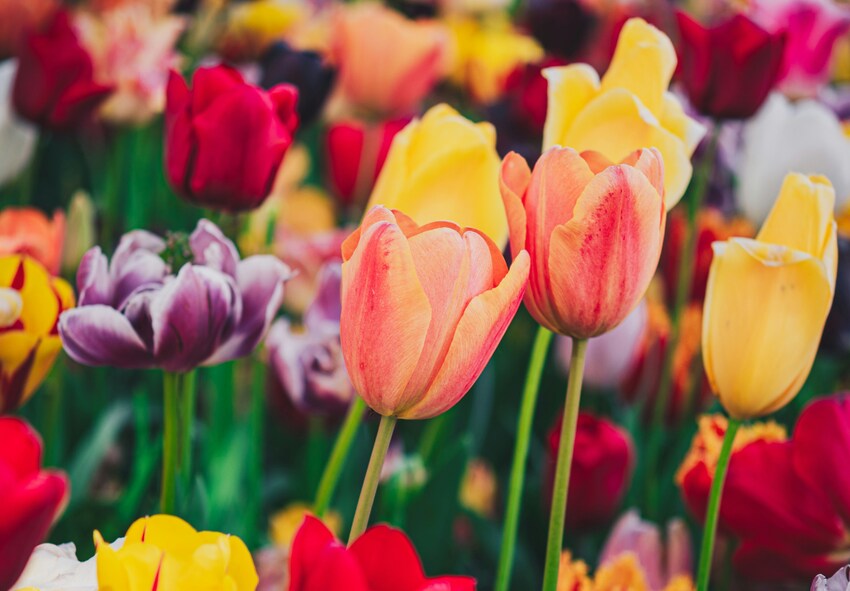
The arrangement of tulip bulbs in the ground is just as important as the selection of varieties. Thoughtful placement allows the flowerbed to remain balanced as different groups come into bloom:
- Grouping Varieties According to Flowering Time: Gardeners can plant early, mid-season, and late varieties in separate groups or mix them in a more natural arrangement. Separate groups make the succession of flowering easier to control and create a clear visual progression. Mixed planting can produce a more natural effect, with different varieties appearing among one another as the season develops. Both approaches can be successful, depending on the style of the garden.
- Creating Layers by Height: Shorter varieties should generally be placed toward the front of a border, while medium-height tulips occupy the center and taller late varieties are planted toward the rear. In informal flowerbeds, this rule can be applied more loosely, but maintaining some variation in height prevents the composition from appearing flat.
- Repeating Colors Throughout the Flowerbed: Repeating selected colors helps unite the different flowering periods. For example, a purple early tulip can be echoed by a lilac mid-season variety and a deep violet late tulip. Similarly, white can be repeated throughout a colorful composition to create visual balance. This technique ensures that the flowerbed remains cohesive even as individual varieties begin and finish flowering at different times.
Conclusion
A flowerbed that blooms for two months is created through thoughtful variety selection and careful planning rather than by chance. By combining early, mid-season, and late tulips, gardeners can ensure that the display changes gradually and remains decorative for much longer than a single-variety planting.
Early cultivars such as Purple Prince can begin the season, mid-season varieties such as Strong Love, Pink Impression, Alibi, and Dow Jones can provide the main wave of color, and late tulips such as Ballerina, La Belle Époque, and other specialty cultivars can extend the display into late spring.
Selecting bulbs in advance, choosing healthy planting material, grouping varieties thoughtfully, and repeating colors throughout the flowerbed all contribute to a harmonious result. With a well-planned combination of flowering times, a tulip garden can become a constantly changing spring composition that remains attractive for many weeks!
Frequently Asked Questions (FAQs) about Tulip Fowering Times
1. How can I make tulips bloom in my flowerbed for two months?
The best approach is to combine tulip varieties with different flowering periods. Early tulips begin the display, mid-season varieties provide the main wave of color, and late-flowering cultivars extend the season. By also combining different plant heights and repeating complementary colors throughout the flowerbed, gardeners can create a continuous, harmonious display that changes gradually from early spring into late spring.
2. Which tulip varieties are best for early flowering?
Early-flowering tulips are generally compact and reliable, making them excellent for starting a spring display. Purple Prince is a popular example, offering rich purple flowers and dependable early-season color. Other early varieties can also be selected according to the desired height and color scheme. Combining several early cultivars creates a stronger opening display and reduces dependence on one variety.
3. Can I order early, mid-season, and late tulip bulbs from your online store?
Yes, you can order a wide selection of tulip bulbs for continuous flowering from our online store Dutch-bulbs.com, including early, mid-season, and late varieties such as Purple Prince, Strong Love, Pink Impression, Alibi, Ballerina, La Belle Époque, and many others. Combining different flowering groups allows you to create a beautiful, long-lasting spring display with color extending over many weeks.
4. Which tulips can extend flowering into late spring?
Late-flowering tulips include many Darwin Hybrid, Lily-Flowered, Parrot, and Extra-Double Late varieties. Ballerina provides elegant orange lily-shaped flowers, while La Belle Époque and Blue Spectacle offer luxurious double blooms. These cultivars can continue flowering after early and mid-season tulips have finished, helping maintain color and visual interest in the flowerbed for several additional weeks.
5. How many bulbs should I plant for a continuous tulip display?
The number of bulbs depends on the size of the flowerbed and the desired density, but planting in groups usually produces a much stronger visual effect than placing individual bulbs randomly. Plan separate or repeated clusters for early, mid-season, and late varieties. This creates a balanced succession of flowering and helps prevent gaps in the composition throughout the season.
Published: 21.07.2026