



Split-corona daffodils are among the most distinctive types of spring-flowering narcissus. Instead of the familiar trumpet-shaped cup, these daffodils have a corona divided into segments that spread outward, creating an open, ruffled, or almost orchid-like flower. Their unusual shapes and striking colour combinations make them especially attractive in spring borders, flower beds, and containers.
From bright yellow blooms to delicate white petals with peach-pink centres, split-corona daffodil varieties offer plenty of choice. Below, we explore 10 beautiful cultivars, including ‘Shrike’, ‘Casanova’, ‘Zinzi’, ‘Congress’, ‘Cassata’, ‘Mondragon’, and ‘Slice of Life’, along with three more varieties worth discovering. Our gardening blog is a perfect place to find all the information you need!
What Are Split-Corona Daffodils?
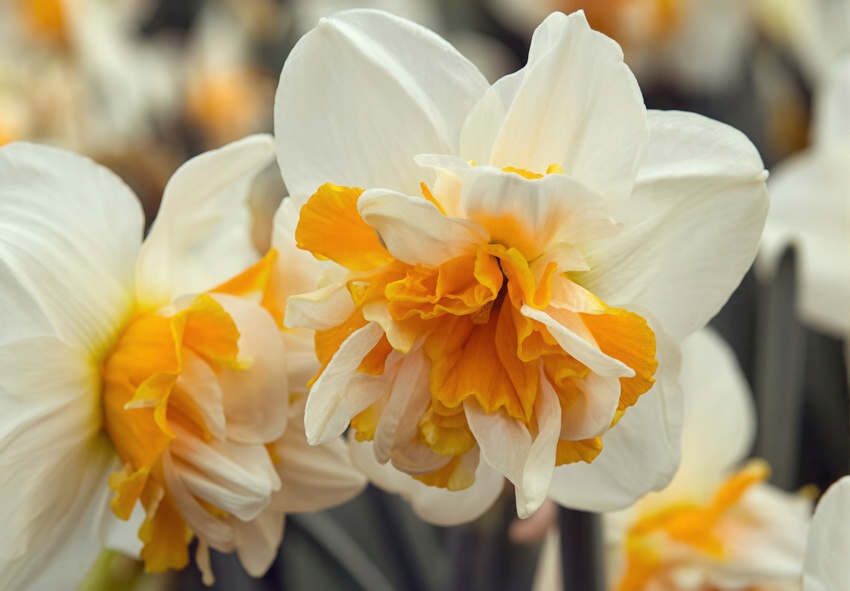
Split-corona daffodils belong to Division 11 of the official narcissus classification. Their defining feature is a central cup, or corona, that is split for at least half its length. The segments spread across the surrounding petals, giving the flowers a layered, decorative appearance.
There are two main flower forms: collar daffodils, whose split corona segments spread over the petals, and papillon daffodils, whose segments resemble butterfly wings. Both forms bring unusual texture and shape to spring displays.
White and Yellow Split-Corona Daffodils
White and yellow combinations offer a softer interpretation of the split-corona form. These varieties are ideal for brightening spring borders while keeping the overall colour scheme fresh and elegant.
1. Narcissus ‘Casanova’
‘Casanova’ is a decorative split-corona daffodil that combines pale outer petals with a contrasting yellow centre. The divided corona spreads across the flower, creating a layered effect that makes the bloom appear broader and more intricate than a standard cupped daffodil.
Its balanced colour combination makes narcissus ‘Casanova’ a versatile choice for spring gardens. It looks attractive beside white narcissus varieties, pale tulips, and early-flowering perennials. For gardeners seeking an elegant split-corona daffodil with a distinctive shape, ‘Casanova’ offers a pleasing combination of colour and structure.
Key characteristics:
- Flower colour: Pale petals with a contrasting yellow centre.
- Flower shape: Flattened, divided corona creating a layered effect.
- Garden appeal: Suitable for elegant borders and mixed spring bulb displays.
2. Narcissus ‘Slice of Life’
‘Slice of Life’ is a distinctive split-corona daffodil with pale petals and a contrasting, flattened centre that creates an open, star-like appearance. Its divided corona adds movement and texture to the bloom, making it an interesting alternative to more conventional daffodil shapes.
This variety is particularly attractive in mixed spring displays, where its unusual flower form can be appreciated alongside simpler narcissus cultivars. Narcissus ‘Slice of Life’ also suits smaller garden groupings, where individual flowers are easy to admire. Its decorative appearance makes it a worthwhile addition to a collection of unusual spring bulbs.
Key characteristics:
- Flower colour: Pale outer petals with a contrasting central corona.
- Flower shape: Open, star-like bloom with divided corona segments.
- Garden appeal: Best appreciated in small groups or mixed narcissus collections.
3. Narcissus ‘Orangery’
‘Orangery’ is a striking split-corona daffodil with white outer petals and a vivid orange centre. Its flattened, deeply divided corona spreads across the flower, producing a dramatic contrast between the clean white background and warm orange segments.
The bold colouring makes narcissus ‘Orangery’ particularly effective in spring borders and containers. It pairs beautifully with white tulips, blue grape hyacinths, and other orange-accented daffodils. For gardeners who want a split-corona variety that looks both elegant and eye-catching, ‘Orangery’ is an excellent option.
Key characteristics:
- Flower colour: White petals with a vivid orange split corona.
- Flower shape: Broad, flattened centre with striking contrasting segments.
- Garden appeal: Excellent for containers, borders, and high-contrast spring displays.
Yellow and Golden Split-Corona Daffodils
Yellow split-corona narcissus varieties combine the cheerful colour of traditional daffodils with more elaborate flower shapes. They are particularly effective when planted in groups, where their unusual centres become more noticeable.
4. Narcissus ‘Cassata’
‘Cassata’ is a distinctive split-corona daffodil known for its creamy white outer petals and broad, flattened yellow centre. The split corona opens outward across the petals, creating a flower that looks almost like a yellow star layered over a pale background. As the bloom matures, the yellow colouring may soften, giving it a gentler appearance.
This variety is an excellent choice for gardeners who want something different from classic trumpet daffodils without losing the familiar freshness of spring yellow. Narcissus ‘Cassata’ works particularly well in mixed bulb displays and alongside blue or purple spring flowers.
Key characteristics:
- Flower colour: Creamy white petals with a broad yellow split corona.
- Flower shape: Open, star-like centre that may become paler with age.
- Garden appeal: Excellent for mixed spring borders and contrasting bulb combinations.
5. Narcissus ‘Congress’
‘Congress’ is a bold split-corona daffodil with a warm, golden-yellow appearance and a contrasting orange-toned centre. Its broad, decorative corona segments create a full, open flower that stands out among more traditional narcissus varieties.
The combination of yellow and orange makes narcissus ‘Congress’ especially useful for bright, energetic spring planting schemes. It can be paired with golden tulips, grape hyacinths, or other warm-coloured daffodils for a coordinated display. Gardeners looking for a striking yellow split-corona daffodil will appreciate its distinctive form and cheerful colouring.
Key characteristics:
- Flower colour: Golden-yellow petals with an orange-toned centre.
- Flower shape: Broad, divided corona with a bold, open appearance.
- Garden appeal: Ideal for colourful spring borders and warm-toned planting schemes.
6. Narcissus ‘Mondragon’
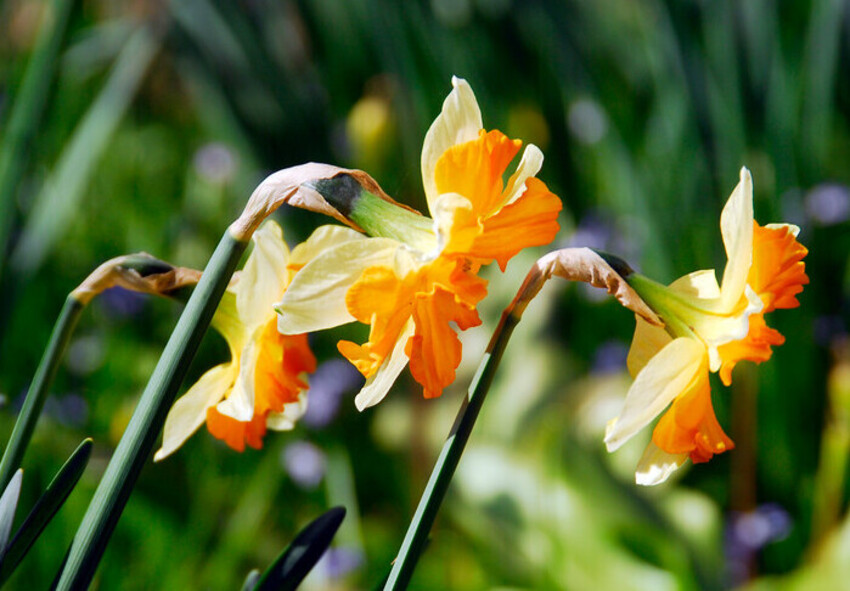
‘Mondragon’ is an eye-catching split-corona daffodil valued for its strong yellow colouring and richly contrasting centre. The divided corona gives the flower a broad, decorative appearance, adding depth and texture to its sunny colour palette.
This cultivar is well suited to gardeners who enjoy daffodils with a more elaborate shape than the familiar trumpet form. Narcissus ‘Mondragon’ can serve as a focal point in a spring bulb collection or be combined with simpler yellow narcissus varieties for contrast. Its unusual flower structure makes it particularly appealing when viewed up close.
Key characteristics:
- Flower colour: Predominantly yellow with a contrasting central corona.
- Flower shape: Broad, divided centre with a decorative appearance.
- Garden appeal: Attractive as a focal point or alongside simpler daffodil varieties.
Pink, Peach, Orange, and Contrasting Split-Corona Daffodils
Some of the most memorable split-corona daffodil varieties feature soft pink, peach, or orange centres. Their unusual colours are especially attractive when combined with white petals, creating a delicate but distinctive spring display.
7. Narcissus ‘Shrike’
‘Shrike’ is a striking split-corona daffodil featuring pale outer petals and a richly coloured, divided centre with warm pink-to-coral tones. Its broad corona segments spread across the flower, giving it a ruffled, almost orchid-like appearance.
This variety is ideal for gardeners who enjoy unusual daffodil colours and decorative flower shapes. Narcissus ‘Shrike’ can be combined with white daffodils, pale pink tulips, or blue spring bulbs to highlight its contrasting centre. Its distinctive colouring also makes it an attractive choice for small groups planted near paths, patios, or seating areas.
Key characteristics:
- Flower colour: Pale petals with warm pink-to-coral central tones.
- Flower shape: Broad, ruffled split corona with an orchid-like effect.
- Garden appeal: Attractive near paths, patios, and other close-viewing areas.
8. Narcissus ‘Zinzi’
‘Zinzi’ is an attractive split-corona daffodil with a decorative centre that brings warm colour and texture to the flower. Its divided corona creates an open, layered shape, helping it stand apart from conventional trumpet and large-cupped daffodils.
This cultivar is worth considering for gardeners who want to introduce more variety into their spring bulb displays. It can be paired with simpler white or yellow daffodils to emphasise the distinctive split-corona form. Narcissus ‘Zinzi’ is also a good candidate for planting in small groups, where its individual flower details can be appreciated.
Key characteristics:
- Flower colour: Contrasting tones that emphasise the decorative centre.
- Flower shape: Open, layered bloom with a divided corona.
- Garden appeal: Suitable for small groups and mixed daffodil collections.
9. Narcissus ‘Parisienne’
‘Parisienne’ is an elegant split-corona daffodil known for its pale petals and warm peach-to-pink centre. The divided corona spreads outward, creating a soft, layered flower with a delicate, romantic appearance.
Its subtle colouring makes narcissus ‘Parisienne’ especially suitable for pastel-themed spring borders. It looks beautiful alongside pale pink tulips, white narcissus, and soft blue spring flowers. Compared with brighter yellow and orange cultivars, ‘Parisienne’ offers a gentler effect while retaining the distinctive shape that makes split-corona daffodils so appealing.
Key characteristics:
- Flower colour: Pale petals with a soft peach-to-pink centre.
- Flower shape: Broad, divided corona with a delicate layered effect.
- Garden appeal: Ideal for pastel borders and soft spring colour combinations.
10. Narcissus ‘Palmares’
‘Palmares’ is a beautiful split-corona daffodil featuring white petals and a broad, ruffled centre in soft salmon-pink tones. The divided corona creates an almost double-flowered impression, giving the bloom a full and decorative appearance.
This variety is particularly effective in elegant spring planting schemes where white, blush pink, and peach colours dominate. It can also be grown alongside classic white daffodils to create contrast in flower shape without introducing too many colours. Narcissus ‘Palmares’ is an appealing choice for gardeners looking for a refined, unusual narcissus variety.
Key characteristics:
- Flower colour: White petals with a soft salmon-pink centre.
- Flower shape: Broad, ruffled split corona with a full appearance.
- Garden appeal: Beautiful in pastel borders and elegant spring bulb combinations.
Which Split-Corona Daffodil Variety Should You Choose?
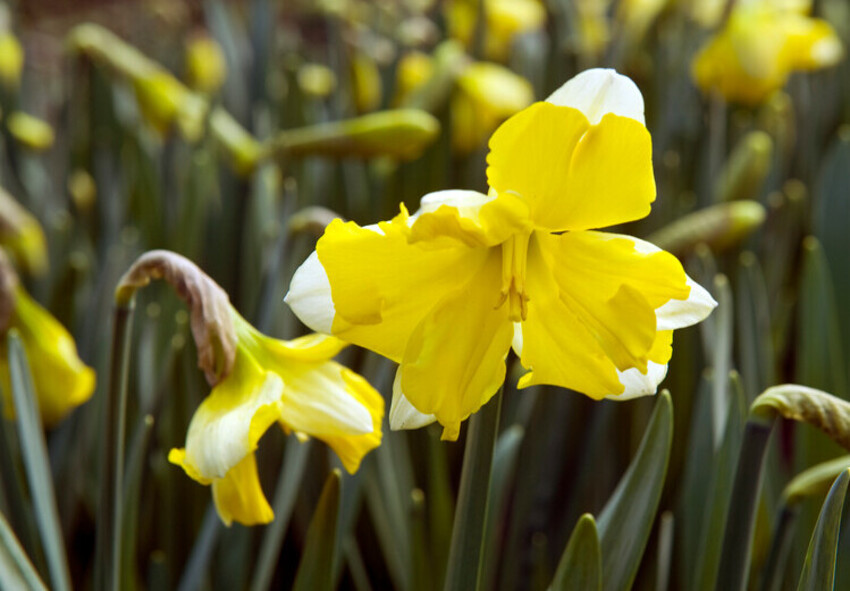
The best split-corona daffodil depends on the colours and overall effect you want in your spring garden. For bright, cheerful displays, consider yellow and golden varieties such as ‘Congress’, ‘Cassata’, and ‘Mondragon’. If you prefer strong contrasts, ‘Orangery’ offers a particularly striking combination of white and orange.
For softer spring colour schemes, ‘Parisienne’ and ‘Palmares’ introduce delicate peach and pink tones. Meanwhile, ‘Shrike’, ‘Zinzi’, ‘Casanova’, and ‘Slice of Life’ offer additional variety in flower shape and appearance. Combining several split-corona cultivars with traditional daffodils is an effective way to create a spring display with different textures, colours, and flower forms.
Conclusion
Split-corona daffodils offer a fresh take on one of the most familiar spring flowers. Their divided, decorative centres create unusual shapes, while their colours range from bright yellow and orange to soft white, peach, and pink.
Whether you prefer the bold appearance of ‘Orangery’ and ‘Congress’ or the gentler tones of ‘Parisienne’ and ‘Palmares’, these 10 split-corona daffodil varieties provide plenty of inspiration for a distinctive spring garden. Choosing a mix of colours and flower forms is a simple way to make your seasonal bulb display more varied and memorable!
Frequently Asked Questions (FAQs) about Split-Corona Daffodils
1. What makes split-corona daffodils different from regular daffodils?
Split-corona daffodils have a central cup divided for at least half its length, creating an open, ruffled, or butterfly-like appearance. Unlike traditional trumpet daffodils, their corona segments spread outward across the petals. This distinctive flower structure makes varieties such as ‘Cassata’, ‘Orangery’, and ‘Palmares’ especially attractive for decorative spring garden displays and containers.
2. Which split-corona daffodil varieties are best for colourful spring gardens?
For bright spring displays, consider ‘Congress’ with its warm yellow and orange tones or ‘Orangery’ with contrasting white petals and an orange centre. ‘Cassata’ offers a softer yellow-and-white combination, while ‘Palmares’ introduces delicate salmon-pink shades. Combining several varieties creates an attractive display with different flower shapes, colours, and textures throughout the garden.
3. When do split-corona daffodils bloom?
Most split-corona daffodils flower in spring, although the exact timing depends on the cultivar, local climate, and seasonal weather. Many bloom during the middle or later part of the daffodil season. Planting several varieties with different flowering periods can help extend the display and provide a succession of colourful blooms in garden borders.
4. Can I order split-corona daffodils in your online store?
You can explore our online store Dutch-bulbs.com for split-corona daffodil bulbs, including varieties such as ‘Shrike’, ‘Cassata’, ‘Casanova’, and ‘Zinzi’, subject to availability. Check individual product listings for flower colours, bulb specifications, planting information, and current stock. Comparing several cultivars will help you choose the right combination for your garden, containers, or spring bulb collection.
5. Can split-corona daffodils grow in pots and containers?
Yes, split-corona daffodils grow well in containers when planted in suitable compost with good drainage. Choose pots with drainage holes and enough depth for healthy root development. Varieties such as ‘Orangery’ and ‘Cassata’ can create attractive seasonal displays. Place containers in a bright location and avoid leaving bulbs in persistently waterlogged conditions during winter.
Published: 18.11.2026