



Amaryllis and Hippeastrum are often confused because plants sold as “amaryllis” in garden centers and online stores are very often actually Hippeastrum. The confusion comes largely from common naming and commercial labeling rather than the plants being botanically identical.
Knowing the difference between Amaryllis and Hippeastrum can be useful when choosing bulbs and researching how to grow them. Although both belong to the Amaryllidaceae family and produce attractive flowers from bulbs, they have different botanical identities, growth habits, and typical growing requirements. Understanding which plant you have makes it easier to follow the right care instructions. Our gardening blog is a perfect place to find all the information you need!
What Is Amaryllis?
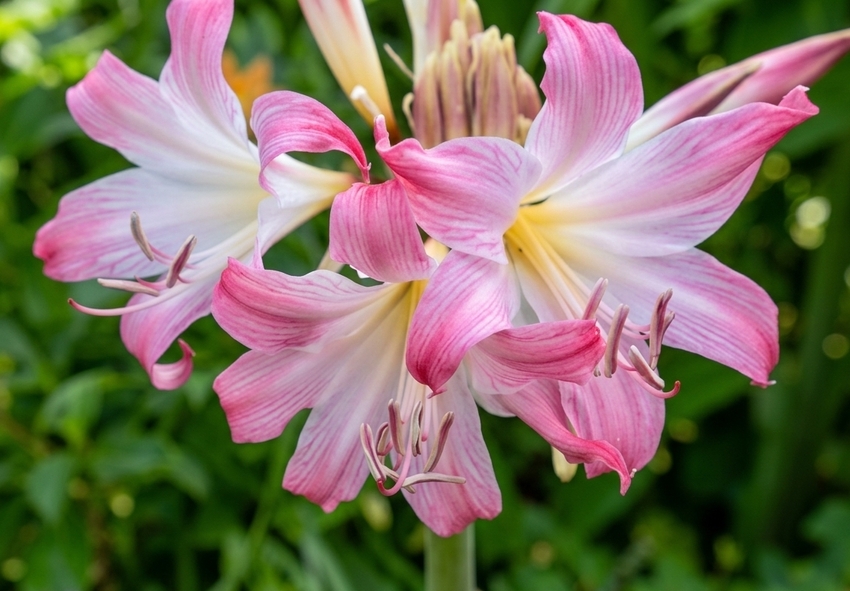
Amaryllis is a botanical genus containing a small number of true species, most notably Amaryllis belladonna. These plants are native to South Africa, particularly areas of the Western Cape, and are adapted to a seasonal growth cycle.
True Amaryllis typically produces clusters of trumpet-shaped flowers on tall, leafless flower stalks. The flowers are commonly pink to rose-colored, although the genus is much less diverse in cultivated forms than Hippeastrum. Its leaves generally develop around or after flowering, depending on growing conditions.
True Amaryllis bulbs are generally associated with outdoor cultivation in suitable climates rather than the indoor holiday bulb trade. It can be grown outdoors in regions with mild winters, while gardeners in colder climates may need to provide protection or grow it in containers.
The name Amaryllis has also been used historically for plants that are now classified as Hippeastrum. This older naming tradition is one of the main reasons the two genera continue to be confused today.
What Is Hippeastrum?
Hippeastrum is a separate botanical genus within the Amaryllidaceae family. It contains numerous species and has been extensively hybridized, resulting in the large range of cultivated varieties available today.
Hippeastrum species originate primarily from tropical and subtropical regions of the Americas. Modern hybrids are especially popular as indoor flowering bulbs because they can produce large, dramatic flowers and can be encouraged to bloom under controlled conditions.
Hippeastrum flowers come in an extensive range of colors and patterns, including red, pink, white, orange, salmon, green, and combinations of these shades. Depending on the variety, flowers may be single, double, striped, edged, or otherwise patterned.
The plants typically produce long, strap-like leaves and tall flower stalks. Because cultivated Hippeastrum bulbs are widely sold for indoor flowering, especially during the winter and holiday season, they are commonly marketed under the familiar name “amaryllis.”
Amaryllis vs. Hippeastrum: Main Differences
Although both plants are bulbous members of the Amaryllidaceae family, several characteristics can help distinguish true Amaryllis from Hippeastrum. No single visual feature should always be treated as absolute, particularly when dealing with hybrids, unusual growing conditions, or plants without labels.
Botanical Classification
Both Amaryllis and Hippeastrum belong to the Amaryllidaceae family, but they are separate genera. This means they are related plants but not simply two names for the same botanical group.
The botanical names are therefore particularly useful when researching a plant. If a bulb is labeled Hippeastrum, its care information should be based on Hippeastrum rather than on assumptions about true Amaryllis. Checking the scientific name can prevent confusion caused by common names.
Flowering Time
True Amaryllis and Hippeastrum can have different natural flowering cycles. True Amaryllis generally flowers after a period of dormancy, with flowering often occurring before or around the emergence of its foliage.
Cultivated Hippeastrum can flower at different times depending on the variety, growing conditions, and whether the bulb has been prepared or forced for indoor flowering. This flexibility is one reason Hippeastrum is so popular as a seasonal houseplant.
Indoor temperature, light, watering, and the bulb’s previous growth cycle can all influence when a Hippeastrum flowers. Therefore, flowering time can provide a useful clue but should not be the only method of identification.
Bulbs
Both plants grow from substantial bulbs, but their bulbs can differ in shape, size, and surface characteristics. Healthy bulbs generally feel firm and should not have extensive soft, damaged, or rotting areas.
However, bulb appearance should not be used as the only identification method. Cultivar differences, bulb age, growing conditions, and storage can all affect appearance. A reliable plant label or botanical identification is much more useful when determining whether a bulb is Amaryllis or Hippeastrum.
Flower Appearance
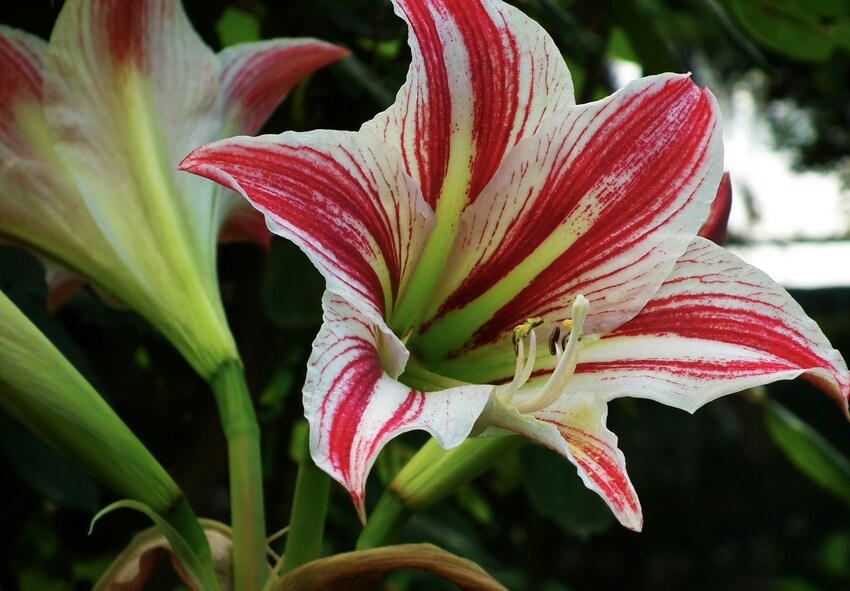
Flower appearance is one of the most noticeable differences between the two groups. True Amaryllis generally produces more limited flower color and form compared with the enormous diversity found among cultivated Hippeastrum hybrids.
Hippeastrum flowers are often very large and can appear in numerous colors and patterns. A single flower stalk may carry several trumpet-shaped flowers, creating a dramatic display. Modern hybrids can also have double flowers, contrasting edges, stripes, veins, or unusual color combinations.
Leaves
True Amaryllis typically has strap-like leaves that develop according to its seasonal growth cycle. Depending on the plant and conditions, foliage may appear around the flowering period or afterward.
Hippeastrum also produces long, strap-like leaves, but its foliage and flowering cycle can vary considerably among cultivars and growing conditions. Because the leaves of both plants can look relatively similar, foliage alone is not always enough for reliable identification.
Flower Stems
The flower stalk can be one of the more useful visual clues. True Amaryllis typically produces solid flower stems, while Hippeastrum flower stalks are characteristically hollow.
However, gardeners should not rely on this feature alone when identifying an unlabeled plant. The condition of the stalk, plant age, and the way it has been grown can make visual assessment less straightforward. When possible, combine the stalk characteristic with the flower, foliage, bulb, and plant label.
Growing Conditions
True Amaryllis is generally suited to outdoor cultivation in climates where its seasonal growth cycle can be supported. It prefers suitable sunlight, well-drained soil, and protection from conditions that can cause prolonged bulb moisture or damage.
Hippeastrum is widely grown as an indoor or container plant, particularly in climates where winter temperatures are too cold for outdoor cultivation. It generally benefits from bright light, a well-draining growing medium, appropriate watering, and protection from freezing temperatures.
Both plants dislike prolonged waterlogging, so drainage is important. However, the exact care routine should be adapted to the species or cultivar, local climate, container conditions, and whether the plant is actively growing or resting.
How to Tell If You Have Amaryllis or Hippeastrum
If you are unsure which plant you have, start with the plant label or botanical name. A label identifying Hippeastrum is the clearest indication that you have a Hippeastrum rather than true Amaryllis. Unfortunately, bulbs sold simply as “amaryllis” may not provide this information.
You can then examine the plant itself. The flower stalk, flower form, leaves, flowering season, and overall growth habit can provide additional clues. A hollow flower stalk is commonly associated with Hippeastrum, while true Amaryllis has a solid flower stalk.
The timing of flowering can also be helpful. True Amaryllis has a characteristic seasonal cycle, while cultivated Hippeastrum can be encouraged to flower at different times, particularly when grown indoors. For more useful information, check out our care guide for Amaryllis.
However, visual identification can sometimes be difficult. Hybrid Hippeastrum varieties are extremely diverse, and growing conditions can alter the appearance and timing of growth. When accuracy matters, the botanical name from a reputable source is preferable to identification based on a single physical characteristic.
Common Misconceptions About Amaryllis and Hippeastrum
There are several common misconceptions surrounding these two plants. Understanding them makes it much easier to interpret plant labels and care information:
- “All plants sold as amaryllis are true Amaryllis” — This is not the case. Many bulbs sold commercially as “amaryllis” are actually Hippeastrum hybrids.
- “Amaryllis and Hippeastrum are exactly the same plant” — They are related members of the same plant family, but they belong to different botanical genera.
- “Every Hippeastrum needs an identical dormancy period” — Care and rest requirements can vary depending on the cultivar, growing conditions, and the method being used to encourage flowering.
- “Flower color alone identifies the genus” — Flower color is not a reliable way to distinguish the two. Hippeastrum hybrids come in an especially wide range of colors and patterns.
- “The common name is always botanically accurate” — Common names can persist for historical or commercial reasons. For this reason, checking the botanical name is often the safest way to identify a plant.
Which One Should You Grow?
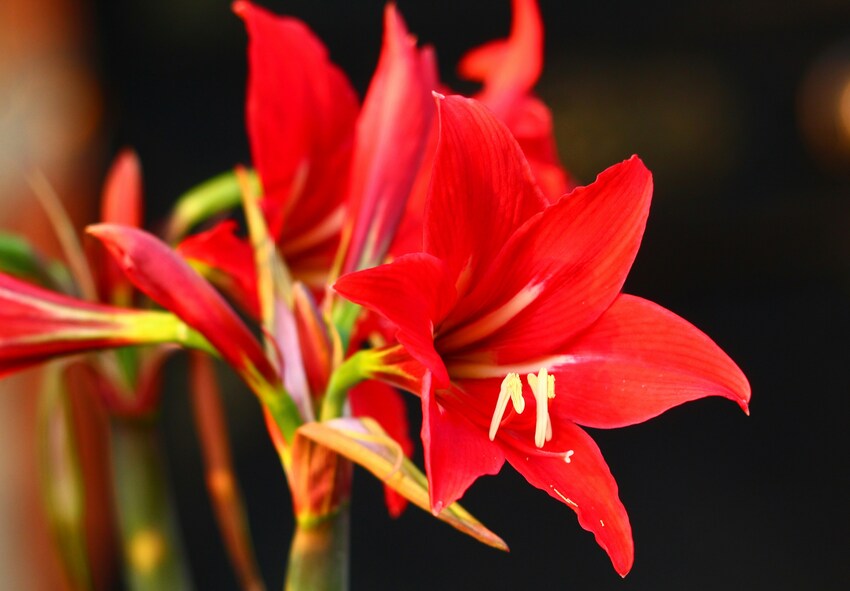
For gardeners looking for a spectacular indoor flowering bulb, Hippeastrum is usually the more relevant choice. Its cultivated hybrids offer a huge variety of flower colors, patterns, and forms, and the bulbs are widely available for container growing and indoor flowering.
True Amaryllis can be an excellent choice where the climate is suitable for growing it outdoors or where the gardener specifically wants to grow the true genus. It has a different seasonal growth pattern and a more limited range of commonly cultivated forms.
When choosing between them, consider the flower appearance you want, your available growing space, local climate, and whether you plan to grow the plant indoors, outdoors, or in a container. Most importantly, check the botanical name before purchasing if you specifically want one genus rather than the other.
Correct labeling is particularly important because care instructions for a plant sold under the common name “amaryllis” may actually be instructions for Hippeastrum. Knowing what you are buying helps you choose an appropriate planting method, watering routine, light level, and approach to dormancy or reblooming.
Conclusion
The main difference between Amaryllis and Hippeastrum is botanical: they are two separate genera within the Amaryllidaceae family. True Amaryllis, particularly Amaryllis belladonna, is native to South Africa, while Hippeastrum species originate primarily from the Americas.
The confusion largely comes from the widespread commercial use of the name “amaryllis” for Hippeastrum bulbs. Most of the large, colorful bulbs sold as indoor amaryllis, especially those offered for winter and holiday flowering, are actually Hippeastrum hybrids.
For gardeners, the simplest approach is to check the botanical name when buying bulbs or researching care. Once you know whether you have true Amaryllis or Hippeastrum, you can choose growing conditions and care practices that better match the plant’s natural growth cycle.
Frequently Asked Questions (FAQs) about Amaryllis vs. Hippeastrum
1. Are Amaryllis and Hippeastrum the same plant?
No. Amaryllis and Hippeastrum are separate genera within the Amaryllidaceae family. However, many Hippeastrum hybrids are commonly sold and marketed as “amaryllis,” especially as indoor flowering bulbs. True Amaryllis, such as *Amaryllis belladonna*, has different growth and flowering characteristics, so checking the botanical name is the best way to distinguish them.
2. How can I tell the difference between Amaryllis and Hippeastrum?
One useful clue is the flower stem: Hippeastrum typically has a hollow stem, while true Amaryllis has a solid stem. Flowering time, leaves, growth habit, and bulb characteristics can also provide clues. However, visual identification is not always straightforward, so plant labels and botanical names are generally more reliable than appearance alone.
3. Why are Hippeastrum bulbs often called amaryllis?
The name “amaryllis” became widely used commercially for Hippeastrum bulbs because of historical naming and horticultural conventions. As a result, the common name remains popular even though these plants belong to different genera. This can cause confusion when gardeners are researching planting, flowering, dormancy, and care requirements for their particular bulb.
4. Can I order Amaryllis or Hipperastrum bulbs in your online store?
Yes, you can order Amaryllis and Hipperastrum bulbs in our online store Dutch-bulbs.com, subject to seasonal availability. When shopping, check the botanical name and individual product information to determine whether you are purchasing true Amaryllis or a Hippeastrum hybrid commonly sold as amaryllis. This helps you choose a bulb with growing requirements suited to your garden or indoor conditions.
5. Which is better for growing indoors, Amaryllis or Hippeastrum?
Hippeastrum is generally the more common choice for indoor growing because many cultivated hybrids are well suited to containers and can produce large, showy flowers indoors. True Amaryllis is less commonly grown as an indoor seasonal bulb. The best choice depends on your climate, available growing conditions, preferred flowers, and whether you want indoor or outdoor cultivation.
Published: 16.10.2026