



Pruning is one of the most confusing aspects of hydrangea care. Many gardeners assume that all hydrangeas should be pruned in autumn, while others avoid pruning altogether for fear of removing next year’s flowers. In reality, the correct approach depends entirely on the type of hydrangea you grow.
Some hydrangeas bloom on new wood, meaning they produce flower buds on the current season’s growth and can safely be pruned in fall. Others bloom on old wood, so autumn pruning may remove the buds that would have flowered the following summer. Understanding this difference is the key to healthy plants and abundant blooms.
This guide explains which hydrangea varieties should be pruned in fall, which should be left untouched until later, and how to prune correctly for vigorous growth and reliable flowering. Our gardening blog is a perfect place to find all the information you need!
Why Some Hydrangeas Can Be Pruned in Fall
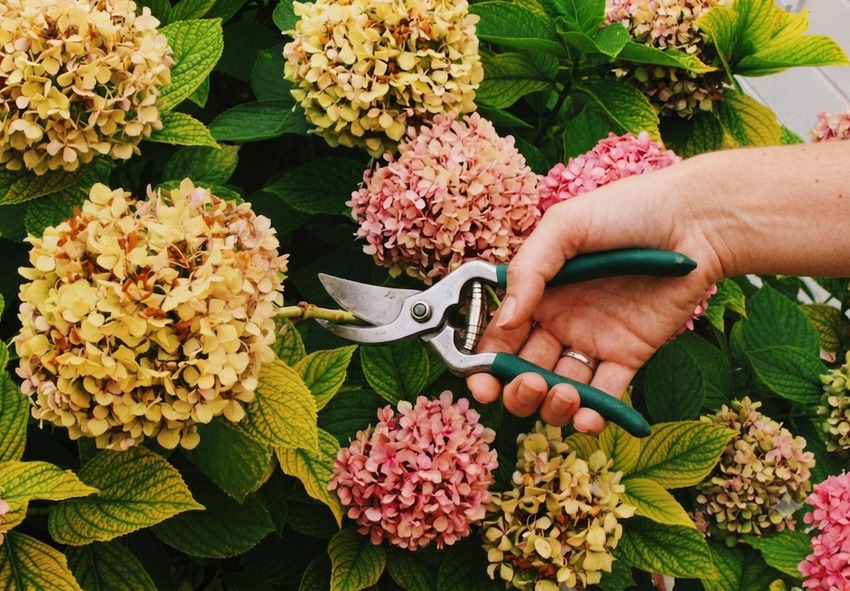
Not every hydrangea responds to pruning in the same way. Before making the first cut, it is important to understand how your particular variety develops its flower buds. Recognising the difference between these flowering habits allows gardeners to prune with confidence while protecting next season’s display.
Understanding Old Wood vs. New Wood Bloomers
Hydrangeas are generally divided into two groups according to where they produce flower buds. New wood bloomers develop flower buds on stems that grow during the current season. Since these buds are produced after spring growth begins, pruning during late autumn or winter does not reduce flowering.
Old wood bloomers form their flower buds during the previous growing season. These buds remain on the stems throughout winter and open the following year. Removing those stems in autumn means removing next season’s flowers. Knowing which group your hydrangea belongs to allows you to prune with confidence and avoid accidental damage.
Why Correct Identification Matters
Incorrect pruning is one of the most common reasons hydrangea plants fail to flower. Many gardeners mistakenly cut every hydrangea back to the ground each autumn. While this works well for certain species, it can completely eliminate flowering on varieties that bloom from old wood.
Checking the plant label or variety name before pruning is always worthwhile. If you are unsure which type you have, it is often safer to delay major pruning until you have identified it correctly.
Hydrangea Varieties That Can Be Pruned in Fall
Fortunately, several of the most popular garden hydrangeas respond very well to autumn pruning. These easy-care hydrangeas reward proper autumn pruning with vigorous growth, improved structure and abundant blooms during the following growing season.
Panicle Hydrangeas (Hydrangea paniculata)
Panicle hydrangeas are among the easiest shrubs to prune. They naturally bloom on new shoots produced each spring, making autumn pruning both safe and beneficial. Because of its adaptability and reliability, hydrangea paniculata is an excellent choice for beginner gardeners.
These shrubs develop strong upright stems topped with large cone-shaped flower clusters that remain decorative well into autumn. Annual pruning encourages vigorous new growth, improves the shape of the shrub and often produces larger flower heads.
Smooth Hydrangeas (Hydrangea arborescens)
Smooth hydrangeas also bloom on new wood and tolerate autumn pruning very well. Although these hydrangeas are naturally hardy, moderate pruning usually results in stronger stems and more attractive flowering.
Their large rounded flower heads appear on vigorous new stems each growing season. Removing old growth after leaf fall helps stimulate fresh shoots the following spring and keeps the shrub compact and manageable.
Why These Groups Bloom on New Wood
Both panicle and smooth hydrangeas begin developing flower buds only after new spring growth starts. This means pruning in late autumn, after dormancy begins, does not remove future flower buds.
Instead, it allows the plant to concentrate its energy on producing healthy new stems when growth resumes. For this reason, these groups remain the safest hydrangeas for gardeners who prefer autumn pruning.
Popular Panicle Hydrangea Varieties for Fall Pruning
Many modern panicle hydrangeas combine outstanding ornamental value with simple maintenance. Each variety offers slightly different flower colours, mature sizes and landscape uses, but all share the advantage of blooming on new wood.
Limelight
Limelight remains one of the world’s most popular panicle hydrangeas. Its enormous lime-green flower panicles gradually soften to creamy white before developing attractive pink tones in autumn. Pruning in fall helps maintain its balanced shape while encouraging strong flowering stems the following season.
Little Lime
Little Lime offers all the beauty of Limelight in a much more compact form. Its manageable size makes it ideal for smaller gardens, borders and containers. Like its larger relative, it flowers on new wood and responds very well to annual autumn pruning.
Phantom
Phantom is admired for producing exceptionally large flower panicles that can exceed 30 centimetres in length. Its vigorous growth allows it to recover quickly after pruning, making autumn maintenance straightforward even for inexperienced gardeners.
Vanilla Strawberry
Vanilla Strawberry produces spectacular flower heads that gradually change from creamy white to soft pink and finally deep strawberry-red. Regular pruning encourages sturdy stems capable of supporting its impressive blooms while maintaining an attractive shrub shape.
Polar Bear
Polar Bear is known for its huge white flower panicles that remain bright and elegant throughout summer. Its strong stems and dependable flowering make it another excellent candidate for routine fall pruning.
Popular Smooth Hydrangea Varieties for Fall Pruning
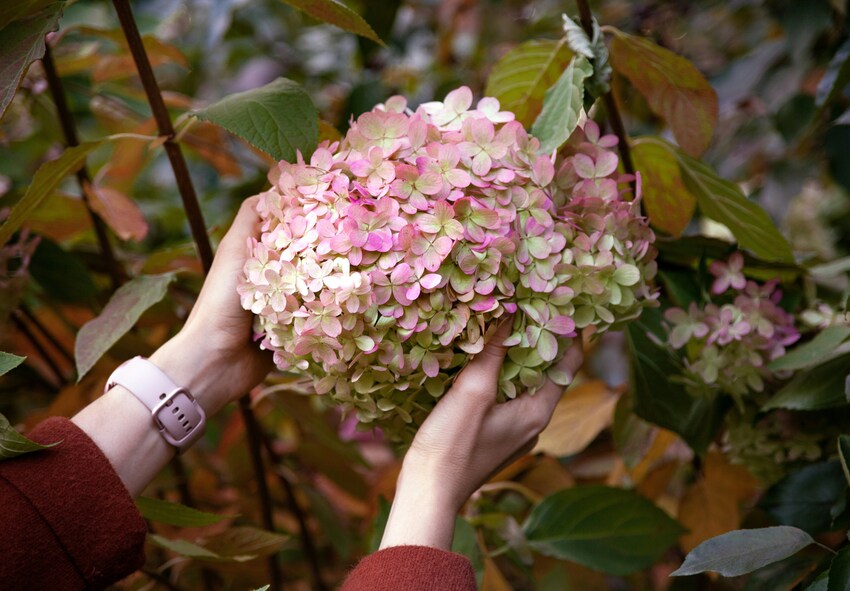
Smooth hydrangeas produce some of the largest spherical flower heads found among garden shrubs. Their dependable flowering and simple maintenance make these hydrangeas popular choices for both beginner and experienced gardeners.
Annabelle
Annabelle is perhaps the best-known smooth hydrangea. Its enormous white flower heads have become a classic feature in cottage gardens around the world. Pruning in late autumn encourages vigorous new shoots capable of producing equally impressive blooms the following year.
Incrediball
Incrediball was developed as an improvement over Annabelle, producing stronger stems that better support its exceptionally large flower heads. Autumn pruning helps maintain its compact framework while stimulating healthy new growth.
Invincibelle Spirit
Invincibelle Spirit offers beautiful rosy-pink flower heads rather than the traditional white. Like other smooth hydrangeas, it flowers on new wood and benefits from annual pruning after the growing season has finished.
How to Prune Hydrangeas in Fall
Correct pruning techniques are just as important as choosing the right varieties. Following a few simple pruning principles helps maintain healthy shrubs while encouraging strong new shoots and larger flower heads.
The Best Time to Prune
Wait until the shrub has finished flowering and dropped most of its leaves before beginning major pruning. Late autumn is generally ideal because the plant has entered dormancy but winter weather has not yet made garden work difficult. Avoid pruning during periods of severe frost.
How Much to Cut Back
Most panicle and smooth hydrangeas can be reduced by approximately one-third to one-half of the current season’s growth. Always remove dead, weak, damaged or crossing branches first. Maintaining a balanced framework encourages better air circulation and stronger flowering stems.
Tools and Pruning Techniques
Use clean, sharp pruning shears to make smooth cuts just above healthy outward-facing buds. Disinfect pruning tools between plants if disease is suspected to reduce the risk of spreading fungal or bacterial infections. Clean cuts heal more quickly and promote vigorous regrowth.
Caring for Hydrangeas After Pruning
After pruning, remove fallen leaves and plant debris from around the base of the shrub. Applying a layer of organic mulch helps regulate soil temperature, conserve moisture and protect the root system throughout winter. Healthy soil conditions support vigorous spring growth and abundant flowering.
Hydrangeas You Should Not Prune in Fall
Not every hydrangea should be pruned before winter. If you are unsure whether your shrub should be cut back in autumn, it is often safer to postpone hydrangea spring pruning until you have correctly identified the variety and its flowering habit.
Bigleaf Hydrangeas (Hydrangea macrophylla)
Bigleaf hydrangeas produce next year’s flower buds during the previous growing season. Pruning in autumn removes these buds and often results in little or no flowering the following summer. Only dead or damaged stems should be removed during autumn.
Oakleaf Hydrangeas (Hydrangea quercifolia)
Oakleaf hydrangeas also bloom on old wood. Their attractive flower heads and colourful autumn foliage provide winter interest, so major pruning is usually postponed until after flowering or limited to light maintenance.
Climbing Hydrangeas (Hydrangea anomala subsp. petiolaris)
Climbing hydrangeas rarely require extensive pruning. These vigorous climbers bloom on older stems, so heavy autumn pruning can significantly reduce flowering. Maintenance should generally be limited to removing damaged or unwanted shoots.
Common Mistakes When Pruning Hydrangeas
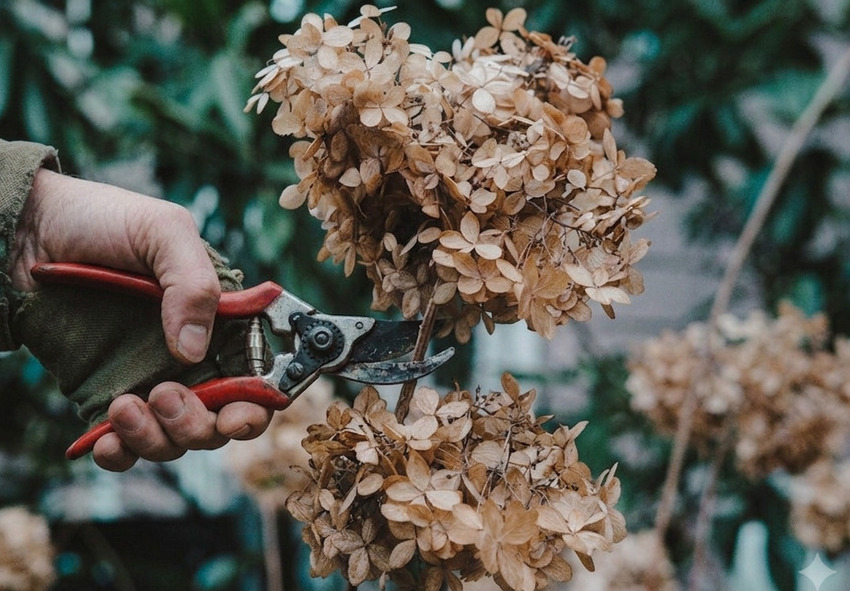
Avoiding a few common errors can greatly improve flowering performance. Learning to avoid these common pruning errors can significantly improve both the health of the shrub and the quality of its flowering each year:
- Pruning at the Wrong Time: Pruning old wood bloomers in autumn remains the most common mistake. Always identify the flowering habit of your hydrangea before reaching for the pruning shears.
- Removing Flower Buds: Many flower buds are already present before winter begins. Careless pruning may remove these developing buds, reducing the following year’s display.
- Cutting Too Severely: Although panicle and smooth hydrangeas tolerate fairly hard pruning, removing excessive growth every year may weaken the plant over time. Balanced pruning encourages healthier stems and more consistent flowering.
Conclusion
Autumn pruning is an excellent maintenance practice for hydrangeas that bloom on new wood, particularly panicle and smooth varieties such as Limelight, Phantom, Vanilla Strawberry, Polar Bear, Annabelle and Incrediball. These shrubs respond with vigorous spring growth, improved shape and abundant flowers when pruned correctly.
At the same time, gardeners should remember that not all hydrangeas follow the same rules. Bigleaf, oakleaf and climbing hydrangeas develop their flower buds on old wood and should generally be left unpruned until the appropriate season. By correctly identifying your hydrangea variety and following suitable pruning techniques, you can enjoy healthier shrubs, stronger growth and spectacular blooms year after year!
Frequently Asked Questions (FAQs) about Hydrangea Autumn Pruning
1. Which hydrangeas can safely be pruned in fall?
Panicle hydrangeas (Hydrangea paniculata) and smooth hydrangeas (Hydrangea arborescens) can be safely pruned in fall because they bloom on new wood. Popular varieties include Limelight, Little Lime, Phantom, Vanilla Strawberry, Polar Bear, Annabelle and Incrediball. Autumn pruning helps maintain a tidy shape, encourages vigorous new growth and often results in larger, healthier flower heads the following season.
2. Why shouldn't some hydrangeas be pruned in autumn?
Bigleaf (Hydrangea macrophylla), oakleaf (Hydrangea quercifolia) and climbing hydrangeas (Hydrangea anomala subsp. petiolaris) produce flower buds on old wood. Pruning these shrubs in autumn removes the buds that would bloom the following year, often resulting in few or no flowers. For these varieties, only dead or damaged stems should be removed before winter.
3. How much should I cut back panicle and smooth hydrangeas in fall?
Most panicle and smooth hydrangeas can be reduced by about one-third to one-half of the current season’s growth after they become dormant. Begin by removing dead, damaged or weak branches before shortening the remaining stems. Moderate pruning encourages stronger new shoots, improves air circulation and helps produce larger, more attractive flower clusters the following growing season.
4. Can I order hydrangea plants from your online store?
Yes, you can order a wide selection of hydrangea plants from our online store Dutch-bulbs.com, including panicle, smooth, bigleaf, oakleaf and climbing varieties. We offer healthy, high-quality planting material suitable for gardens of all sizes, allowing you to choose hydrangeas with different flower colours, growth habits and flowering periods to create beautiful landscape displays throughout the season.
5. What tools should I use when pruning hydrangeas?
Always use sharp, clean pruning shears to make smooth cuts just above healthy buds or branches. Disinfect your tools between plants if you suspect disease to reduce the risk of spreading infections. Well-maintained tools create cleaner cuts that heal more quickly, helping hydrangeas recover faster and produce vigorous new growth during the following spring.
Published: 03.08.2026