



The correct planting depth is one of the most important factors for healthy bulb flowers and abundant blooms in spring. If flower bulbs are planted too shallowly or too deeply, they may struggle to establish themselves, freeze to death in winter or fail to produce flowers later on. The ‘three-depth rule’ for flower bulbs offers a simple guide: the planting depth should be roughly three times the height of the bulb. This is measured from the base of the bulb or the root plate to the surface of the soil. Our gardening blog is the perfect place to find all the information you need!
How the ‘three times depths’ rule works
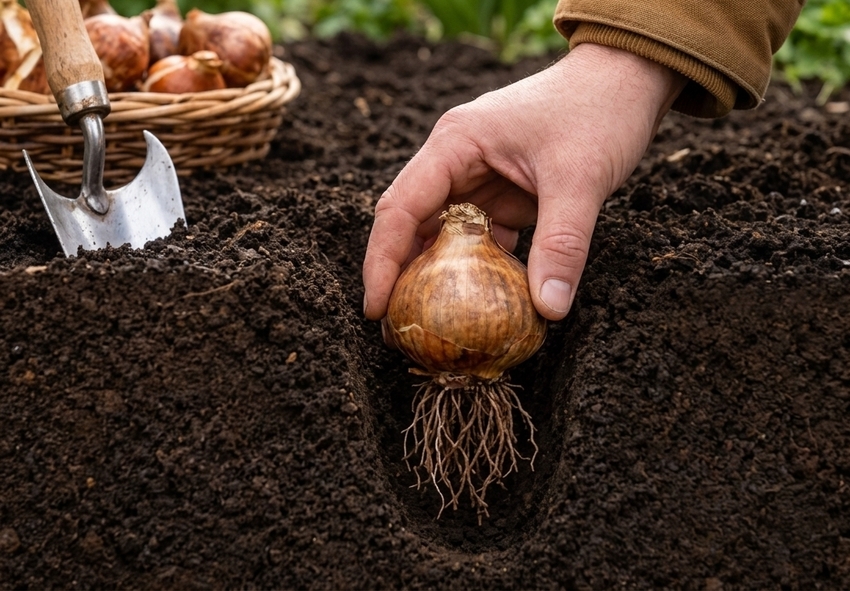
If you want to know how deep to plant bulbs, you can use the height of the bulb in question as a guide. Measure the bulb from the base – that is, the lower end where the roots begin – to the tip. Then multiply this height by three.
For example, if a tulip bulb is 5 cm tall, the total planting depth is around 15 cm. The bulb is therefore placed in the planting hole so that its base is approximately 15 cm below the soil surface. In this case, there will be about 10 cm of soil covering the tip. The planting depth for flower bulbs therefore depends on the bulb’s height and not on its diameter.
This simple rule helps to determine the appropriate depth for different varieties. Small crocus bulbs require significantly less soil above them than large allium bulbs or imperial crowns. If you want to plant flower bulbs correctly, you should therefore take each bulb size into account individually.
Why the correct planting depth is so important
Planting bulbs too shallowly or too deeply can significantly impair their development. If flower bulbs are planted too shallowly, they are less well protected from extreme temperature fluctuations in winter. In frosty conditions, there is a higher risk of the bulbs or their roots freezing. Furthermore, the soil can dry out more quickly, and bulbs lying close to the surface are more easily discovered by animals such as mice or birds.
The above-ground parts of the plant can also suffer if planted too shallowly. The stems may develop less sturdily and are more likely to snap in the wind. Larger bulbous flowers, in particular, therefore benefit from a sufficient layer of soil.
If, on the other hand, flower bulbs are planted too deeply, the young shoot has to travel a long way through the soil. This causes the plant to expend additional energy. This can lead to delayed emergence, weaker flowering or even a complete failure to flower. In some cases, only leaves appear, whilst no flower stems develop.
Planting depth and spacing at a glance
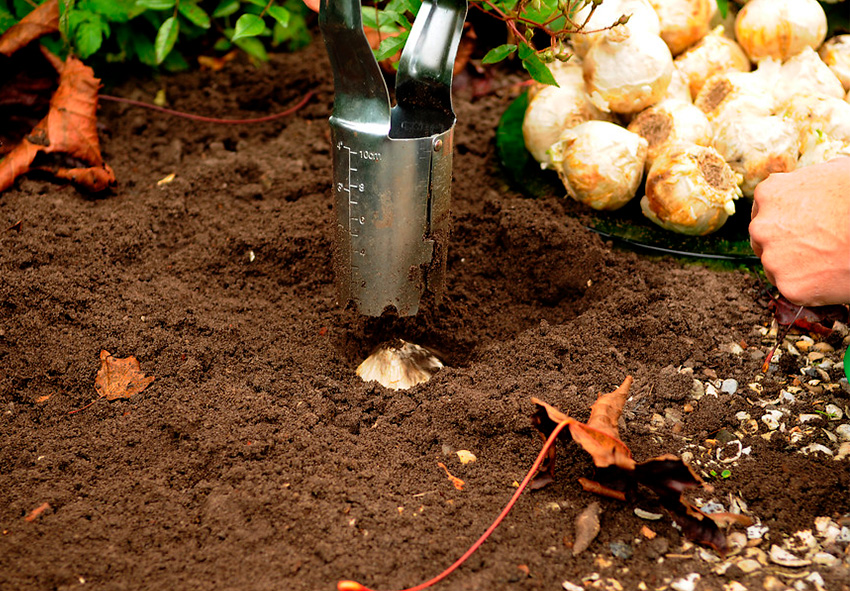
The following overview provides a practical guide for the most popular spring-flowering plants. The figures given can be adjusted slightly depending on the variety, soil and regional conditions. As well as planting depth, spacing also plays an important role in ensuring that each plant has enough room to develop.
| Bulb size | Examples | Planting depth | Planting spacing |
| Small bulbs (2–3 cm) | Crocuses, snowdrops, grape hyacinths | 6–9 cm | 5–8 cm |
| Medium bulbs (4–5 cm) | Tulips, daffodils, hyacinths | 12–15 cm | 10–15 cm |
| Large bulbs (6–8+ cm) | Alliums, fritillarias | 18–25 cm | 20–30 cm |
Many gardening enthusiasts wonder, in particular, how deep to plant tulip bulbs. For most tulips, a depth of around 12 to 15 cm is a good guideline. For larger tulip bulbs, the planting depth can be slightly greater. However, the actual height of the individual bulb is always the decisive factor.
When the ‘three time depth’ rule should be adjusted
The ‘three-depth rule’ is a reliable general guide, but it must be adapted to the specific soil conditions. In light, sandy soil, it may be advisable to plant the bulbs about one to two centimetres deeper. This provides better protection against rapid drying out and extreme temperature fluctuations.
In heavy clay soils, on the other hand, bulbs should be planted slightly shallower. Planting them one to two centimetres shallower can help excess moisture to drain away more effectively and reduce the risk of rot.
Some plants also present special exceptions. The Madonna lily (Lilium candidum), for example, is planted significantly shallower. There should only be about two to three centimetres of soil above the bulb.
Correct orientation is just as important. The base of the bulb, or root plate, should face downwards, whilst the tip should point upwards. If the orientation of a bulb is not clearly discernible, it can simply be planted on its side so that the shoot finds its own way to the surface.
The right depth for a magnificent spring bloom
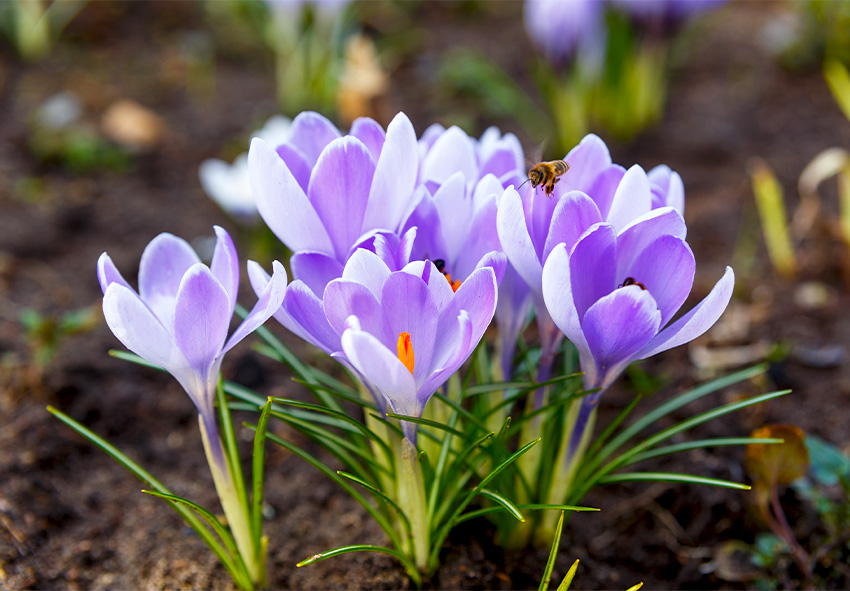
The correct planting depth is a simple yet crucial requirement for vigorous and floriferous bulbous plants. Use the ‘three-depth rule’ as a guide and, if necessary, adjust the depth to suit the soil type and the specific plant species. This will create the best conditions for rooting and successful overwintering. Order robust Dutch flower bulbs and handy planting tools from the Dutch-bulbs.com catalogue now and get your garden ready for a colourful spring season!
Frequently Asked Questions (FAQs) about the ‘Three Times Depths’ Rule
1. What is the three times depth rule for planting flower bulbs?
The three times depth rule means planting a flower bulb at a depth approximately three times its own height. For example, a bulb that is 2 inches tall is generally planted about 6 inches deep. This guideline helps provide insulation, stability, and enough space for healthy root development.
2. Does the three times depth rule apply to all flower bulbs?
The three times depth rule is a useful general guideline, but individual bulb varieties may have different planting requirements. Large bulbs, small bulbs, and bulbs grown in containers can need slightly different depths. Always check the planting instructions for the specific variety to achieve the best possible growing results.
3. What happens if flower bulbs are planted too shallow?
Bulbs planted too shallow may be more exposed to temperature changes, frost, and disturbance from animals. They can also develop weaker support as stems grow. In some cases, shallow planting may cause bulbs to dry out more quickly or be pushed upward by repeated freezing and thawing.
4. Can flower bulbs be planted too deep?
Yes, planting bulbs too deeply can make it harder for shoots to reach the soil surface. Excessive planting depth may also delay or reduce flowering because the developing plant must use more energy to grow upward. Follow the recommended depth for each bulb variety rather than applying one measurement to every bulb.
5. Should I measure bulb depth from the top or bottom of the bulb?
Planting depth is generally measured from the soil surface to the base of the bulb, rather than to its tip. Place the bulb with its pointed end facing upward and roots or the flatter basal plate facing downward. Then cover it with soil until the recommended planting depth is reached.
Published: 03.09.2026