



Ranunculus asiaticus, commonly known as Persian buttercup, is a beautiful flowering plant admired for its layered, rose-like blooms and rich range of colours. From soft pastel shades to vivid red, orange, yellow and white, ranunculus flowers bring an elegant touch to garden beds, borders and containers. They are also popular as cut flowers, making them a rewarding choice for gardeners who enjoy bringing fresh blooms indoors.
Although Persian buttercups are not difficult to grow, successful flowering begins with proper planting. Choosing the right time, preparing the corms and providing well-drained soil are all important for healthy growth. This guide explains how to plant Ranunculus asiaticus in your garden and help it produce an attractive display. Our gardening blog is a perfect place to find all the information you need!
When to Plant Ranunculus Asiaticus

The best planting time depends largely on your climate. Persian buttercups are cool-season plants that develop well in mild conditions, but their corms and young growth can be damaged by severe frost or excessive heat.
Planting in Mild Climates
In regions with mild winters and little risk of hard frost, ranunculus asiaticus bulbs and corms can often be planted in autumn. They establish roots during the cooler months and may flower in early spring. Autumn planting is particularly useful where winters remain cool but the soil does not freeze deeply.
Avoid planting during periods of warm weather, as high soil temperatures can interfere with establishment. Choose a time when temperatures are becoming cooler and the soil remains workable.
Planting in Colder Regions
In colder climates, spring planting is generally safer. Wait until the soil can be worked and the risk of severe frost has passed, or plant in a protected location where young growth can be shielded from cold conditions.
Ranunculus can tolerate cool weather, but prolonged freezing temperatures may damage the corms. Gardeners in regions with harsh winters may prefer to grow them in containers or start them in a sheltered space before moving them outdoors.
Choosing a Suitable Location
Persian buttercups grow best in a sunny position with fertile, well-drained soil. They need enough light to develop strong stems and abundant flowers, while good drainage helps prevent corms from rotting.
Sunlight and Garden Position
Choose a location that receives around six hours of sunlight a day. In areas with mild spring weather, a sunny garden bed is ideal. Where spring temperatures rise quickly, some afternoon shade can help extend the flowering period. Avoid planting ranunculus in places where water collects after rainfall. Heavy, poorly drained soil can cause the corms to deteriorate before they have a chance to grow.
Preparing the Soil
Ranunculus prefers loose, fertile soil that allows water to drain freely. Before planting, loosen the soil to a depth of around 20–25 cm and remove weeds, stones and large clumps. In heavy clay soil, improve drainage by incorporating suitable organic matter and, where appropriate, creating a raised bed. Avoid adding excessive compost or fertiliser directly into the planting hole. A balanced, well-prepared growing area is more beneficial than overly rich soil.
Preparing Ranunculus Corms Before Planting
Ranunculus grows from corms, which are often sold dry and have a distinctive shape resembling a small cluster of claws. These corms may look unusual, but preparing them correctly helps encourage more reliable growth.
Soaking the Corms
Dry ranunculus corms benefit from soaking before planting. Place them in room-temperature water for approximately three to four hours. They will absorb moisture and become plumper. Do not soak them for too long, as prolonged immersion can reduce oxygen availability and encourage damage. Once hydrated, plant the corms promptly rather than leaving them wet for an extended period.
Identifying the Correct Orientation
Ranunculus corms have several pointed projections that resemble claws. These should face downward when planted, while the rounded crown sits above them. If the orientation is not immediately clear, look for the central crown and the small roots or pointed projections beneath it. Planting the corms in the correct direction helps shoots emerge naturally and supports healthy establishment.
How to Plant Ranunculus Asiaticus in the Garden
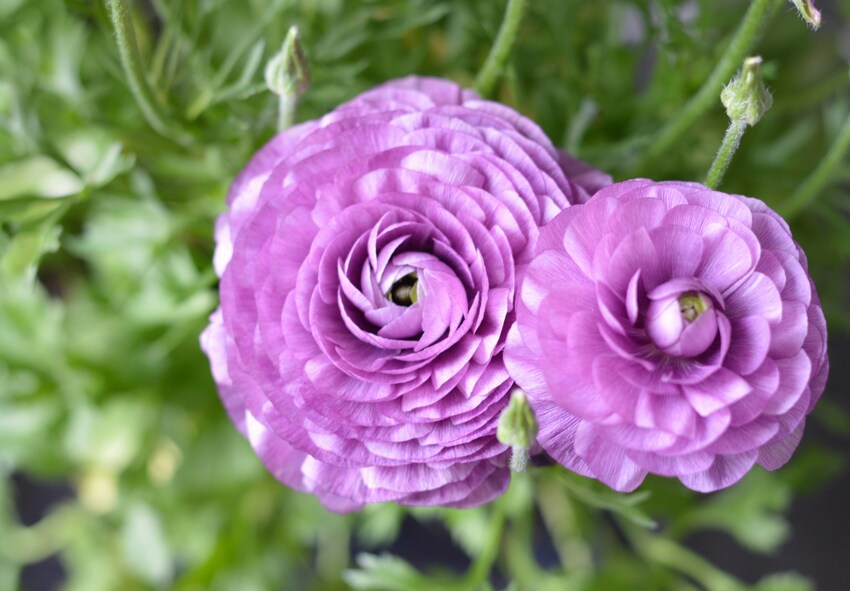
Once the corms are prepared and the planting area is ready, you can plant them directly into the garden. Correct depth and spacing allow the plants to develop without unnecessary competition.
Planting Depth and Spacing
Plant ranunculus corms approximately 5 cm deep, with the pointed claws facing downward. Leave around 10–15 cm between corms, depending on the variety and the space available. For a fuller display, you can plant them in groups or informal clusters.
Avoid placing them too close together, as crowded plants may have reduced airflow and can be more difficult to maintain. Cover the corms with soil and gently firm the surface. Water lightly after planting if the soil is dry, but avoid saturating the bed.
Planting in Containers
Ranunculus can also be grown in pots, making them suitable for patios, balconies and smaller gardens. Choose a container with drainage holes and use a loose, well-drained potting mix.
Plant corms at a similar depth to those grown in the garden, allowing enough space for their roots and foliage. Containers may dry out more quickly than garden soil, so check moisture regularly. At the same time, avoid leaving pots standing in water.
Watering and Early Growth
After planting, ranunculus corms need a balance of moisture and oxygen. Excessive watering is one of the most common reasons for poor establishment, particularly in cool weather.
Watering After Planting
Water the planting area lightly after placing the corms in the soil, especially if the ground is dry. During the early stages of growth, keep the soil slightly moist but never waterlogged. If autumn or spring rainfall is sufficient, additional watering may not be necessary. Check the soil before watering rather than following a fixed schedule.
Caring for Emerging Shoots
Once shoots appear, maintain consistent but moderate moisture. Ranunculus benefits from regular watering during active growth, especially in dry weather. Keep the area free from weeds that may compete for water and nutrients. Avoid disturbing the soil around emerging plants, as their roots and young shoots can be delicate.
Feeding Ranunculus for Healthy Flowers
Ranunculus grows best in fertile soil, but excessive feeding is not necessary. A balanced fertiliser applied according to its label can support healthy foliage and flowering. Avoid high-nitrogen fertilisers that encourage excessive leaf growth at the expense of flowers. If the soil was prepared well before planting, only modest additional feeding may be needed during active growth.
What to Expect When Ranunculus Flowers
Persian buttercups typically flower during the cooler part of the growing season. Depending on the planting time, climate and variety, flowering may occur in spring or early summer. The plants produce attractive, layered blooms on upright stems.
Removing faded flowers can help keep the display tidy and may encourage the plant to produce additional blooms. Ranunculus flowers are also excellent for cutting. Harvest stems when the buds have begun to show colour but are not fully open, and place them in clean water as soon as possible.
Troubleshooting Common Problems When Growing Ranunculus

Even when planted correctly, Ranunculus asiaticus may sometimes struggle to establish or produce flowers. Most problems are related to excess moisture, unsuitable temperatures, poor drainage or insufficient light. Watch for the following signs to identify potential issues and take action early:
- Corms fail to sprout: Corms may be damaged, planted too deeply or affected by waterlogged soil. Check drainage and make sure the corms were healthy before planting. Remember that emergence can take several weeks, depending on temperature and growing conditions.
- Corms become soft or rotten: Excessive moisture and poorly drained soil are common causes. Avoid overwatering, use containers with drainage holes and improve heavy garden soil before planting.
- Leaves turn yellow: Yellowing may indicate overwatering, nutrient deficiencies or natural seasonal changes after flowering. Check soil moisture first and avoid adding fertiliser until you understand the cause.
- Plants produce leaves but few flowers: Insufficient sunlight, excessive nitrogen or unsuitable growing temperatures can reduce flowering. Choose a sunny location and avoid overfeeding with nitrogen-rich fertilisers.
- Stems become weak or flowers droop: Poor light, overcrowding or inconsistent watering may affect stem development. Provide enough space between plants, maintain suitable soil moisture and choose a position with adequate sunlight.
- Young shoots are damaged by frost: Unexpected cold weather can harm emerging growth, particularly in spring-planted beds. Protect young plants with horticultural fleece when frost is forecast, and avoid planting too early in colder regions.
It’s important to know how to manage common problems after planting and how to help your plant produce more healthy flowers. If you need more care tips for stunning spring blooms, check out the full care guide for ranunculus asiaticus.
Conclusion
Ranunculus asiaticus is a rewarding choice for gardeners who want colourful, elegant flowers in spring. Although the plants require some attention during planting, they can grow successfully in garden beds and containers when given the right conditions.
Choose a suitable planting time for your climate, prepare the corms by soaking them briefly, and plant them claws-down in fertile, well-drained soil. With adequate sunlight, moderate watering and simple care, Persian buttercups can produce a beautiful display of flowers to enjoy in the garden and as cut blooms.
Frequently Asked Questions (FAQs) about Planting Ranunculus Asiaticus
1. When is the best time to plant Ranunculus asiaticus corms?
The best planting time depends on your climate. In regions with mild winters, plant Ranunculus asiaticus corms in autumn so they can establish before spring flowering. In colder areas, plant them in spring after the risk of hard frost has passed. This helps protect young shoots from freezing temperatures.
2. Should I soak Ranunculus corms before planting?
Yes, soaking dry Ranunculus corms before planting can help them rehydrate and begin growing. Place them in room-temperature water for approximately three to four hours. Avoid soaking them for too long, as excessive moisture can encourage rotting. After soaking, plant the corms promptly with their claw-like points facing downwards.
3. How deep should Ranunculus asiaticus corms be planted?
Plant Ranunculus asiaticus corms approximately 5 cm deep, with their pointed claws facing downwards. Leave around 10–15 cm between corms to give the plants enough room to develop. Choose loose, well-drained soil, as waterlogged conditions can cause the corms to rot before they establish.
4. Can I order Ranunculus asiaticus corms in your online store?
You can explore our online store Dutch-bulbs.com to see whether Ranunculus asiaticus corms are available for purchase. Browse the current selection to check the varieties, colours and product details offered. Availability may change throughout the planting season, so check the product listings for the latest information before placing your order.
5. Why are my Ranunculus plants growing leaves but not flowering?
Ranunculus plants may produce plenty of foliage but few flowers if they receive insufficient sunlight, grow in unsuitable temperatures or receive too much nitrogen fertiliser. Choose a sunny position, avoid excessive feeding and maintain consistent soil moisture without waterlogging. Healthy corms and suitable growing conditions also support better flowering.
Published: 20.11.2026