



Tulips are among the world’s most beloved spring flowers, offering an incredible range of colors, shapes, and flowering times. While many classic varieties are affordable and widely available, there is also a premium segment that attracts collectors, landscape designers, and gardening enthusiasts looking for something truly extraordinary. These exotic tulips often stand out with unusual flower forms, rare color combinations, or distinctive petal textures that cannot be found in traditional cultivars.
This guide is intended for gardeners who are curious about premium tulip varieties and want to understand why some bulbs command significantly higher prices than standard selections. Beyond their striking appearance, these tulips often represent years of careful breeding, limited production, and exceptional ornamental value.
Below, we’ll explore why certain tulips are more expensive, introduce some of the most remarkable varieties available today, and help you decide whether investing in premium bulbs is the right choice for your garden. Our gardening blog is a perfect place to find all the information you need!
Why Some Tulip Varieties Cost More Than Others
The price difference between classic and premium tulip bulbs is not simply a matter of rarity. Several factors contribute to their higher value, including the time required to develop new cultivars, the speed at which bulbs multiply, and the strong demand among gardeners seeking distinctive ornamental plants.
The Complexity of Breeding New Cultivars
Developing a completely new tulip variety is a lengthy process that often takes well over a decade. Plant breeders carefully cross selected parent plants in search of unique combinations of flower shape, color, height, flowering time, and overall performance. Thousands of seedlings may be evaluated before only a handful are considered worthy of further development.
Even after a promising seedling is selected, it must undergo years of observation to ensure that its characteristics remain stable. Breeders assess whether the flowers maintain consistent color, whether the stems are strong enough for garden use or cut flower production, and whether the bulbs perform reliably under different growing conditions.
Slower Propagation and Limited Availability
Unlike some garden plants that can be propagated rapidly, tulips reproduce relatively slowly. Each mature bulb produces only a limited number of daughter bulbs each season, making large-scale production a gradual process. For newly introduced varieties, growers often spend several years increasing stock before bulbs become widely available. During this period, demand frequently exceeds supply, resulting in higher prices.
Limited availability is especially noticeable among unusual flower forms, such as double, parrot, or specialty tulips, where production volumes remain relatively small compared with traditional single-flowered varieties.
Exceptional Ornamental Value and Collector Demand
Many premium tulips are purchased not only for their rarity but also for their exceptional decorative qualities. Some produce flowers that resemble peonies, while others feature dramatically twisted petals, unusual green markings, or striking color combinations rarely seen in spring gardens.
Collectors are often willing to pay higher prices for varieties that create distinctive displays or become conversation pieces within the landscape. Professional garden designers also favor these cultivars because they add originality and elegance to carefully planned planting schemes.
Ice Cream Tulips (Double-on-Double)
Ice Cream tulips are among the most recognizable novelty tulips thanks to their unique layered blooms that resemble scoops of ice cream. They are prized for their unusual appearance and make eye-catching focal points in spring gardens and containers. Their main characteristics of Ice Cream tulips include:
- Distinctive double-on-double flower structure;
- Large, highly ornamental blooms;
- Excellent choice for feature plantings and containers;
- Ideal for gardeners looking for rare and unusual tulips;
- Featured in the Danish tulip collection.
Ice Cream
Ice Cream is perhaps the most famous novelty tulip in the world. Its outer petals are deep pink, while the densely packed white center gradually expands as the flower opens, creating the unmistakable appearance of vanilla ice cream in a dessert cup.
Although the blooms are highly decorative, tulip Ice Cream requires favorable growing conditions to achieve its characteristic form. Strong sunlight and stable spring temperatures help the flowers develop fully and display their unique layered structure. For gardeners looking to create memorable spring displays, Ice Cream remains one of the most desirable premium tulips available.
Ice Cream Banana
Tulip Ice Cream Banana offers an equally unusual appearance but replaces the classic white center with creamy yellow tones that resemble banana-flavored ice cream. The soft contrast between the yellow center and surrounding petals creates a warm, cheerful display that attracts attention immediately.
Like the original Ice Cream variety, it performs best when planted in fertile, well-drained soil and benefits from a sheltered location where heavy spring rain is less likely to damage its densely filled flowers. Its uncommon appearance has made it increasingly popular among collectors and specialty bulb enthusiasts.
Ice Cream Strawberry
Tulip Ice Cream Strawberry combines rich pink shades with creamy white petals, creating a flower that closely resembles a strawberry dessert. The blooms are full, rounded, and exceptionally decorative, making them ideal for premium flower beds and spring container displays.
This variety is admired for its ability to become a focal point wherever it is planted. Although slightly more demanding than traditional tulips, its spectacular flowers often justify the additional care required to achieve their full ornamental potential.
Parrot Tulips
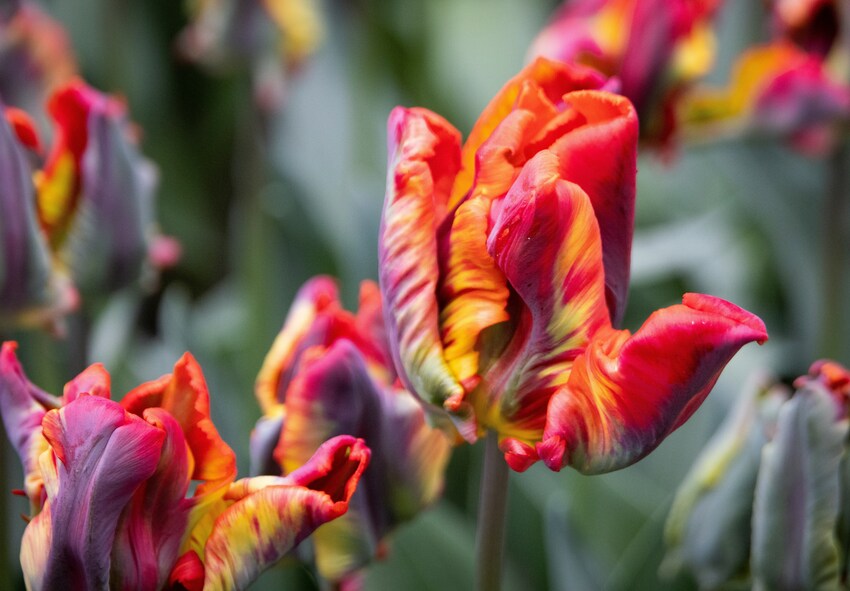
Parrot tulips are famous for their dramatically ruffled, twisted petals and vibrant color combinations. Their exotic appearance makes them one of the boldest tulip groups for decorative gardens and spring floral displays. Parrot tulips are characterized by:
- Strongly feathered and curled petals;
- Bold, unusual color patterns;
- Large flowers that continue changing as they open;
- Excellent focal plants for borders and bouquets;
- Popular among collectors and specialty bulb enthusiasts.
Black Parrot
Tulip Black Parrot is one of the darkest tulips available, producing deeply colored flowers with richly ruffled petals that appear almost black under certain lighting conditions. In reality, the petals display shades of dark purple and burgundy that give the flowers remarkable depth and elegance.
The dramatic coloring makes Black Parrot especially attractive when paired with white, pink, or pale yellow tulips that emphasize its rich tones.
Blue Parrot
Although no naturally blue tulips exist, tulip Blue Parrot creates the illusion through its unusual blend of violet, lavender, and bluish-purple shades. Combined with heavily feathered petals, these colors produce one of the most distinctive flowers found among spring bulbs.
Its large blooms continue changing shape as they open, creating a constantly evolving display throughout the flowering period.
Amazing Parrot
Amazing Parrot lives up to its name with vibrant blends of red, orange, yellow, and green that create an almost tropical appearance. Every flower develops slightly differently, adding even greater visual interest to the planting.
Its bold colors and spectacular petal form make tulip Amazing Parrot an excellent centerpiece for spring flower beds where dramatic impact is desired.
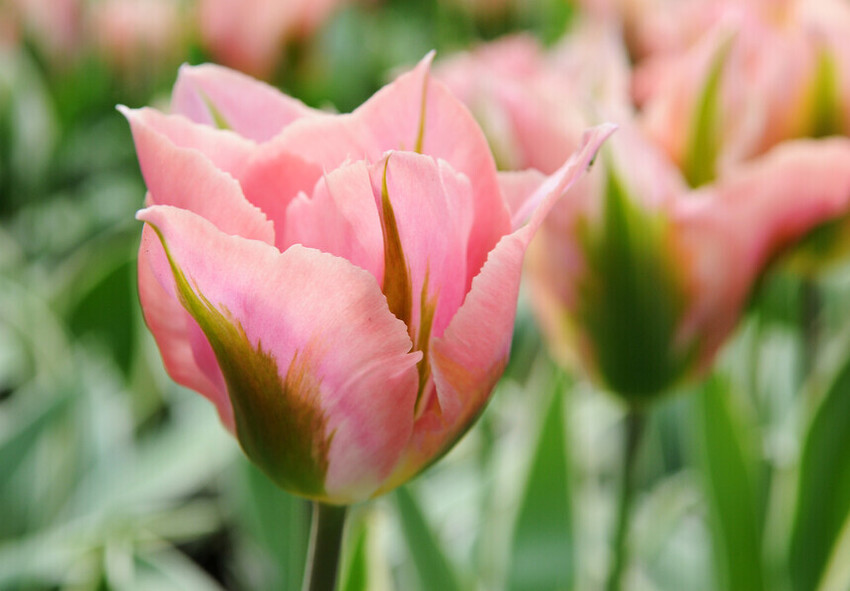
Viridiflora (Green-Flowered) Tulips
Viridiflora tulips combine classic tulip elegance with distinctive green markings that remain visible throughout flowering. Their refined appearance makes them popular in contemporary garden designs and sophisticated mixed plantings. Key features of Viridiflora tulips include:
- Green streaks or flames running through the petals;
- Long-lasting flowers with excellent ornamental value;
- Elegant appearance suitable for modern landscapes;
- Easy to combine with both pastel and vibrant tulips;
- Several varieties are included in the Danish tulip assortment.
Spring Green
Spring Green is one of the best-known Viridiflora tulips and has become a favorite among landscape designers for its understated elegance. Creamy white petals are accented by vivid green flames that extend from the base almost to the tip of each flower.
Its refined color palette allows it to blend beautifully with almost any spring planting scheme. Whether paired with pastel or more vibrant varieties, tulip Spring Green provides contrast without overwhelming neighboring plants. Because of its long-lasting flowers and graceful appearance, it is equally suitable for garden displays and cut flower arrangements.
China Town
China Town combines soft pink petals with striking green stripes, producing one of the most recognizable flowers within the Viridiflora group. In addition to its attractive blooms, the foliage often displays subtle variegation that increases its decorative value even before flowering begins.
The gentle color combination works particularly well in romantic gardens, cottage-style borders, and mixed spring plantings where delicate shades are preferred. Gardeners appreciate tulip China Town not only for its unusual appearance but also for its dependable garden performance.
Greenland
Greenland offers an elegant blend of rose-pink petals highlighted with broad green markings that create a fresh, sophisticated look. As the flowers mature, the contrast between the colors becomes even more pronounced, adding visual interest throughout the blooming period.
Its sturdy stems and graceful flowers make Greenland an excellent choice for both landscape planting and floral arrangements. The variety is especially attractive when planted alongside white, purple, or deep burgundy tulips that emphasize its unique coloring.
Peony-Flowered (Extra-Double Late) Tulips
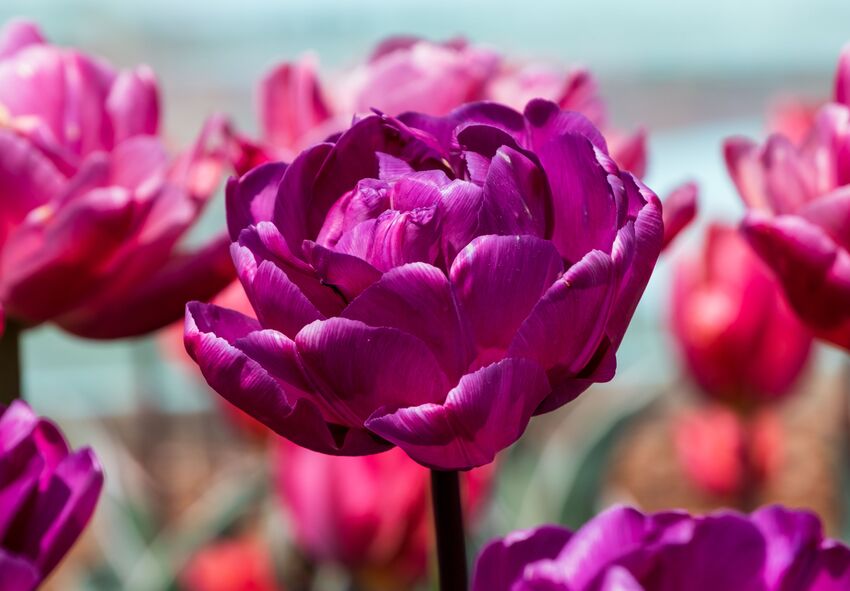
Peony-flowered tulips produce exceptionally full blooms that closely resemble peonies. Their luxurious flowers provide outstanding visual impact and are highly valued in ornamental gardens and floral arrangements. Peony-flowered tulips are known for:
- Large, densely packed double flowers;
- Long-lasting blooms with exceptional decorative appeal;
- Rich colors and unique petal textures;
- Excellent performance in borders and cut flower gardens;
- A premium choice for gardeners seeking dramatic spring displays.
La Belle Époque
La Belle Époque is widely regarded as one of the most sophisticated tulips introduced in recent years. Its densely filled flowers display a remarkable blend of apricot, caramel, copper, and soft pink tones that shift subtly depending on lighting conditions.
This constantly changing coloration gives every planting a dynamic quality rarely seen among traditional tulips. The flowers remain attractive for an extended period, making the variety particularly valuable for ornamental gardens and cut flower production. Its refined appearance has earned tulip La Belle Époque a place in many premium bulb collections, including the Danish assortment.
Carnaval de Nice
Carnaval de Nice produces large double flowers with crisp white petals dramatically streaked with rich crimson-red markings. No two blooms are exactly alike, giving the planting a lively and artistic appearance throughout the flowering season.
The large blossoms create a luxurious display that immediately attracts attention. Although the flowers can become quite heavy, strong stems generally provide adequate support under normal growing conditions. Its bold coloration makes tulip Carnaval de Nice an excellent focal point in spring borders and decorative containers.
Blue Spectacle
Blue Spectacle offers lush double flowers in deep violet-purple shades that create an elegant and sophisticated display. Like many double tulips, its flowers open gradually into broad, peony-like blooms with exceptional ornamental appeal.
The rich coloring pairs beautifully with white, pink, or green-flowered tulips, creating harmonious spring compositions with strong visual contrast. Its impressive flower size and long flowering period have made tulip Blue Spectacle a favorite among gardeners seeking premium spring displays.
Lily-Flowered Tulips
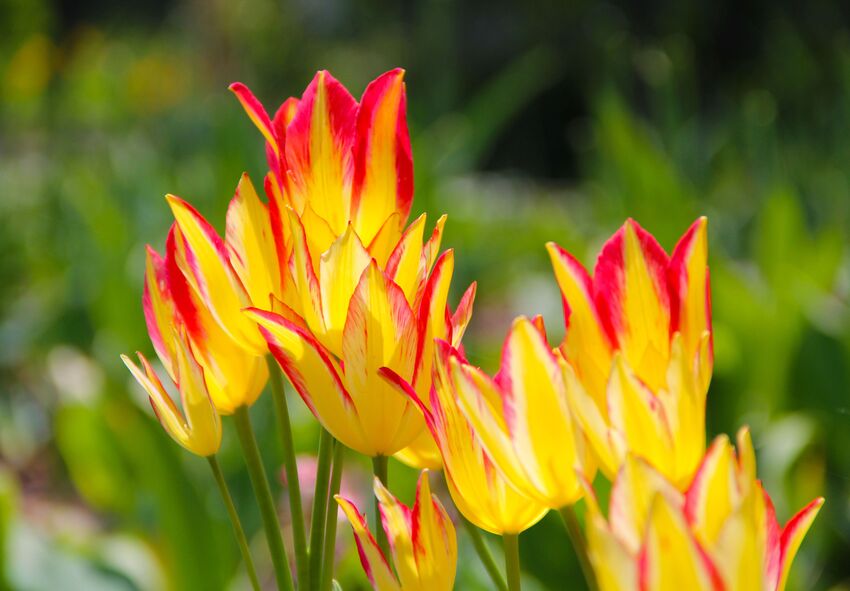
Lily-flowered tulips are admired for their graceful pointed petals that curve outward, creating an elegant and refined silhouette. Their distinctive shape adds movement and sophistication to spring landscapes. They offer several attractive qualities:
- Elegant lily-like flower shape;
- Slender stems with graceful blooms;
- Suitable for formal and naturalistic garden designs;
- Beautiful companions for other premium tulip groups;
- Many varieties also perform exceptionally well as cut flowers.
Tres Chic
Tulip Tres Chic is admired for its pure ivory-white flowers that open into elegant star-like blooms with gracefully recurved petals. Its simple color allows the distinctive flower shape to become the primary decorative feature.
The variety works beautifully in minimalist gardens, formal landscapes, and sophisticated floral arrangements where understated elegance is desired. Its clean appearance also makes it an excellent companion for more colorful premium tulips.
West Point
West Point produces brilliant golden-yellow flowers carried on tall, slender stems that sway gently in the breeze. The pointed petals curve outward dramatically, creating one of the most recognizable flower forms among lily-flowered tulips.
Its bright color introduces warmth and energy into spring borders while maintaining a refined, graceful appearance. Tulip West Point has long been appreciated by gardeners seeking both elegance and strong visual impact.
Ballerina
Ballerina is one of the most celebrated lily-flowered tulips thanks to its glowing orange flowers and delightful fragrance, a relatively uncommon characteristic among tulips. Its elegant blooms appear almost flame-like as the petals curve outward during flowering.
The warm orange tones blend beautifully with yellow, burgundy, and deep purple spring flowers, creating vibrant seasonal displays. Its graceful habit, pleasant fragrance, and dependable performance have made Ballerina one of the most popular premium tulips available today.
Are Premium Tulips Worth the Investment?
Premium tulips undoubtedly cost more than standard garden varieties, but their value depends largely on what gardeners hope to achieve. For some, these remarkable cultivars become unforgettable focal points that transform an ordinary spring display into something truly exceptional. For others, classic tulips may provide better value when large-scale planting is the priority.
When Expensive Tulips Are Worth Buying
Premium tulips are an excellent investment for gardeners who appreciate unusual flower forms, rare colors, and distinctive planting designs. They are particularly worthwhile when creating showcase flower beds, decorative containers, or premium cut flower arrangements where every bloom can be fully appreciated.
Collectors also enjoy growing these exclusive varieties because they offer something beyond the familiar appearance of traditional tulips. In smaller gardens, even a limited number of exotic cultivars can create an impressive visual impact.
When Classic Varieties May Be the Better Choice
Classic tulip varieties remain an excellent option for gardeners who wish to plant large drifts of flowers while keeping costs under control. They often provide equally reliable performance, strong flowering, and excellent garden value.
For public landscapes, naturalized plantings, or extensive borders, traditional varieties frequently offer the most practical balance between beauty, availability, and affordability. Many gardeners successfully combine premium and classic tulips to achieve both dramatic focal points and abundant seasonal color.
How to Choose Premium Bulbs Wisely
When purchasing expensive tulips, bulb quality becomes even more important. Large, healthy bulbs from reputable suppliers are far more likely to produce vigorous plants and flowers that display all the characteristics for which the variety is known.
It is also advisable to purchase premium varieties early, as many specialty cultivars are produced in relatively limited quantities and often sell out well before the planting season begins. If a variety is included in the Danish tulip catalogue, this is an additional indication of its quality and popularity among experienced growers.
Conclusion
Premium tulips represent the finest achievements of modern tulip breeding, offering extraordinary flower forms, sophisticated color combinations, and exceptional ornamental value. Although their higher price reflects years of breeding, slower propagation, and limited availability, many gardeners find that their remarkable appearance more than justifies the investment.
Whether you are drawn to the dessert-like blooms of the Ice Cream series, the dramatic petals of Parrot tulips, the elegant simplicity of Viridiflora varieties, the luxurious flowers of peony-flowered tulips, or the graceful silhouettes of lily-flowered cultivars, premium tulips provide opportunities to create unforgettable spring displays.
For gardeners seeking truly distinctive flowers, investing in a carefully selected collection of exotic tulips can add originality, elegance, and lasting enjoyment to the garden for many seasons to come!
Frequently Asked Questions (FAQs) about Exotic Tulips
1. Why are some tulip varieties much more expensive than others?
Premium tulip varieties often require many years of breeding before they become commercially available. They also reproduce more slowly than standard varieties, making high-quality bulbs less abundant. In addition, their unusual flower shapes, rare colors, and exceptional ornamental value increase demand among collectors, landscape designers, and gardening enthusiasts, all of which contribute to their higher market price.
2. Are exotic tulips more difficult to grow than traditional varieties?
Most premium tulips are grown using the same basic planting and care techniques as classic varieties. However, some double or heavily petaled cultivars may benefit from sheltered locations to protect their large blooms from heavy rain and strong winds. Providing fertile, well-drained soil and adequate sunlight helps these specialty tulips perform at their best throughout the flowering season.
3. Do premium tulips come back every year?
Like many garden tulips, premium varieties may return for several seasons if they are planted in suitable conditions and receive proper care. However, flowering quality often declines over time, especially in highly bred double or specialty cultivars. Many gardeners choose to replant fresh bulbs each autumn to ensure the most impressive spring displays and maintain the distinctive characteristics of each variety.
4. Can I order exotic tulip bulbs from your online store?
Yes, you can order a wide selection of exotic tulip bulbs from our online store Dutch-bulbs.com, including Ice Cream tulips, Parrot tulips, Viridiflora varieties, Peony-Flowered tulips, Lily-Flowered tulips, and many other premium cultivars. We offer carefully selected, high-quality planting stock to help gardeners create spectacular spring displays with some of the most distinctive tulips available.
5. Which exotic tulip group is best for creating a focal point?
Each premium tulip group offers a unique visual effect. Ice Cream tulips attract attention with their unusual double-on-double blooms, while Parrot tulips create dramatic texture with twisted petals. Peony-flowered tulips provide lush, full blossoms, Viridiflora tulips add elegant green accents, and Lily-flowered tulips contribute graceful shapes. The best choice depends on your preferred garden style and overall planting design.
Published: 17.07.2026