



Crocuses are among the most beloved early spring flowers, bringing color and life to gardens just as winter begins to fade. Their cheerful blooms often emerge while the weather is still cool, making them one of the first signs of the new growing season. Gardeners appreciate crocuses not only for their hardiness and ease of cultivation but also for their remarkable diversity of colors.
This wide range of shades makes crocuses an excellent choice for gardeners and ornamental plant enthusiasts who want to create attractive flower beds, borders, rock gardens, and naturalized lawns. Whether the goal is to design a soft pastel landscape or a bold and vibrant spring display, crocuses offer countless possibilities.
Thanks to their extensive color palette, crocuses can be used to create elegant monochromatic plantings, striking color contrasts, or natural-looking floral carpets. Their versatility allows them to complement many other spring-flowering plants while adding beauty and seasonal interest to virtually any garden style. Our gardening blog is a perfect place to find all the information you need!
Popular Crocus Colors for the Garden
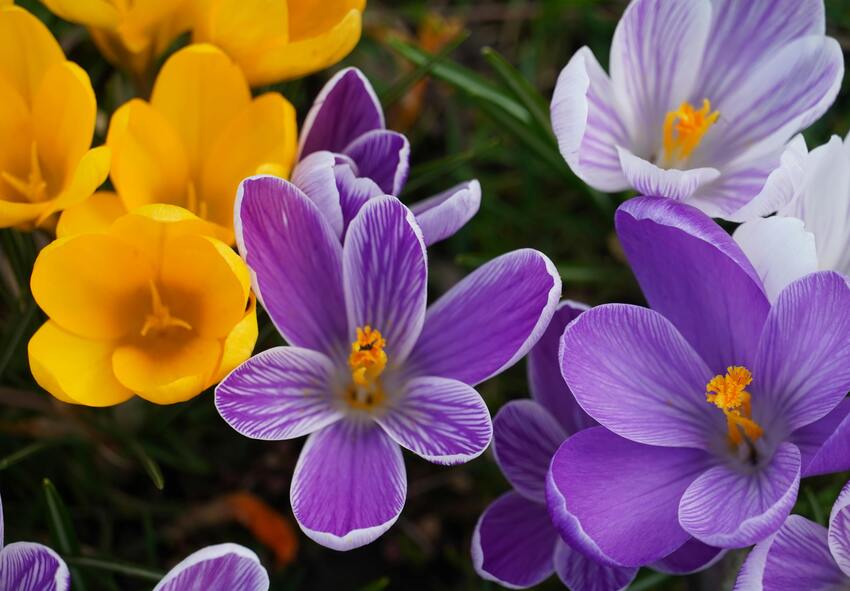
Crocuses are available in a variety of colors that can suit different garden themes and planting schemes. Some shades are especially popular because of their visual appeal and ability to blend harmoniously with other spring flowers.
The most common crocus colors include:
- Purple and violet– Among the most recognizable crocus colors, these shades create a rich and elegant appearance. They are often used in both formal and informal garden designs.
- Lavender and lilac– Softer than deep purple varieties, these colors provide a delicate and romantic touch, making them ideal for pastel-themed plantings.
- White– White crocuses symbolize freshness and purity. They brighten flower beds and create beautiful contrasts when paired with darker colors.
- Yellow– Bright yellow crocuses bring warmth and energy to the garden. Their sunny appearance makes them highly visible in early spring landscapes.
- Cream and pale yellow– These subtle shades offer a gentler alternative to vibrant yellow and work well in naturalistic designs.
- Blue and bluish-purple– Cool-toned crocuses create a calming effect and pair beautifully with white and yellow spring flowers.
- Striped and variegated shades– Some crocus varieties feature petals with contrasting stripes, blending multiple colors within a single bloom.
These colors combine exceptionally well with one another and with other spring-flowering bulbs such as tulips, daffodils, and hyacinths. Together, they create a harmonious and visually appealing spring garden.
Combining Multicolored Crocuses in the Garden
Planting crocuses in multiple colors can significantly enhance the decorative value of a garden. Rather than arranging individual flowers separately, gardeners often achieve the most attractive effect by planting large groups of bulbs together. This approach allows colors to flow naturally across the landscape, creating the impression of a vibrant floral carpet.
The choice of color combinations influences the overall mood of the planting. Pairing purple and white crocuses creates an elegant contrast that works particularly well in formal garden settings. Yellow and white combinations produce a bright and refreshing appearance, while blue and purple shades create a softer and more harmonious effect.
For gardeners seeking a more dramatic display, yellow and purple crocuses provide a striking contrast that immediately attracts attention. Softer combinations, such as lilac and white, contribute a romantic atmosphere that complements traditional garden styles.
The most natural-looking displays are often achieved by repeating color groups throughout the planting area rather than concentrating them in a single location. This technique helps unify the design while maintaining visual interest. By carefully blending shades and planting crocus bulbs in generous clusters, gardeners can create spring displays that appear both organic and professionally designed.
Tips for successful color combinations include:
- Plant at least 10–20 bulbs of the same color together.
- Repeat color groups throughout the planting area for cohesion.
- Use contrasting colors sparingly to create focal points.
- Blend pastel shades for a softer and more natural appearance.
- Consider bloom timing to ensure colors appear simultaneously.
Single-Color and Two-Color Crocus Varieties
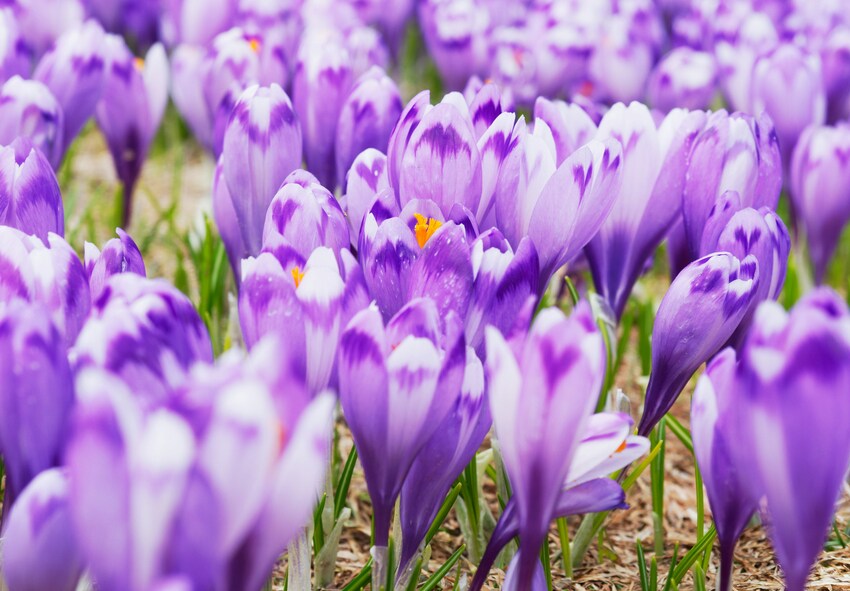
Crocus varieties can generally be divided into two categories: single-color and two-color types. Each offers unique decorative advantages and can serve different design purposes.
Single-Color Crocuses
Single-color crocuses feature blooms that maintain a consistent shade throughout the petals. These varieties are valued for their simplicity, elegance, and ability to create a clean and organized appearance.
Large plantings of a single color can have a dramatic impact while still maintaining a sense of harmony and order. Large drifts of white, purple, or yellow crocuses can create a striking yet refined display that draws attention without appearing overly complex.
Two-Color Crocuses
Two-color crocuses, on the other hand, display combinations of shades within the same flower. Their petals may feature stripes, contrasting edges, or subtle color transitions that add complexity and visual interest. These varieties often draw attention because of their unique patterns and dynamic appearance.
These varieties add movement and excitement to spring compositions and can become focal points in flower beds or borders. Even a small planting of two-color crocuses can become a focal point in the garden.
Combining both single-color and two-color crocuses often produces the most balanced design. The simplicity of solid-colored blooms helps anchor the composition, while patterned varieties introduce variety and character.
How to Create a Vibrant Composition with Crocuses
Creating a beautiful crocus display involves thoughtful planning of colors, planting locations, and companion plants. A well-designed composition can transform even a small garden space into a colorful spring showcase.
Choose Colors According to Garden Style
The choice of crocus colors should reflect the overall style and atmosphere of the garden. White, lavender, and pale yellow varieties are particularly suitable for romantic, traditional, and classic landscapes, where they create a soft and elegant appearance. Gardeners seeking a more dramatic effect may prefer combinations of purple and yellow crocuses, which provide strong visual contrast and attract immediate attention.
Blue and white shades are often associated with refined and calming garden designs, making them ideal for creating a peaceful spring display. For a more naturalized look, mixing several colors together can mimic the appearance of a wildflower meadow and create a vibrant seasonal carpet.
Select the Right Planting Locations
Proper placement is essential for maximizing the decorative value of crocuses. Planting them along pathways allows visitors to enjoy their blooms up close during the early spring months. Crocuses also perform exceptionally well in rock gardens, where their delicate flowers stand out among stones and low-growing plants.
Naturalizing bulbs in lawns creates a spontaneous and organic effect, making the flowers appear as though they have emerged naturally from the landscape. In addition, crocus bulbs can be planted along the edges of flower beds and borders, where they provide early-season color before many other plants begin to bloom.
Combine Crocuses with Other Spring Flowers
Crocuses can be successfully combined with a wide range of spring-flowering plants to create richer and more dynamic compositions. When planted alongside tulips, they contribute additional layers of color and visual interest by contrasting with the taller blooms. Pairing crocuses with daffodils results in a classic spring display that remains popular in both formal and informal gardens.
Hyacinths complement crocuses by adding fragrance and texture, enhancing the sensory appeal of the planting. Early-flowering perennials and ground covers can also be incorporated to provide continuity and maintain decorative interest throughout the spring season.
Design Principles for Maximum Impact
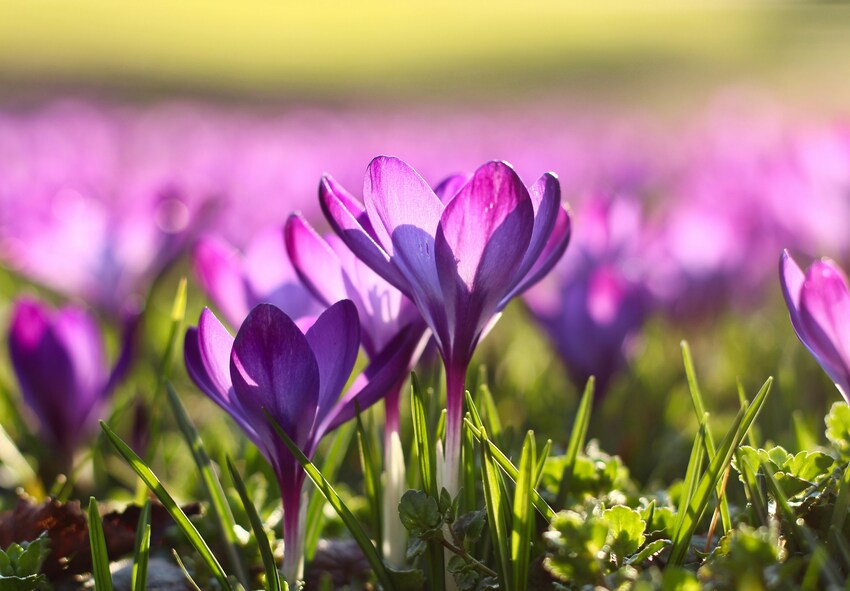
To achieve the strongest visual effect, crocus bulbs should be planted in generous groups rather than arranged in straight lines or isolated clusters. Repeating similar colors throughout the garden helps establish a sense of unity and cohesion within the overall design.
Bright and vibrant shades should be balanced with softer or more neutral tones to prevent the composition from appearing overwhelming. Including both early- and mid-spring flowering plants within the same planting scheme can further extend the season of interest, ensuring that the garden remains colorful and attractive for a longer period.
Conclusion
The remarkable diversity of crocus colors makes these flowers one of the most versatile and rewarding additions to any spring garden. From pure white and soft lavender to vivid yellow and deep purple, crocuses offer endless opportunities for creative garden design.
Whether planted in single-color drifts, mixed-color groupings, or alongside other spring-flowering plants, crocuses can transform outdoor spaces with vibrant seasonal beauty. By experimenting with different shades, varieties, and planting combinations, gardeners can create personalized spring displays that reflect their own style while enhancing the overall landscape. With thoughtful planning, crocuses can provide a stunning and memorable welcome to the gardening season year after year!
Frequently Asked Questions (FAQs) about Crocus Colors
1. What are the most common crocus colors found in gardens?
The most common crocus colors include purple, violet, white, yellow, lavender, lilac, and blue shades. Many gardeners choose these colors because they complement one another and create beautiful spring displays. In addition to solid-colored flowers, some crocus varieties feature striped or bi-colored petals, adding extra visual interest.
2. Which crocus colors look best when planted together?
Several color combinations work particularly well in garden settings. Purple and white crocuses create an elegant contrast, while yellow and white varieties provide a fresh and cheerful appearance. Blue and purple shades offer a harmonious look, whereas yellow and purple combinations create a bold statement.
3. Can I order crocus bulbs from your online store?
Yes! You can order high-quality crocus bulbs directly from our online store Dutch-bulbs.com. We offer carefully selected varieties suited for home gardens, containers, and naturalized areas. Ordering online allows you to choose from multiple options and receive bulbs ready for planting at the right time of year.
4. Are two-color crocuses better than single-color varieties?
Neither type is necessarily better, as both offer unique decorative benefits. Single-color crocuses create a clean, organized, and elegant appearance, especially when planted in large groups. Two-color varieties attract attention through their distinctive patterns and contrasting shades.
5. Can crocuses be combined with other spring flowers?
Yes, crocuses pair exceptionally well with many other spring-blooming plants. They are commonly planted alongside tulips, daffodils, and hyacinths to create layered displays with varying heights, colors, and textures. Crocuses also work well with early perennials and ground covers.
Published: 08.06.2026