



Tulips are among the most versatile spring flowers, offering an incredible range of colors, heights, and bloom times that make them suitable for almost any garden style. While they are striking on their own, their true decorative potential is revealed when they are thoughtfully combined with other spring-flowering plants. Carefully planned flowerbeds provide continuous color, varied textures, and a balanced composition that remains attractive throughout the season.
This guide is intended for gardeners, landscape enthusiasts, and anyone planning a spring display who wants practical ideas for combining tulips with compatible flowering plants. By selecting species that complement one another in height, color, and blooming period, it is possible to create flowerbeds that look professionally designed while remaining easy to maintain.
The following sections explain the key principles of successful flowerbed planning before presenting several ready-made planting combinations featuring tulips and some of the most popular spring bulbs and companion flowers, many of which are included in the Danish collection. Our gardening blog is a perfect place to find all the information you need!
Principles of Designing a Spring Flowerbed
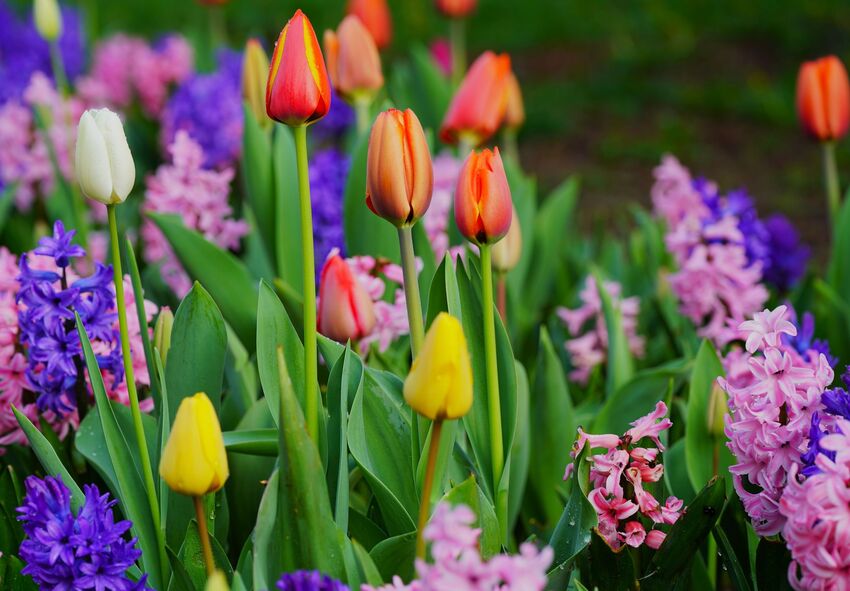
Creating an attractive spring flowerbed involves more than simply choosing beautiful flowers. Successful combinations rely on balance, proportion, and careful planning so that every plant contributes to the overall composition. Considering factors such as plant height, flowering sequence, color harmony, and growing requirements helps ensure that the display remains decorative from the first blooms of early spring until late-season varieties finish flowering.
Combine Plants by Height
One of the simplest ways to create a visually balanced flowerbed is by arranging plants according to their mature height. Taller flowers naturally attract attention and often serve as focal points, while medium-sized plants fill the central areas and lower-growing species soften the edges of the planting.
Tulips are available in a wide range of heights, making them easy to integrate into different garden designs. Taller Darwin Hybrid and Lily-Flowered tulips work well toward the back of borders, whereas shorter Triumph or botanical tulips are ideal for the front of flowerbeds or along garden paths. Layering plants by height also ensures that every flower remains visible throughout the season rather than being hidden behind taller neighbors.
Coordinate Flowering Times
A well-designed flowerbed should provide color for as long as possible rather than producing a single short burst of flowering. This can be achieved by selecting plants with overlapping bloom periods that gradually replace one another as spring progresses.
Early crocuses and botanical tulips often begin flowering first, followed by hyacinths, daffodils, and many Triumph tulips. Later in spring, Darwin Hybrid tulips, Lily-Flowered varieties, alliums, and other ornamental bulbs continue the display, extending seasonal interest well into early summer. By coordinating flowering times, gardeners can enjoy a continuously evolving landscape instead of large gaps between blooming periods.
Create Harmonious Color Combinations
Color is one of the most influential elements in flowerbed design. Soft pastel shades create calm and elegant compositions, while bold contrasts produce energetic displays that immediately capture attention.
White tulips combine beautifully with nearly every spring flower and provide a neutral foundation for more vibrant colors. Pink tulips blend naturally with blue muscari or forget-me-nots, while yellow daffodils create cheerful combinations alongside red or orange tulips. Repeating selected colors throughout the flowerbed helps unify the planting and creates a more cohesive overall appearance.
Choose Plants with Similar Growing Requirements
The most successful flowerbeds combine plants that thrive under similar environmental conditions. Tulips perform best in fertile, well-drained soil with plenty of sunlight, and many other spring bulbs share these same preferences.
Selecting companion plants with comparable moisture and light requirements simplifies maintenance because the entire planting can be cared for using the same watering and fertilization routine. This approach also improves the long-term health of the flowerbed by ensuring that no species struggles because of unsuitable growing conditions.
Ready-Made Flowerbed Designs with Tulips
Once the basic design principles are understood, creating attractive spring flowerbeds becomes much easier. Certain plant combinations have proven successful for many years because they naturally complement one another in color, texture, height, and flowering sequence.
Many of the following flowers are also featured in the Danish bulb collection, allowing gardeners to recreate these professionally inspired combinations using high-quality planting material.
Tulips and Daffodils
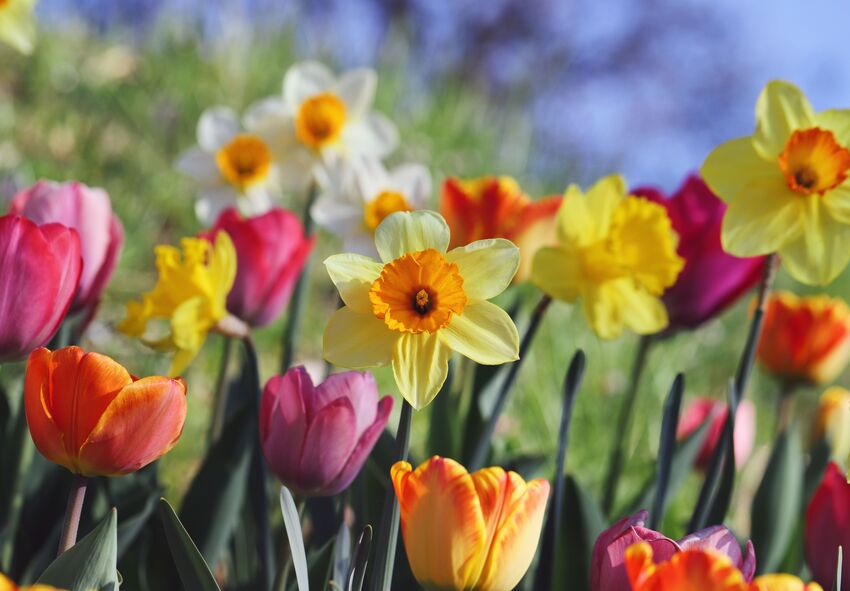
Tulips and daffodils form one of the most timeless spring combinations. Both flowers bloom during a similar period and thrive under nearly identical growing conditions, making them excellent companions in mixed borders and flowerbeds.
The upright elegance of tulips contrasts beautifully with the trumpet-shaped flowers of daffodils, creating visual variety without appearing overcrowded. White daffodils paired with deep purple or burgundy tulips produce sophisticated displays, while classic yellow daffodils combined with bright red or orange tulips create cheerful, high-impact spring plantings. Because both plants return reliably under favorable conditions, this combination remains popular in both formal and naturalistic gardens.
Tulips and Muscari
Muscari, commonly known as grape hyacinths, are among the best companions for tulips. Their compact size and dense clusters of blue flowers create a colorful carpet beneath taller tulip stems, adding depth and texture to the planting.
The rich blue shades of muscari provide striking contrast against white, pink, yellow, or red tulips while helping to conceal the bare lower stems that many taller tulip varieties develop as they mature. This combination is particularly effective along pathways, in borders, and in island flowerbeds where layered planting can be fully appreciated.
Tulips and Forget-Me-Nots
Forget-me-nots are one of the classic companion plants for tulips, creating soft carpets of delicate blue flowers beneath the taller blooms. Their low-growing habit fills empty spaces in the flowerbed and helps create a lush, natural appearance during spring.
The cool blue flowers complement almost every tulip color. White tulips gain additional elegance, pink varieties appear softer and more romantic, while red and orange cultivars become even more vibrant against the blue background. As the tulip foliage begins to mature after flowering, forget-me-nots continue covering the soil surface, helping maintain the flowerbed’s decorative appearance.
Tulips and Crocuses
Crocuses are among the earliest spring flowers and extend the flowering season when planted alongside tulips. Their low-growing habit allows them to bloom beneath emerging tulip foliage long before the taller plants reach full height.
As the crocuses finish flowering, the tulips gradually become the dominant feature, ensuring a smooth transition between early and mid-spring displays. This succession of blooms creates the impression of continuous flowering without requiring additional planting. The combination works particularly well in lawns, beneath deciduous trees, and in informal garden settings where a natural appearance is desired.
Tulips and Alliums
Alliums extend the seasonal interest of a spring flowerbed by beginning to flower as many tulips are reaching the end of their display. Their perfectly rounded flower heads provide a striking contrast to the elegant cup-shaped blooms of tulips, adding both height and architectural structure to the planting.
This combination is especially effective in mixed borders where gardeners want to maintain color beyond the peak tulip season. Purple alliums pair beautifully with white, pink, yellow, or deep red tulips, while the tall stems create an attractive vertical accent above the surrounding flowers. Since both plants prefer sunny locations with well-drained soil, they are easy to grow together and require very similar care throughout the season.
Tulips and Hyacinths
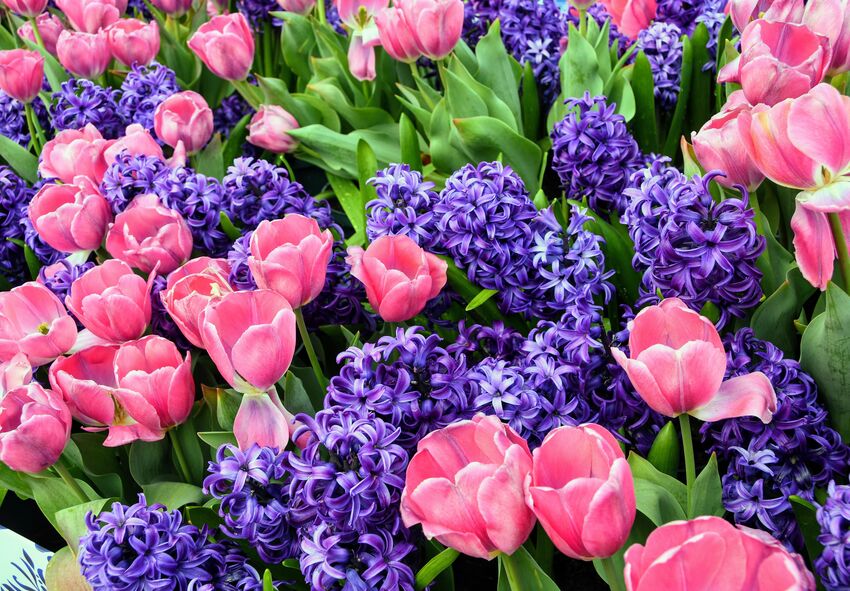
Combining tulips with hyacinths creates one of the most fragrant spring flowerbeds. While tulips contribute graceful elegance, hyacinths add densely packed flower spikes and an unmistakable perfume that enhances the garden experience.
The contrasting flower shapes produce an attractive visual balance, especially when complementary colors are selected. Soft pink tulips paired with lavender hyacinths create romantic displays, while white tulips combined with deep blue hyacinths provide crisp, elegant contrasts. Because both flowers bloom during a similar period, they work exceptionally well together in decorative containers as well as traditional garden beds.
How Many Bulbs Should You Plant?
The overall impact of a flowerbed depends not only on the plant varieties selected but also on the number of bulbs planted. Generous groupings create a fuller and more natural appearance, while sparse planting can leave gaps that reduce the visual effect. Planning bulb quantities before planting also helps maintain balance between tulips and their companion plants, ensuring that no single species dominates the composition unless intentionally used as a focal point.
Choosing the Right Number of Tulips
Tulips generally create the greatest visual impact when planted in generous groups rather than individually. Larger groups allow the flowers to be appreciated as cohesive blocks of color instead of isolated blooms scattered throughout the flowerbed.
The exact number depends on the available space and the desired effect. Smaller borders may require only modest groupings, while larger beds benefit from repeated clusters of tulips placed throughout the design to create rhythm and continuity. Repeating the same variety in several locations also helps unify the overall composition.
Balancing Companion Flowers
Companion plants should support the tulips rather than compete with them. Lower-growing species, such as muscari, crocuses, and forget-me-nots, naturally provide a colorful base beneath the taller tulips without obscuring the flowers.
Medium-height companions like hyacinths and daffodils create additional layers while maintaining a balanced appearance. Taller plants such as ornamental alliums can be positioned behind or among later tulip varieties to extend the display and add vertical structure. Thoughtful proportions between the different species create harmonious plantings that remain visually pleasing throughout the flowering season.
Planting in Groups for a Natural Look
One of the simplest ways to make a flowerbed appear professionally designed is to avoid planting tulip bulbs with other flower bulbs in straight rows. Instead, arranging flowers in irregular clusters creates a more natural effect that resembles how spring bulbs often grow in nature.
Grouping several bulbs of the same variety together allows their color and flower form to stand out more effectively. Repeating similar clusters throughout the planting also guides the eye naturally across the flowerbed and creates a sense of unity without excessive symmetry. This approach works equally well in formal borders, informal cottage gardens, and naturalized landscapes.
Tips for Creating a Harmonious Spring Display
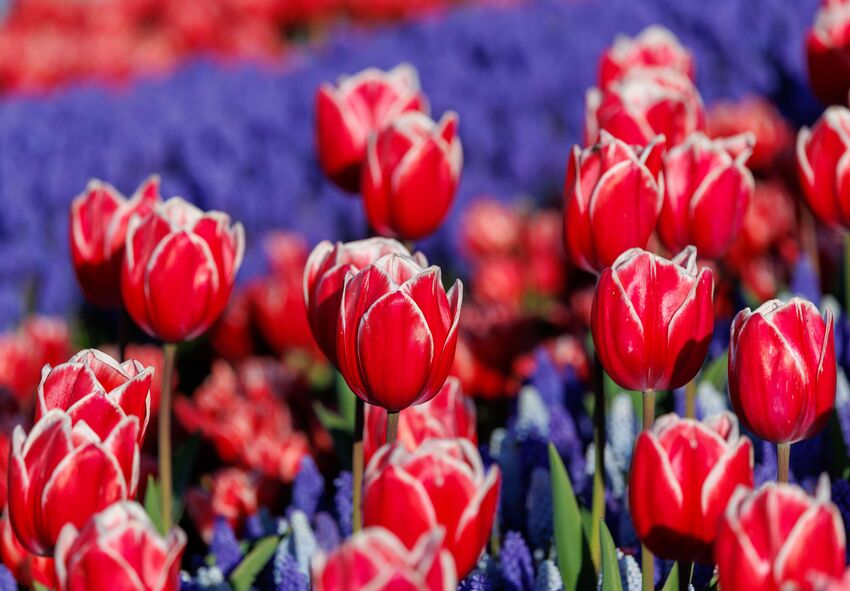
A successful flowerbed combines thoughtful planning with a willingness to experiment. Even simple adjustments to color placement, plant selection, or flowering sequence can dramatically improve the final appearance of a spring garden. By considering the relationship between flowers rather than viewing each plant individually, gardeners can create displays that remain attractive for many weeks:
- Repeat Colors Throughout the Flowerbed: Repeating selected colors in different parts of the planting creates visual harmony and prevents the flowerbed from appearing fragmented. Rather than grouping every color into separate sections, allowing similar shades to reappear throughout the design helps connect different areas into one cohesive composition.
- Mix Flower Shapes and Textures: A flowerbed becomes more interesting when it combines different flower forms instead of relying on a single shape. Tulips naturally pair well with the rounded flower heads of alliums, the dense spikes of hyacinths, the trumpet blooms of daffodils, and the delicate clusters of muscari or forget-me-nots.
- Plan for Continuous Spring Bloom: One of the greatest advantages of combining different spring flowers is the ability to extend the flowering season. By selecting early, mid-season, and late-flowering species, gardeners can enjoy an evolving display that changes gradually over several weeks.
Conclusion
Tulips become even more spectacular when thoughtfully combined with other spring-flowering plants. By considering plant height, flowering times, color harmony, and growing requirements, gardeners can create flowerbeds that remain balanced, colorful, and attractive throughout the season.
Classic combinations such as tulips with daffodils, muscari, hyacinths, crocuses, alliums, and forget-me-nots have proven their value over many years, while the wide selection of bulbs available in the Danish collection offers countless opportunities for creating unique arrangements tailored to individual preferences.
Careful planning, generous group planting, and the thoughtful repetition of colors and flower forms allow even modest gardens to achieve a professionally designed appearance. With the right combinations and quality planting material, every spring flowerbed can become a vibrant celebration of the new gardening season!
Frequently Asked Questions (FAQs) about Companion Plants for Tulips
1. Which flowers grow best alongside tulips?
Tulips pair beautifully with many spring-flowering plants, including daffodils, muscari, hyacinths, crocuses, alliums, and forget-me-nots. These flowers share similar growing requirements and often bloom at complementary times. Their different heights, flower shapes, and colors help create balanced, visually appealing flowerbeds that remain attractive throughout the spring season while providing continuous interest as different plants come into bloom.
2. Can I order tulips and companion spring flowers from your online store?
Yes, you can order a wide selection of tulip bulbs and companion spring flowers from our online store Dutch-bulbs.com, including daffodils, hyacinths, crocuses, alliums, and many other ornamental bulbs featured in our Danish collection. We offer premium-quality planting material to help you create beautiful, harmonious flowerbeds that provide vibrant color throughout the spring season.
3. How can I make my tulip flowerbed look more natural?
A natural-looking flowerbed is created by planting bulbs in irregular groups instead of straight rows. Repeating the same tulip varieties and companion plants throughout the bed helps unify the design while maintaining an informal appearance. Combining flowers of different heights and bloom times also creates a layered effect that resembles natural spring landscapes and provides continuous color throughout the season.
4. How many tulip bulbs should I plant together?
Tulips generally create the strongest visual impact when planted in generous clusters rather than individually. Small groups may suit compact gardens, while larger flowerbeds benefit from repeated plantings of the same variety across the design. Group planting creates fuller displays, improves color impact, and gives the flowerbed a more professional and harmonious appearance than scattered individual bulbs.
5. Can tulips and spring bulbs stay in the same flowerbed for several years?
Many spring bulbs, including tulips, daffodils, muscari, crocuses, and alliums, can successfully share the same flowerbed for several seasons when planted in suitable soil and cared for properly. While some tulip varieties perform best when replanted with fresh bulbs each year, many companion plants naturalize well and gradually create fuller, more colorful spring displays with minimal maintenance.
Published: 20.07.2026