



A natural floral carpet is a planting designed to create the impression that flowers have appeared naturally across the garden rather than being arranged in formal rows or isolated groups. Minor bulbs are particularly well suited to this style because their compact growth, delicate flowers, and ability to multiply can gradually transform bare areas into colorful spring displays.
Combining several small bulbs that bloom at slightly different times makes the effect even more attractive. Snowdrops and winter aconites can begin the display very early, followed by botanical crocuses, chionodoxa, muscari, and anemones. With the right selection of plants, a naturalized planting can develop into a succession of color, texture, and flower shapes that change throughout the spring. Our gardening blog is a perfect place to find all the information you need!
What Are Minor Bulbs?
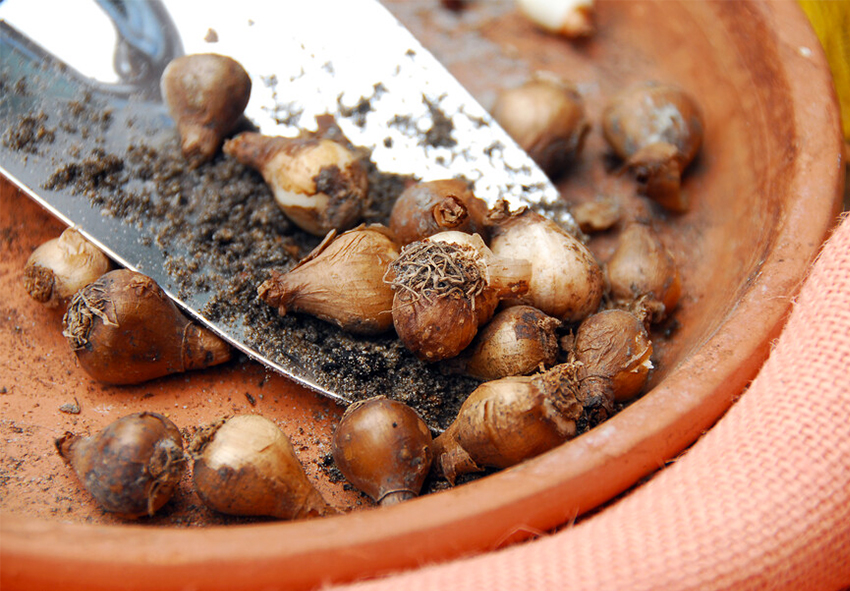
The term minor bulbs is commonly used for small-flowering bulbous plants and related underground storage organs, including certain bulbs, corms, and tubers. Unlike large ornamental bulbs such as tulips, daffodils, or giant alliums, minor bulbs generally produce smaller flowers and foliage and are often valued for their ability to form informal groups over time.
Their smaller scale makes them especially useful in naturalistic garden design. Instead of becoming isolated focal points, they can be planted in drifts, scattered through lawns, positioned along woodland edges, or tucked beneath deciduous trees and shrubs.
Many minor bulbs are also well suited to naturalization. When growing conditions are favorable, established plants can produce offsets, seedlings, or larger clumps, gradually expanding their presence. This makes them particularly effective for creating a garden that looks less deliberately planted and more like a naturally occurring spring landscape.
The Best Minor Bulbs for Natural Floral Carpets
There are many small spring-flowering bulbs and bulb-like plants that can contribute to a natural floral carpet. The best combinations are usually those that differ in flower color, shape, height, and flowering time while sharing similar growing requirements.
Botanical Crocuses
Botanical crocuses are among the most useful plants for creating an early spring floral carpet. They are generally compact, flower early, and produce brightly colored blooms that are particularly striking when several plants are grouped together. Depending on the variety, flowers may appear in shades of purple, white, yellow, or combinations of these colors. Their low growth makes them suitable for lawns, rock gardens, borders, and spaces beneath deciduous trees.
For a naturalized effect, botanical crocuses work particularly well when planted in irregular groups rather than evenly spaced rows. Once established in a suitable location, they can gradually form larger groups and contribute to a more substantial spring display.
Snowdrops
Snowdrops are one of the classic signs that winter is coming to an end. Their small white flowers and slender foliage can brighten the garden when many other plants are still dormant. Snowdrops are often most convincing when planted in groups rather than as isolated bulbs. Established clumps can expand over time, helping create the impression of a naturally occurring colony.
They are particularly effective in woodland-style plantings, beneath deciduous trees, and around shrubs where they can create a soft, natural appearance. Their white flowers also combine beautifully with early yellow winter aconites and colorful crocuses.
Muscari
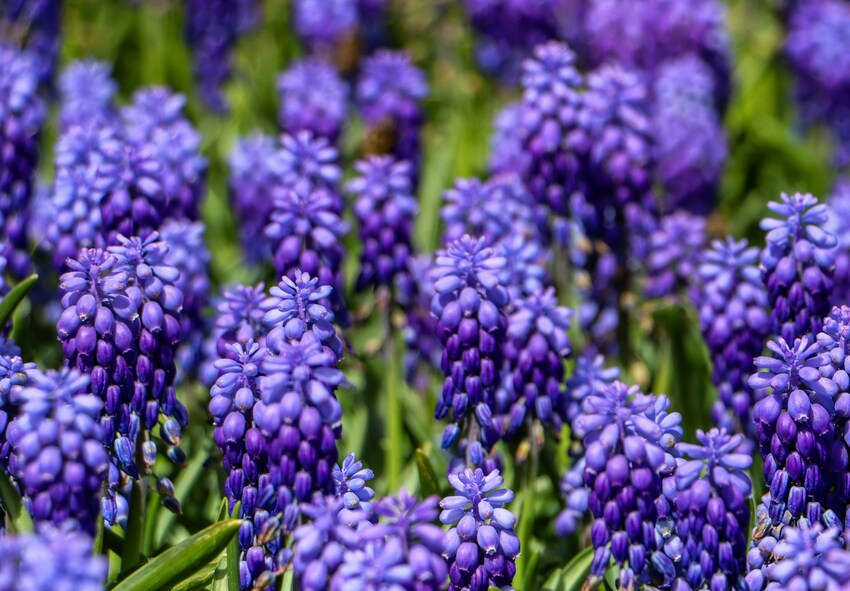
Muscari, often known as grape hyacinths, adds a strong layer of blue or purple color to a spring bulb planting. Its compact flower clusters create a dense visual effect that contrasts nicely with the more open flowers of crocuses and chionodoxa.
Muscari is particularly useful for strengthening the display in early to mid-spring. Its rounded flower clusters can also provide a different texture from cup-shaped crocuses and delicate anemones. Try combining muscari with earlier-flowering bulbs so that the planting develops gradually rather than appearing all at once. Repeating muscari in several areas can also help connect different parts of the garden visually.
Chionodoxa
Chionodoxa, commonly called glory-of-the-snow, produces small star-shaped flowers that can create a soft, scattered effect across the garden. Its delicate appearance makes it particularly suitable for naturalistic planting schemes.
It can fill spaces between larger spring bulbs and works well when allowed to spread informally. Rather than planting every bulb at an identical distance, use loose groups with occasional gaps. The blue, violet, pink, or white flowers can also complement the stronger colors of crocuses and muscari while adding a lighter, more open texture to the planting.
Anemones
Anemones can bring a different character to a minor-bulb planting. Their delicate flowers and fine foliage provide a softer appearance than dense clusters of muscari or the compact blooms of crocuses. They can be useful in woodland-style, informal, and partially shaded planting schemes, depending on the species and growing conditions. Their flowers can also help bridge the transition between very early spring bulbs and later spring plants.
When combining anemones with other minor bulbs, consider their flowering periods and growing requirements. Pairing them with bulbs that bloom slightly earlier or later can help maintain visual interest across a longer part of the season.
Winter Aconite
Winter aconite is one of the earliest plants to bring strong color to the garden. Its cheerful yellow flowers can appear very early in the season, sometimes while the surrounding landscape is still largely dormant. Its low-growing habit makes it excellent for naturalized planting beneath deciduous trees and shrubs. The yellow flowers are particularly effective when combined with white snowdrops or purple and yellow crocuses.
Because winter aconite is so early, it can form the first layer of a floral carpet before later bulbs take over. Planting it in groups helps emphasize its bright color and creates a more convincing naturalized effect.
Cyclamen
Cyclamen can add distinctive flowers and attractive foliage to naturalistic planting areas. Depending on the species, flowering may occur at different times, so it is important to choose plants suited to the conditions and season of interest in your garden.
Their patterned or attractively shaped foliage can provide interest even when flowers are not present. Cyclamen can work especially well in sheltered areas, woodland-style gardens, or beneath trees where conditions suit the particular species. When used alongside minor bulbs, cyclamen can extend seasonal interest beyond the earliest spring display. Its different flower and foliage forms also add variety to a planting that might otherwise rely heavily on similar bulb shapes.
How to Design a Natural Floral Carpet
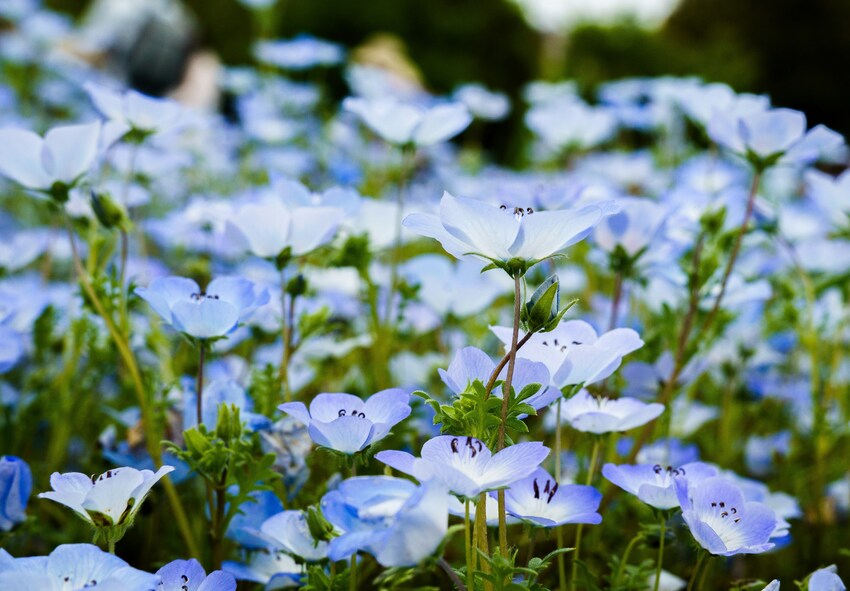
Creating a convincing floral carpet is about more than planting large numbers of bulbs. The arrangement, flowering sequence, colors, and surrounding plants all influence whether the result feels natural or overly formal.
Choose a Naturalistic Planting Pattern
Avoid perfectly spaced rows when your goal is to create a natural-looking display. Instead, use irregular groups and loose drifts that mimic the way plants might spread in nature. You can scatter bulbs across an area or plant them in clusters of different sizes. A few larger groups mixed with smaller groups will usually look more convincing than identical blocks repeated at regular intervals.
Planting clusters rather than individual bulbs also creates stronger visual impact during flowering. Over time, the plants can expand and fill some of the spaces between the original groups.
Combine Bulbs with Different Flowering Times
One of the easiest ways to make a natural floral carpet more dynamic is to combine plants that flower in succession. Very early species such as winter aconite, snowdrops, and botanical crocuses can begin the display. Chionodoxa, muscari, and some anemones can then contribute color during early to mid-spring. Depending on the species and local climate, cyclamen and other compatible plants can provide additional seasonal interest.
Overlapping flowering periods are particularly useful because they reduce long gaps between displays. Instead of having one short burst of color, the planting gradually changes as different plants come into flower and fade.
Layer Color, Height, and Flower Shape
Color is an important part of a floral carpet, but it is not the only consideration. Combining yellow winter aconites with white snowdrops, purple or yellow crocuses, blue muscari, and star-shaped chionodoxa creates a richer visual composition than relying on a single flower form.
Consider combining cup-shaped, bell-shaped, star-shaped, and rounded flowers as well. Although minor bulbs are generally low-growing, differences in height and foliage shape can still add depth. A useful approach is to keep the overall planting relatively low and informal while allowing individual species to provide different layers of color and texture.
Where to Plant Minor Bulbs for a Natural Carpet
The right location is essential for successful naturalization. Choose areas that suit the light, drainage, and soil requirements of the selected plants, and consider how the space will be managed after flowering.
- Under deciduous trees: Many early bulbs can take advantage of sunlight reaching the ground before deciduous trees develop their full canopy. This creates an excellent setting for woodland-style spring displays.
- Along lawn edges: Naturalized bulbs can soften the transition between lawn and planting areas. Choose species and planting locations carefully, particularly if the lawn will be mowed while bulb foliage is still green.
- Beneath shrubs and perennials: Minor bulbs can fill bare ground beneath established plants and provide early-season color before larger perennials emerge.
- Rock gardens and slopes: Small bulbs can fit naturally into gaps between rocks and other low-growing plants. Slopes can also provide interesting planting opportunities for loose groups of bulbs.
- Woodland-style garden areas: A woodland-inspired setting can provide the informal atmosphere that suits many minor bulbs. Combine them with compatible groundcovers, ferns, shrubs, and other shade-tolerant plants where appropriate.
How to Make the Carpet Look Natural
A successful naturalized planting should not look as though every bulb was measured and positioned individually. The goal is to create variation while still maintaining enough repetition for the display to feel cohesive. Vary the spacing rather than following a grid.
Use larger and smaller groups together, leaving occasional open areas between them. Repeat the same species throughout the planting instead of restricting each type to a single section, as repetition helps create a more unified effect.
Mix complementary species while considering their different growth habits and environmental needs. For example, groups of snowdrops, crocuses, and winter aconites can overlap visually without needing to occupy separate beds. It is also useful to leave some gaps.
Naturalized plantings often become more convincing as bulbs multiply and expand into open spaces over several seasons. A little room for change can be more valuable than trying to achieve maximum density immediately.
Caring for a Naturalized Minor Bulb Planting
Once established, many minor bulbs require relatively little attention, but appropriate care is important during the first seasons and while plants are developing their underground reserves:
- Watering: Water newly planted bulbs when conditions are dry and they need additional moisture to establish. After establishment, watering requirements depend on rainfall, soil type, plant selection, and the growing season. Avoid persistently waterlogged conditions unless a particular species is adapted to them.
- Feeding: Minor bulbs generally benefit most from growing in reasonably fertile soil suited to their requirements. If feeding is needed, use an appropriate fertilizer at the recommended rate rather than applying excessive amounts. Healthy soil and suitable growing conditions are more important than heavy fertilization.
- Managing foliage: Allow foliage to remain after flowering until it naturally begins to die back. The leaves help replenish the bulb’s energy reserves for the following season. Avoid cutting or pulling away green foliage simply because the flowers have finished.
- Mowing naturalized areas: If bulbs are planted in lawn, delay mowing the affected areas until the foliage has had enough time to mature and decline. Cutting leaves too early can reduce the plants’ ability to store energy for future growth.
- Allowing bulbs to multiply: Give established plants time to form larger clumps and spread. Naturalization is a gradual process, and the planting may become noticeably fuller after several growing seasons. Avoid disturbing bulbs unnecessarily once they have established.
Good post-bloom care for bulb flowers, including allowing foliage to mature naturally, helps bulbs replenish their energy reserves and prepare for healthy growth in the following season.
Conclusion
Minor bulbs may be small, but their combined effect can be remarkably impressive. When botanical crocuses, snowdrops, muscari, chionodoxa, anemones, winter aconites, cyclamen, and other compatible plants are arranged thoughtfully, they can transform lawns, woodland edges, borders, and spaces beneath trees into natural-looking floral carpets.
The key is to think beyond individual plants. Choose species that suit the growing conditions, combine different flowering periods, vary colors and flower shapes, and use irregular groups instead of rigid planting patterns. Most importantly, give the planting time to develop.
A natural floral carpet rarely reaches its full potential in a single season. As bulbs establish, multiply, and gradually spread into surrounding spaces, the display becomes fuller and more organic. With a little patience, a collection of small bulbs can evolve into one of the most charming signs of spring in the garden!
Frequently Asked Questions (FAQs) about Natural Floral Carpets
1. What are the best minor bulbs for creating natural floral carpets?
Some of the best choices include botanical crocuses, snowdrops, muscari, chionodoxa, anemones, winter aconite, and suitable cyclamen species. These plants offer different flower colors, shapes, heights, and flowering periods. Combining several types can create a natural-looking succession of blooms while allowing the planting to become fuller as bulbs establish and multiply.
2. Can I order minor bulbs in your online store?
Yes, you can order minor bulbs for naturalized planting projects from our online store Dutch-bulbs.com. Depending on the available selection, you may look for botanical crocuses, snowdrops, muscari, anemones, and cyclamen. Always check the product information to choose species and varieties appropriate for your growing conditions.
3. When should I plant minor bulbs for naturalization?
Most spring-flowering minor bulbs are planted in autumn, while the soil is still workable but temperatures are beginning to cool. Exact planting time depends on the species, local climate, and soil conditions. Planting before the ground freezes generally gives bulbs time to establish roots before winter and supports strong growth when spring arrives.
4. How do I make a naturalized bulb planting look less formal?
Avoid straight rows and perfectly equal spacing. Instead, plant bulbs in irregular groups and loose drifts, using clusters of different sizes throughout the area. Repeating the same species in several locations creates visual continuity, while leaving some gaps gives bulbs room to spread naturally over subsequent seasons.
5. When can I mow an area planted with naturalized bulbs?
Wait until the bulb foliage has naturally yellowed and begun to die back before mowing a naturalized lawn area. The leaves need time after flowering to replenish the bulb’s energy reserves. Cutting them too early can weaken the plants and reduce flowering in future seasons, particularly when bulbs are still becoming established.
Published: 09.10.2026