



Lupines, belonging to the genus Lupinus, are among the most eye-catching plants for adding height, color, and structure to a garden. Their tall flower spikes rise above attractive palmate foliage, creating strong vertical accents that can transform an ordinary border into a more layered and dynamic planting scheme.
Their flowers are available in shades ranging from blue, purple, pink, and white to yellow and bicolored combinations. Thanks to this variety, lupines can be incorporated into romantic cottage gardens, informal perennial borders, naturalistic plantings, and even more restrained modern designs. Our gardening blog is a perfect place to find all the information you need!
Why Use Lupinus in Garden Design?
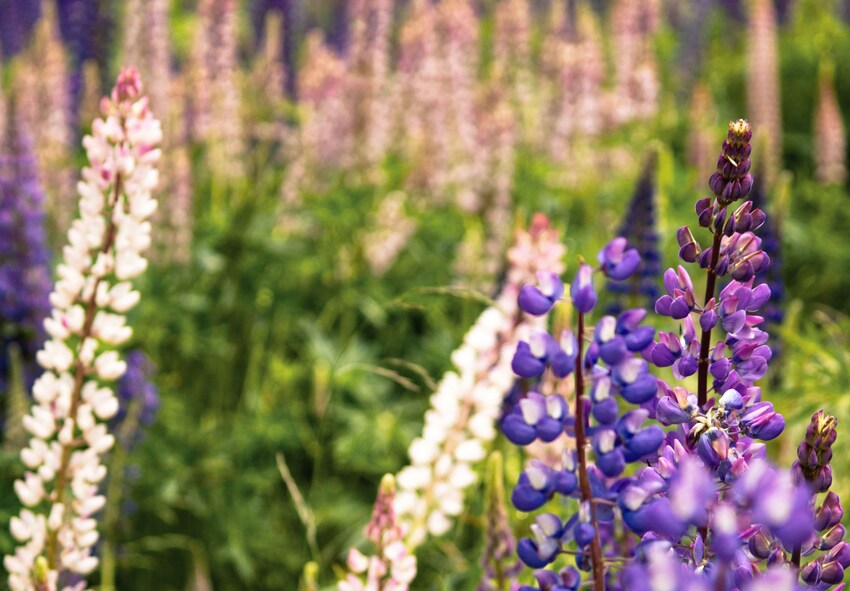
Lupines are versatile ornamental plants that can bring height, color, and structure to many types of gardens. Their tall flower spikes and attractive foliage make them especially useful for creating contrast and visual movement within mixed plantings. Consider these advantages when incorporating Lupinus into your garden design:
- Create vertical accents: Tall lupines draw the eye upward and add height to flower borders without taking up excessive horizontal space.
- Add bold color and form: Their upright flower spikes are available in many colors, providing strong seasonal accents and an architectural quality.
- Fill gaps between lower plants: Lupines can occupy the middle or upper layer of a border, helping connect low-growing groundcovers with taller perennials.
- Suit cottage gardens: Their abundant, colorful flowers work naturally alongside roses, foxgloves, delphiniums, and other informal cottage-garden plants.
- Enhance naturalistic planting: Groups of lupines can be combined with ornamental grasses and meadow-style perennials for a relaxed, organic appearance.
Choosing the Right Lupinus for Your Garden
Before choosing a lupine, consider both its appearance and the conditions in your garden. Different Lupinus species and cultivars can vary considerably in mature height, flower color, flowering period, and growing requirements.
Think about where the plant will be positioned, which colors already dominate the planting scheme, and how much height you want to introduce. Selecting the right type from the beginning will make the overall design more cohesive.
Popular Lupinus Types and Varieties
Garden lupines are commonly represented by hybrid cultivars derived from species such as Lupinus polyphyllus. The Russell hybrids are particularly well known for their tall flower spikes and broad range of colors. Examples include cultivars such as ‘Gallery Blue’, ‘Gallery Pink’, and ‘Gallery White’, which are generally more compact than some of the taller traditional forms.
Other selections, such as ‘The Governor’ and ‘My Castle’, are known for their striking flower colors and strong vertical presence. There are also shorter lupine varieties that can be useful toward the front or middle of a border rather than at the back.
When choosing among them, pay attention to mature height as well as flower color. Tall cultivars can create dramatic vertical accents, while compact varieties may be easier to incorporate into smaller borders or containers. Flowering times can also vary, so selecting several plants with complementary bloom periods can help maintain interest.
Consider the Growing Conditions
Lupines generally perform best in a sunny position where they receive several hours of direct light each day. Good light encourages strong growth and helps the flower spikes develop well. In very hot climates, some afternoon protection can be beneficial, particularly where intense summer heat is common.
Soil should be fertile but well drained. Lupines do not appreciate persistently waterlogged conditions, so heavy soils may need improvement before planting. Incorporating organic matter can improve soil structure while maintaining adequate drainage.
Choose the position carefully before planting Lupinus. Because many lupines develop a strong vertical presence, they are most effective where they have enough room to grow without being crowded by neighboring plants. Also consider the background: a darker hedge or mass of foliage can make pale flowers stand out, while lighter surroundings can emphasize deeper purple and blue varieties.
How to Use Lupinus in Flower Borders
Lupines can become striking focal points when positioned correctly in mixed borders. Their upright flower spikes contrast beautifully with plants that have rounded, airy, or spreading forms.
Use their height strategically rather than scattering them randomly throughout the garden. A well-planned arrangement allows lupines to connect different layers of planting and guide the eye through the border.
Create a Vertical Accent
Tall lupines are particularly effective toward the middle or back of a border. Their flower spikes can rise above lower perennials without requiring large amounts of horizontal space.
In a deep border, combine them with shorter plants in front and medium-height perennials around them. This creates a gradual transition between different heights instead of an abrupt wall of tall plants.
Plant in Groups
A single lupine can certainly make an impression, but several plants grouped together usually create a stronger visual effect. Groups of three, five, or more can make the flowers appear more intentional and help establish a clear focal point.
Repeating the same lupine color in different areas of the garden can also create rhythm. For example, a group of blue lupines in one border can be echoed near a path or another planting area, visually connecting separate parts of the garden.
Combine Different Heights
Layering is one of the simplest ways to make a flower border look fuller. Pair taller lupines with low-growing groundcovers or edging plants, then add medium-height perennials between the two.
This approach ensures that the foliage and flowers of shorter plants remain visible while the lupines provide the upper layer. The result is a more three-dimensional planting scheme rather than a collection of plants arranged at the same height.
Best Companion Plants for Lupinus
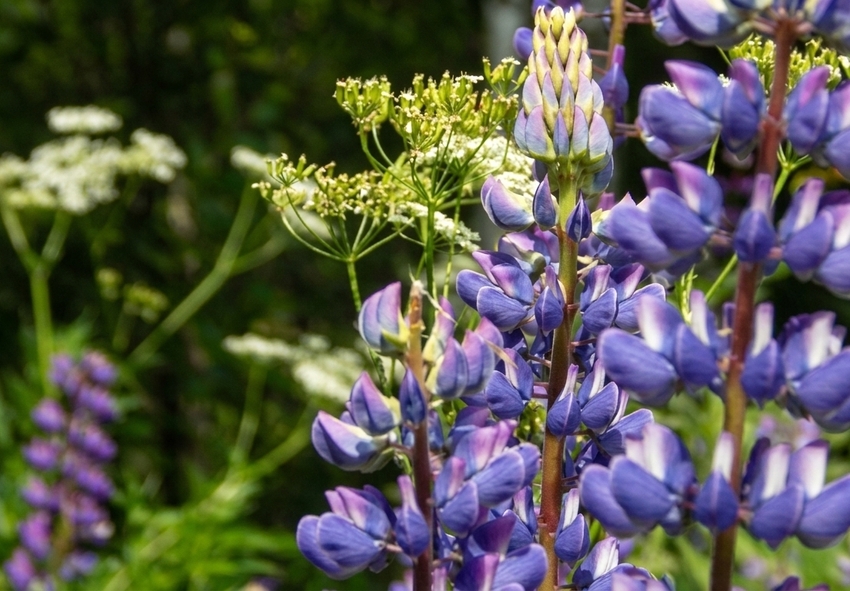
Lupines become even more effective when combined with plants that complement their shape, color, and flowering period. Good companions can soften their upright form while helping create a continuous display throughout the growing season.
Choose companions with similar preferences for light, soil, and moisture. This makes maintenance easier and prevents one plant from struggling because its neighboring plants require completely different conditions.
Roses
Lupines and roses are a natural combination for a romantic cottage-garden effect. The vertical flower spikes of lupines provide a contrast to the rounded, fuller shapes of rose flowers.
Plant lupines behind or near roses where their tall stems can rise through the planting without competing visually with the main rose display. Blue, purple, pink, or white lupines can be selected to complement the color of the roses.
Alliums
Alliums offer an interesting contrast because their flowers are generally rounded, while lupines produce tall, vertical spikes. Combining these different shapes creates a more dynamic planting scheme.
The two can work particularly well in contemporary or naturalistic borders. Their architectural forms provide visual structure, while their different flower shapes prevent the planting from looking repetitive.
Salvia
Salvia and lupines can create a sophisticated combination, particularly when their colors complement each other. Purple, blue, pink, and white flowers can be combined according to the desired mood.
Salvia can also help extend vertical interest within the border. Its flower spikes are generally more delicate and slender, creating a useful contrast with the fuller appearance of lupines.
Ornamental Grasses
Ornamental grasses are excellent for softening the strong vertical form of lupine flower spikes. Their fine foliage and gently moving stems provide texture and movement around the more substantial flowers.
In naturalistic gardens, combine lupines with grasses to create a meadow-inspired appearance. The contrast between bold flowers and fine grass blades can make the planting feel relaxed rather than overly formal.
Peonies and Other Large-Flowered Perennials
Peonies and other large-flowered perennials can provide a beautiful contrast to lupines. Their rounded flowers and broad foliage create a different visual texture, while the lupines add height.
Use these plants together to create a layered, abundant border. The key is to give each plant enough space so that the combination looks lush without becoming overcrowded.
Lupinus in Cottage Garden Design
Lupines are classic choices for cottage gardens because their tall, colorful flower spikes contribute to the informal abundance that defines this style. They look particularly natural when planted in generous groups rather than as isolated specimens.
Combine them with roses, foxgloves, delphiniums, daisies, and other flowering perennials to create a relaxed succession of shapes and colors. Allowing plants to intermingle slightly can make the border feel more spontaneous.
For the most convincing cottage-garden effect, avoid making every planting perfectly symmetrical. Repeat a few colors and plant forms throughout the border, but allow enough variation to create the charming, slightly informal character associated with this garden style.
Lupinus in Naturalistic and Modern Gardens
Although lupines are strongly associated with cottage gardens, they can also work beautifully in naturalistic planting. Use them in looser groups among ornamental grasses and other perennials to recreate the feeling of a meadow or wildflower planting.
Repeating lupines throughout a larger planting area can make the design feel intentional while still appearing natural. Rather than arranging every plant in rigid rows, create clusters with varying heights and textures.
In modern gardens, use fewer colors and repeat them consistently. For example, a restrained combination of white or purple lupines with ornamental grasses can create a clean, architectural appearance. Their tall flower spikes provide structure without requiring elaborate garden ornamentation.
How to Use Lupinus in Containers
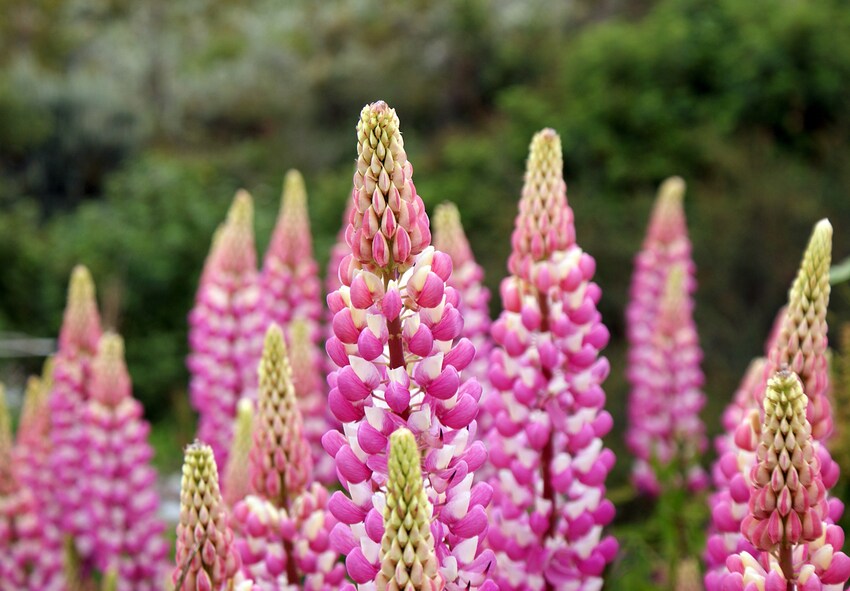
Lupines can also make impressive container plants, bringing their distinctive vertical flower spikes to patios, terraces, balconies, and other small outdoor spaces. With the right container and companions, they can become a striking focal point even without a traditional garden border. Keep these practical considerations in mind when growing Lupinus in containers:
- Choose a large, stable container: A sufficiently heavy pot helps prevent tall flowering plants from becoming top-heavy and tipping over.
- Prioritize drainage: Use a container with drainage holes and a well-draining potting mix to prevent excess moisture around the roots.
- Combine different plant heights: Place a lupine toward the center or back of a large container and surround it with shorter plants for a layered effect.
- Add trailing companions: Spreading or trailing plants can soften the container’s edges and create a fuller composition.
- Monitor moisture regularly: Container soil can dry out faster than garden soil, so check moisture frequently and water when needed.
- Use containers for color experiments: Try different lupine and companion-plant combinations in pots before repeating the same color scheme throughout the garden.
Conclusions
Lupinus can be a powerful design plant when its height, color, and distinctive flower form are used intentionally. Whether planted in a traditional cottage border, a relaxed naturalistic planting, or a contemporary garden, lupines can provide a strong vertical accent and help connect different layers of plants.
For the best results, choose varieties according to their mature size and growing conditions, group plants for greater visual impact, and combine their upright flower spikes with contrasting shapes and textures. Roses, alliums, salvias, ornamental grasses, and peonies can all help create attractive combinations.
Finally, consider flowering succession when planning your garden. Lupines may provide a spectacular seasonal display, but the garden should remain attractive after they finish blooming. Pairing them with plants that flower later or offer interesting foliage and seedheads will keep the border visually engaging throughout the growing season.
Frequently Asked Questions (FAQs) about Lupinus in Garden Design
1. Where should I plant lupines in the garden?
Plant lupines in a sunny position where they can receive several hours of direct light each day. Tall varieties work particularly well toward the middle or back of flower borders, while shorter types can be placed closer to the front. Choose fertile, well-draining soil and leave enough space for mature plants to develop comfortably.
2. What plants grow well with Lupinus?
Lupines combine well with plants that contrast with their upright flower spikes. Roses, alliums, salvias, ornamental grasses, and peonies can create attractive combinations of different shapes, heights, and textures. Foxgloves and delphiniums are also suitable companions for cottage-style borders. Choose plants with similar light, soil, and moisture requirements for easier maintenance.
3. Can Lupinus be grown in containers?
Yes, lupines can be grown in containers, particularly compact or shorter varieties. Choose a large, stable pot with drainage holes and use a well-draining potting mix. Monitor moisture regularly because containers can dry out faster than garden soil. Combining lupines with lower-growing or trailing plants can create an attractive layered display.
4. Can I order Lupinus from your online store?
Yes, you can browse an online store Dutch-bulbs.com for available Lupinus plants or seeds and choose varieties suited to your garden design. When selecting a plant, consider its mature height, flower color, growing requirements, and intended position. This helps ensure your chosen lupine fits naturally into your border, container, or overall planting scheme.
5. How can I use Lupinus in a cottage garden?
Lupines are excellent for cottage gardens because their colorful flower spikes create an informal, abundant appearance. Plant them in groups alongside roses, foxgloves, delphiniums, daisies, and other flowering perennials. Repeating a few colors throughout the border can create visual rhythm while allowing plants to intermingle naturally for a relaxed, traditional effect.
Published: 18.09.2026