



Hydrangeas are among the most rewarding shrubs to grow, and propagating them at home is both simple and cost-effective. Whether you want to expand your garden or share plants with friends, hydrangea propagation allows you to create healthy new shrubs from existing ones. With the right timing and techniques, even beginner gardeners can successfully grow hydrangeas from cuttings or divisions. Our gardening blog is a perfect place to find all the information you need!
Introduction to Hydrangea Propagation
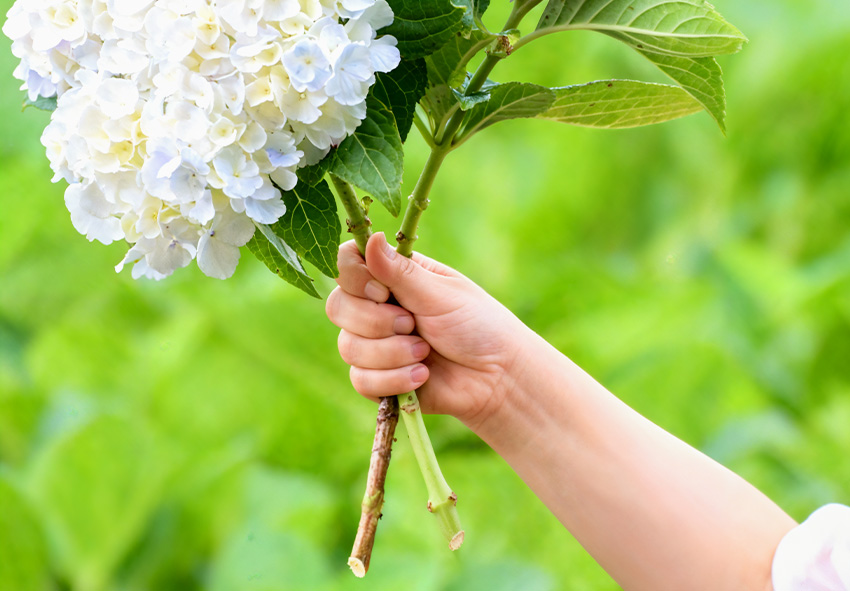
Hydrangea propagation involves creating new plants from an established hydrangea using natural growth processes. This method ensures the new plants are genetically identical to the parent plant, preserving flower color and growth habits. Learning how to propagate hydrangeas gives gardeners greater control over plant quality and garden design.
The most common methods include cuttings, layering, and division. Each technique suits different plant types and garden situations. Choosing the right method improves success rates and promotes healthy root development.
Best Time to Propagate Hydrangeas
Timing plays a critical role in successful hydrangea propagation, as root development depends on temperature and plant activity. Most hydrangeas root best during active growth phases when stems are flexible and full of energy. Choosing the correct season reduces stress and speeds up root formation.
Spring and Early Summer Propagation
Spring and early summer are ideal for propagating hydrangeas from cuttings. New growth is soft and roots quickly under warm conditions. Cuttings taken during this period establish faster and are ready for transplanting before winter.
Late Summer and Early Fall Options
Propagation in late summer is possible using semi-hardwood cuttings. While rooting takes longer, this method still produces strong plants if protected from cold. Avoid late fall propagation, as low temperatures slow root development.
Why Timing Matters for Root Development
Proper timing ensures cuttings have enough warmth and daylight to form roots. Cold or overly hot conditions can cause cuttings to fail. Aligning propagation with natural growth cycles improves survival rates.
Propagation by Layering
Layering allows hydrangeas to form roots while still attached to the parent plant. This low-risk method works well for mature shrubs. It requires minimal tools and attention.
When to Use Ground Layering
Use layering when branches are low and flexible. Spring and early summer are best. This technique is ideal for gardeners who prefer a hands-off approach.
Step-by-Step Layering Method
Layering is a reliable and beginner-friendly way to propagate hydrangeas while the stem remains attached to the parent plant. This method allows the cutting to receive nutrients as roots develop, resulting in strong, well-established plants. It works especially well for mature shrubs with flexible lower branches. Here’s an instruction for you:
- Select a healthy, low-growing stem: Choose a long, flexible branch that can be bent easily to the ground without breaking and shows no signs of disease or damage.
- Prepare the soil beneath the stem: Loosen the soil and mix in compost to improve drainage and encourage root development where the stem will be buried.
- Wound the stem lightly: Remove a small section of bark or gently scrape the underside of the stem to stimulate root growth at the contact point.
- Secure the stem to the soil: Bend the wounded section into the soil and anchor it with a garden pin, stone, or wire to keep it firmly in place.
- Cover and water regularly: Bury the pinned section with soil, leaving the tip exposed, and keep the area consistently moist throughout the growing season.
- Separate the new plant: After roots have formed, usually by the following season, cut the new plant from the parent and transplant it to its permanent location.
Separating and Transplanting New Plants
Once roots develop, cut the new plant away from the parent. Transplant it carefully to avoid root damage. Water thoroughly after planting.
Propagating Hydrangeas by Division
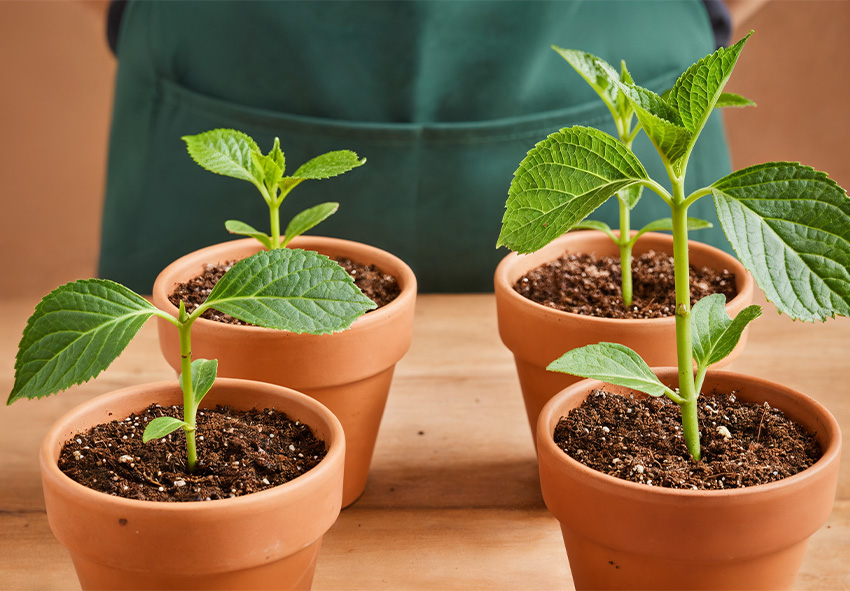
Division is effective for older, well-established hydrangeas. This method creates instant mature plants with minimal waiting time. It works best during dormancy.
Which Hydrangeas Can Be Divided
Not all hydrangeas respond well to division. Large-leaf and smooth hydrangeas tolerate division best. Avoid dividing young or weak plants.
How to Divide Mature Hydrangea Plants
Dig up the plant and gently separate the root ball into sections. Each division should have healthy roots and shoots. Replant immediately.
Caring for Divided Plants
Water divisions deeply and provide partial shade. Avoid fertilizing immediately. Allow plants time to recover before encouraging new growth.
Propagating Hydrangeas from Cuttings
Propagating hydrangeas from cuttings is the most popular and reliable method for home gardeners. This technique allows you to produce multiple plants from a single shrub. With proper care, cuttings root quickly and grow into strong plants. Here’s a step-by-step guide for you:
- Choosing Healthy Stems for Cuttings: Select non-flowering stems that are flexible and free from disease. Healthy green stems root faster than woody growth. Avoid using stems with buds or flowers.
- How to Prepare Hydrangea Cuttings: Cut a 10–15 cm stem just below a leaf node and remove the lower leaves. Leave one or two leaves at the top and trim them in half to reduce moisture loss. Clean cuts encourage quicker rooting.
- Rooting Cuttings in Soil: Plant cuttings in moist, well-draining soil and keep them in bright, indirect light. Covering them with a clear plastic dome helps maintain humidity. Roots typically develop within three to four weeks.
- Rooting Cuttings in Water: Hydrangea cuttings can also root in water, though this method produces weaker roots. Change the water regularly to prevent rot. Transfer rooted cuttings to soil as soon as roots appear.
- Aftercare for Newly Rooted Cuttings: Keep soil evenly moist but never waterlogged. Gradually reduce humidity as roots strengthen. New growth indicates successful hydrangea propagation.
Tools and Materials Needed for Hydrangea Propagation
Using the right tools improves success and reduces plant stress. Clean equipment prevents disease transfer. Preparation ensures smooth propagation.
Essential Gardening Tools
Sharp pruners, a trowel, and gloves are essential. Clean tools before use. Precision cuts promote healthy roots.
Recommended Soil and Containers
Use lightweight, well-draining soil and containers with drainage holes. Avoid heavy garden soil. Proper airflow supports root development.
Optional Rooting Aids and Supplies
Rooting hormone can speed up root growth but isn’t required. Humidity domes and misting bottles are helpful additions.
Common Mistakes to Avoid When Propagating Hydrangeas
Small errors can reduce success rates during hydrangea propagation. Understanding common mistakes helps ensure healthier plants. Prevention is easier than recovery:
- Using Weak or Flowering Stems: Flowering stems divert energy away from root development. Always choose strong, non-flowering growth. This significantly improves results.
- Overwatering or Poor Drainage: Soggy soil causes root rot and failure. Ensure proper drainage at all times. Moist—not wet—soil is key.
- Inadequate Light and Humidity: Low light slows growth, while dry air causes wilting. Provide bright indirect light and steady humidity. Balanced conditions lead to success.
Transplanting and Growing On New Hydrangea Plants
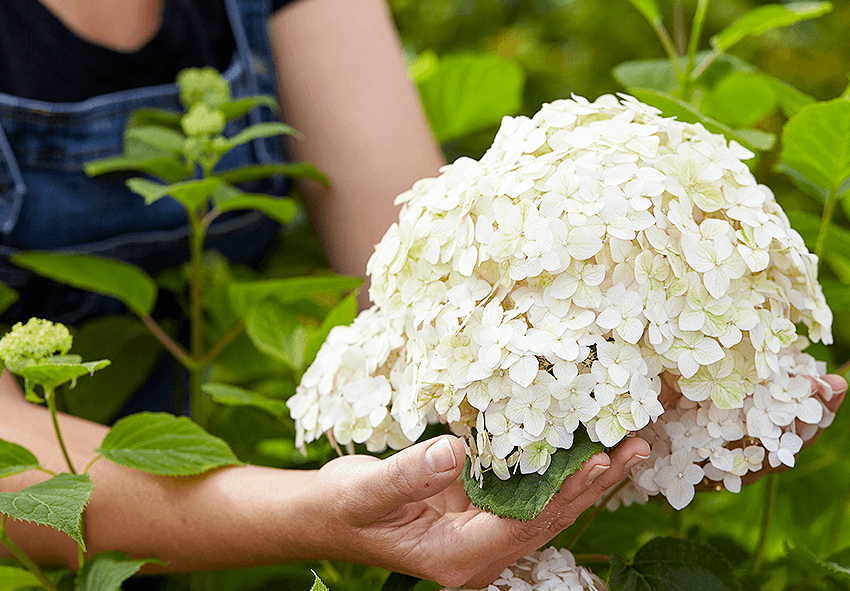
After rooting, young hydrangeas need gradual adjustment to outdoor conditions. Proper hydrangea transplanting reduces shock and encourages growth. Careful handling ensures long-term success.
When to Pot Up or Plant Outdoors
Transplant when roots are well-developed and new leaves appear. Choose mild weather. Avoid extreme heat or frost.
Hardening Off Young Hydrangeas
Introduce plants to outdoor conditions slowly over 7–10 days. Increase sun exposure gradually. This strengthens stems and leaves.
Long-Term Care for Propagated Plants
Provide regular watering, mulch, and protection from harsh sun. Fertilize lightly after establishment. Healthy care ensures strong flowering shrubs.
Conclusion
Hydrangea propagation is an easy and rewarding way to expand your garden naturally. Whether using cuttings, layering, or division, each method offers reliable results when done correctly. With proper timing, care, and patience, you can successfully grow beautiful hydrangeas that thrive for years to come!
Frequently Asked Questions (FAQs) about Hydrangea Propagation
1. What is the easiest way to propagate hydrangeas at home?
The easiest method for hydrangea propagation is using softwood cuttings taken in spring or early summer. Cut a healthy, non-flowering stem, remove lower leaves, and plant it in moist, well-draining soil. With consistent humidity and indirect light, roots usually develop within a few weeks.
2. Can hydrangeas be propagated in water successfully?
Yes, hydrangeas can be propagated in water, but this method is best for short-term rooting. While roots form quickly, they tend to be weaker than soil-grown roots. Once roots appear, transferring the cutting to soil promptly helps ensure stronger long-term growth and healthier plants.
3. When is the best time of year to propagate hydrangeas?
The best time to propagate hydrangeas is during spring and early summer when plants are actively growing. Warm temperatures and longer daylight hours promote faster root development. Late summer propagation is possible, but young plants need protection from cold weather to survive successfully.
4. Can I order Holland hydrangeas from your online store?
Yes, our online store Dutch-bulbs.com offers a wide selection of hydrangeas, including some varieties originating from Holland. Explore our collection to find the perfect hydrangea varieties for your garden or landscaping projects. We take pride in providing top-quality plants that are carefully cultivated and shipped with care.
5. How long does it take for hydrangea cuttings to root?
Hydrangea cuttings typically take three to four weeks to develop roots under ideal conditions. Factors such as temperature, humidity, and light influence rooting speed. Maintaining moist soil and high humidity while avoiding direct sunlight improves success rates and encourages healthy root formation.
Published: 26.12.2025