



Roses may be some of the most beloved garden plants, but they are also magnets for a range of pests that can weaken growth and diminish flowering. Effective rose pest control begins with knowing what you’re dealing with, identifying early symptoms, and applying the right treatment at the right time. Whether you prefer natural methods or need targeted solutions, understanding how to treat roses will help you maintain consistently healthy plants. Our gardening blog is a perfect place to find all the information you need!
Common Rose Pests and How to Identify Them
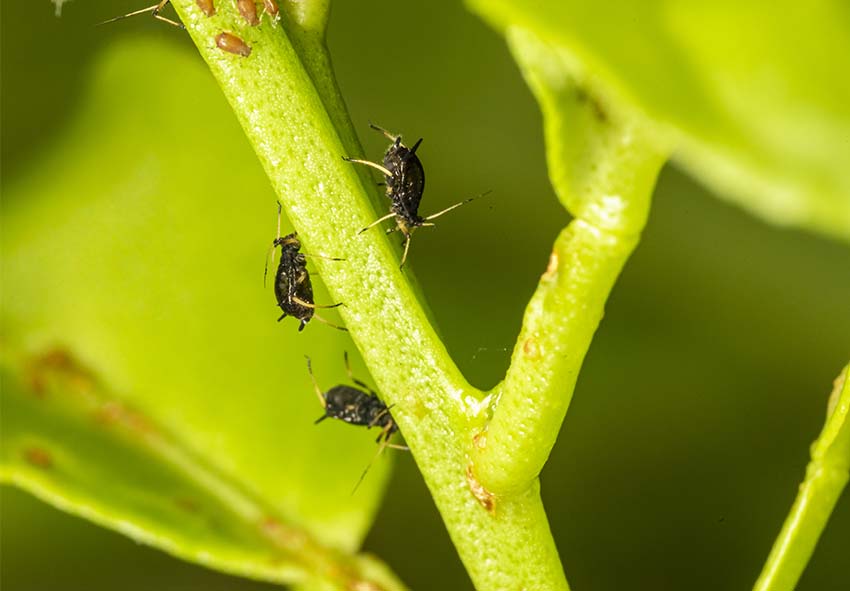
Roses are beloved for their beauty, but they often attract a variety of pests that can weaken plants and ruin blooms. Recognizing these insects early is essential for effective rose pest control and preventing damage from spreading. By learning the signs of common rose pests, gardeners can treat infestations quickly and keep roses healthy all season long.
Aphids
Aphids are among the most common rose pests, clustering on new growth and sucking sap from stems and buds. They cause curled leaves, distorted blooms, and sticky honeydew that attracts ants. Most infestations begin in early spring, so inspecting fresh shoots regularly helps you take action before damage spreads.
Spider Mites
Spider mites thrive in hot, dry conditions and are almost invisible to the naked eye. Their presence is marked by speckled, yellowing leaves and fine webs on the undersides of foliage. If ignored, they can cause premature leaf drop and overall plant stress.
Thrips
Thrips damage rose buds by feeding on soft petals and flower tissues. Blooms may appear streaked, discolored, or partially deformed. Because they hide inside buds, thrips often go unnoticed until flowers fail to open properly.
Rose Slugs (Sawfly Larvae)
Rose slugs chew through rose leaves, leaving behind windowpane-like patches or skeletonized foliage. Although small, they feed aggressively and can defoliate a plant if not treated quickly.
Japanese Beetles
These metallic green beetles feed in groups, skeletonizing rose leaves and chewing holes in flower petals. They are especially active in summer and can cause significant damage within a few days.
Scale Insects
Scale insects appear as small, shell-like bumps on stems and leaves. They suck plant sap, weaken rose canes, and leave behind sticky secretions. Once they establish, they spread quickly and require consistent monitoring.
Caterpillars and Leaf Rollers
Certain caterpillars roll and tie rose leaves together with silk threads. Others chew holes through foliage or buds. While not always widespread, these pests can damage new growth significantly.
Natural Pest Control for Roses
Before using chemicals, many gardeners begin with natural pest control methods. These approaches are safe, eco-friendly, and often highly effective when applied early. They help reduce pest populations while maintaining a balanced garden ecosystem.
Manual Removal and Water Spraying
For light infestations, a strong blast of water dislodges pests like aphids and mites. Manual removal works well for beetles and caterpillars. This simple method is ideal as a first step before using sprays or treatments.
Homemade Sprays (Soap, Neem, Garlic)
Mild soap solutions dissolve soft-bodied pests, while neem oil disrupts insect life cycles. Garlic sprays repel many insects naturally. Apply these treatments weekly for best results and avoid spraying during high heat.
Organic Treatments (Neem Oil, Horticultural Oils)
These oils smother eggs, larvae, and soft-bodied insects. They’re gentle on roses and safe for beneficial insects when applied correctly. Use them early in the morning or evening to protect foliage.
Beneficial Insects to Attract
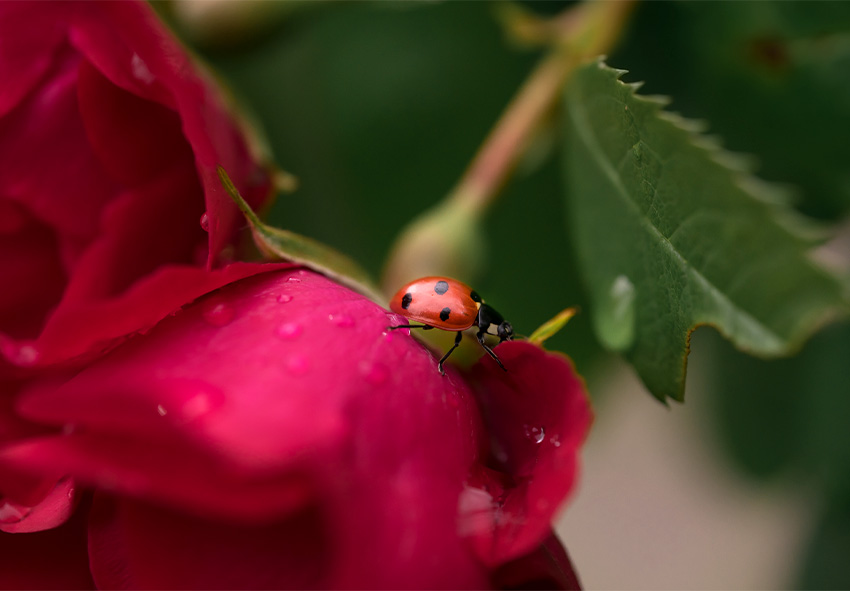
Introducing or attracting helpful predators is an excellent natural pest control strategy:
- Ladybugs target aphids
- Lacewings feast on thrips and mites
- Hoverflies consume aphid colonies
Planting yarrow, dill, fennel, or cosmos encourages these allies to stay in your garden.
Chemical Treatments for Severe Infestations
Chemical options are sometimes necessary when pests are widespread or resistant to natural methods. These products should be used sparingly but can provide fast relief for roses in distress.
When to Use Chemical Products
Chemical insecticides are recommended only when pests threaten plant survival or bloom production. Severe infestations may require immediate intervention, particularly during peak growing season.
Systemic vs. Contact Insecticides
Contact sprays kill pests on the plant surface, while systemic insecticides are absorbed into the plant and target pests feeding internally. Choose carefully based on the type and severity of infestation.
Safe Application and Environmental Considerations
Always follow label instructions and avoid spraying during high heat or windy conditions. Protect pollinators by applying treatments early in the morning before bees become active.
Preventive Measures for Healthy, Pest-Resistant Roses
Healthy roses are naturally more capable of resisting pests. Preventive care is essential for long-term rose health and reduces the need for future treatments. With consistent rose care tips in place, your plants will stay vigorous throughout the growing season.
Proper Watering and Soil Health
Water at the base of the plant to prevent fungal issues that attract pests. Use nutrient-rich soil and compost to encourage strong canes and lush foliage.
Pruning and Air Circulation
Prune roses to remove dead or crowded stems. Improved airflow lowers humidity levels around the plant, discouraging pests like mites and thrips.
Mulching and Garden Cleanliness
Mulch helps retain moisture and reduce weeds while preventing pests from hiding in bare soil. Clean garden beds minimize habitat for beetles, slugs, and larvae.
Monitoring and Regular Inspection
Inspect roses weekly for signs of pests or stress. Early intervention always results in easier, more successful treatment.
Seasonal Pest Control Tips
Each season poses different risks for roses, so adapting strategies year-round ensures consistent protection. A seasonal approach keeps pests under control and prevents major outbreaks before they start:
- Spring Pest Prevention: Spring is the peak time for new growth and for early pest activity. Inspect new shoots, remove winter debris, and apply organic preventative sprays if needed. Getting ahead of aphids, mites, and thrips now prevents larger problems later.
- Summer Pest Management: Hot weather triggers outbreaks of spider mites, beetles, and thrips. Water deeply, maintain mulch, and check foliage frequently for early signs of stress or feeding.
- Fall Clean-Up and Protection: Remove fallen leaves, spent blooms, and any diseased material. These steps reduce overwintering spots for pests such as borers and beetles.
- Winter Dormancy and Overwintering Pest Reduction: Cut back dead stems and remove mulch if it harbors overwintering larvae. Winter is the ideal time for heavy pruning and preparing beds for spring.
For more seasonal care tips check out our comprehensive guide for roses.
When to Seek Professional Help
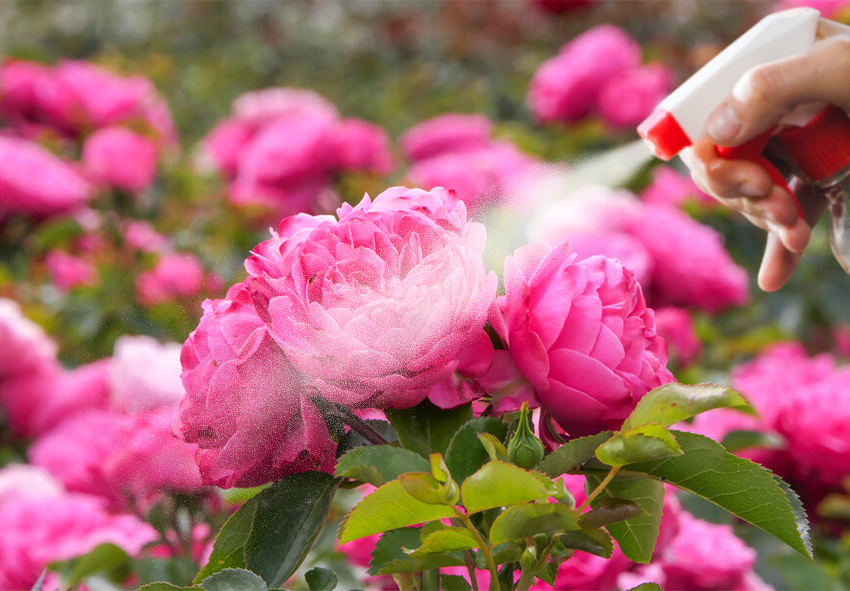
Even the most experienced gardeners may face infestations that seem impossible to control alone. Professional help ensures roses recover strongly and safely.
Signs of a Severe Infestation
If pests persist despite multiple treatments, or if entire canes are affected, it’s time to involve an expert. Severe damage or widespread presence of borers requires immediate professional intervention.
Professional Treatment Options
Certified arborists or rose specialists may use advanced insecticides, soil drenches, or targeted systemic treatments. They can also help you build a long-term prevention plan for healthier roses.
Conclusion
Pest control for roses is a combination of prevention, early detection, and choosing the right treatment method. With a blend of natural solutions, good gardening habits, and timely intervention, you can keep your roses strong, vibrant, and resistant to common rose pests. Healthy roses reward you with abundant blooms and long-lasting beauty.
Frequently Asked Questions (FAQs) about Pest Control for Roses
1. What is the most effective natural pest control method for roses?
Natural pest control works best when combining several methods, such as releasing beneficial insects like ladybugs, using neem oil, and improving garden hygiene. These approaches help reduce aphids, spider mites, and thrips without harming the plant. Regular monitoring ensures pests are caught early before the infestation becomes severe.
2. Are chemical insecticides safe for roses?
Most chemical insecticides are safe for roses when used as directed, but they should be applied carefully to avoid harming beneficial insects. Always follow label instructions and avoid spraying during peak pollinator activity. Integrating chemicals with natural methods creates a balanced approach that manages pests while preserving plant and garden health.
3. Can pests on roses spread to other plants in the garden?
Yes, many common rose pests — such as aphids and spider mites — easily migrate to nearby plants. This makes early detection essential for protecting your entire garden. By isolating affected plants, removing heavily infested leaves, and applying appropriate treatments promptly, you can prevent pests from spreading and causing widespread issues.
4. How can I order Holland roses from your online store?
Yes, you can order roses from our online store Dutch-bulbs.com. Visit our website and browse our selection of rose varieties, including those sourced from Holland for their exceptional quality and beauty. Once your order is confirmed, our team will carefully pack and ship rose bulbs directly to your doorstep, ensuring they arrive fresh and ready for planting.
5. What is the best way to prevent pests on rose bushes?
The best prevention combines proper care and regular maintenance. Keep roses well-watered, prune for good airflow, and remove dead leaves that attract insects. Applying natural repellents like insecticidal soap or neem oil also helps. Healthy roses are naturally more resistant to pests, making prevention the most effective long-term strategy.
Published: 09.12.2025