



Transplanting dahlias is an essential part of maintaining strong, productive plants that bloom abundantly year after year. Whether you’re moving your dahlias to a better location, dividing tubers, or refreshing the soil, proper timing and technique are key to success. This guide walks you through the best practices for transplanting dahlia tubers, ensuring healthy growth and stunning summer displays. Our gardening blog is a perfect place to find all the information you need!
When Is the Best Time to Transplant Dahlias?
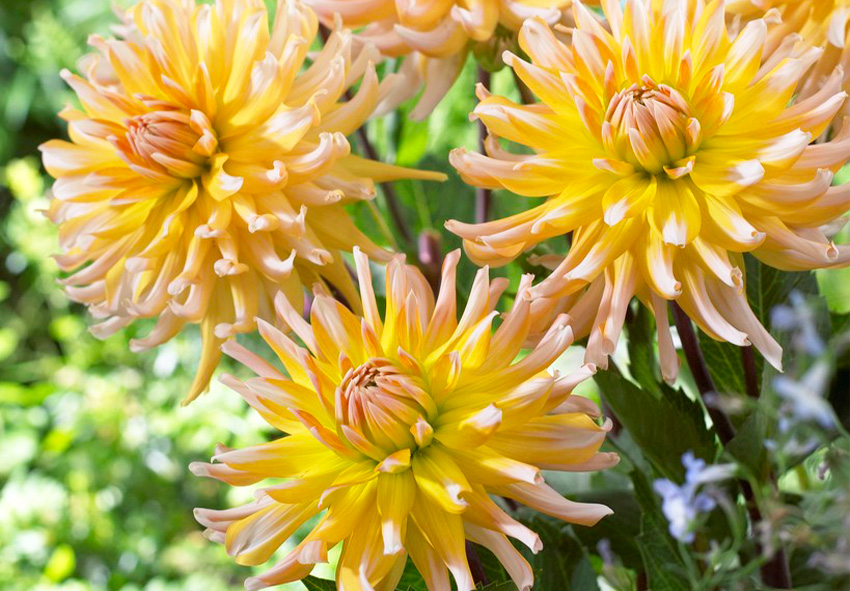
Choosing the right time to transplant dahlias plays a major role in how well they adapt and grow. Since dahlias are sensitive to cold temperatures, transplanting too early can damage tender shoots or tubers. Understanding the growth cycle helps ensure you move your plants at the ideal stage.
Understanding Dahlia Growth Cycles
Dahlias grow from tubers that stay dormant in winter and begin sprouting once soil temperatures warm up. New roots develop as soon as warmth and moisture return, making early spring the ideal time for relocation. Knowing where your dahlias are in their growth cycle prevents stress and encourages quick recovery.
Transplanting Dahlias in Spring
Spring is the best season to transplant dahlias, typically after the last frost when the soil warms to at least 10°C (50°F). This allows tubers to wake naturally and begin forming strong roots. Planting at this stage gives your dahlias a full growing season to thrive.
Can You Transplant Dahlias in Fall?
You can transplant dahlias in fall, but only after frost blackens the foliage and the tubers are dug for winter storage. Fall transplanting involves dividing and labeling tubers, then planting them the following spring. This method works well for gardeners already lifting tubers for overwintering.
Tools and Materials You’ll Need
Gathering the right tools makes transplanting dahlias efficient and safe. Using proper equipment also helps you avoid damaging the delicate tubers. Having everything ready before you begin ensures a smooth process.
Essential Garden Tools
A garden fork, sharp knife, gloves, and clean pruning shears are essential for handling dahlia tubers without bruising them. A fork is gentler than a shovel and reduces the risk of cutting through tubers. Clean tools also prevent spreading diseases between plants.
Soil Amendments and Additives
Dahlias benefit from rich, well-drained soil, so compost, aged manure, and coarse sand are excellent additions. These amendments improve aeration and create an ideal environment for tuber growth. Adding a balanced slow-release fertilizer helps dahlias establish quickly after transplanting.
Optional Supports and Accessories
Stakes, cages, and plant labels make caring for dahlias easier throughout the season. Tall varieties especially benefit from early staking to prevent stem breakage later. Labels help you keep track of varieties, colors, and bloom times.
How to Prepare Dahlias for Transplanting
Proper preparation reduces transplant shock and increases the chance of fast, healthy growth. Start by conditioning the soil and handling the tubers gently. A few simple steps ensure your dahlias transition smoothly to their new home:
- Watering Before Digging: Water your dahlias lightly a day before transplanting to soften the soil. Moist — but not soggy — ground makes it easier to lift the entire clump without breaking tubers. Avoid heavy watering, which can turn soil muddy and cause damage.
- Lifting the Plants Carefully: Use a garden fork to lift dahlias by loosening the soil around the base in a wide circle. Gently raise the clump, keeping as many tubers intact as possible. Avoid pulling the plant by the stem, as it can snap off or tear the tubers.
- Inspecting and Cleaning the Tuber Clump: Once lifted, remove excess soil and inspect the tubers for rot, mold, or damage. Healthy tubers should feel firm and have visible “eyes,” where new growth will sprout. Cleaning helps you identify which tubers can be replanted or divided.
Step-by-Step Guide to Transplanting Dahlias
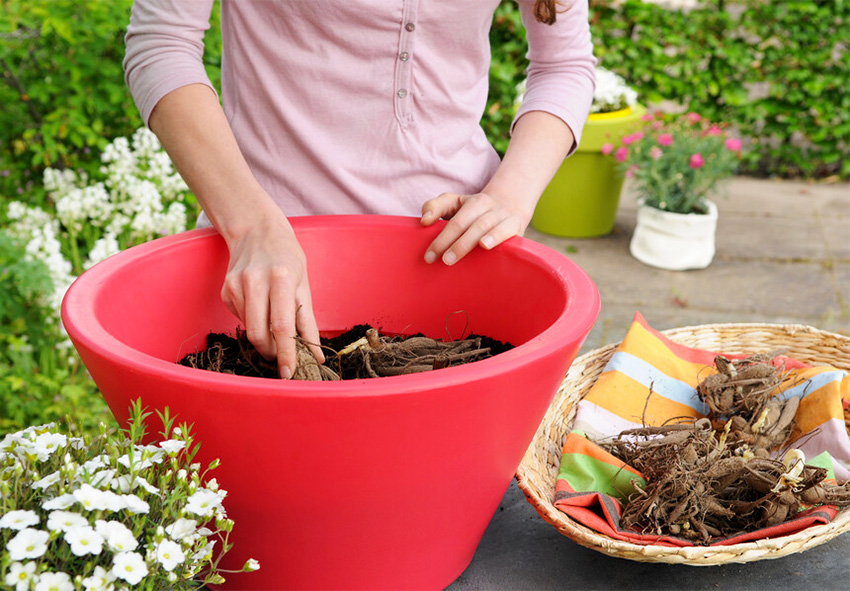
Following a clear process helps ensure your dahlias settle well into their new location. Focus on preparing the soil, placing the tubers at the correct depth, and keeping them hydrated. Each step supports strong early growth and long-term health.
Dividing Dahlia Tubers (If Needed)
Dividing dahlias encourages more plants and better bloom production. Use a clean knife to separate tubers, ensuring each piece includes at least one eye. Dividing also prevents overcrowding, which can limit flowering.
Preparing the New Planting Site
Choose a sunny spot with at least six hours of direct light and well-drained soil. Enrich the area with compost and loosen the ground to promote root expansion. A well-prepared site helps dahlias establish rapidly and bloom more vigorously.
Planting Tubers at the Correct Depth
Place tubers horizontally about 10–15 cm (4–6 inches) deep, with the eyes facing upward. Cover gently with soil and avoid compacting it too firmly. Proper planting depth protects tubers from drying out or rotting.
Watering and Settling the Soil After Transplanting
After planting, water moderately to settle the soil around the tubers. Avoid overwatering, which can lead to rot before new roots form. Consistent moisture encourages quick root development and strong sprouting.
Common Mistakes to Avoid
Understanding common errors helps ensure successful transplanting. Many issues arise from rushing the process or neglecting soil needs. Avoiding these mistakes leads to stronger, more vibrant dahlias.
Transplanting Too Early or Too Late
Planting before the last frost can kill tubers, while planting too late may shorten the bloom season. Always follow local frost dates for best results. Timing matters as much as technique.
Overwatering Tubers
Too much moisture before sprouting encourages rot. Water sparingly until you see growth above the soil line. Healthy dahlias prefer slightly dry soil during early development.
Using Poor Soil or Insufficient Sunlight
Heavy, compacted, or shady soil reduces flowering and weakens the plants. Dahlias need full sun and loose, nutrient-rich conditions for maximum bloom production. A poor location can drastically reduce performance.
Aftercare for Newly Transplanted Dahlias
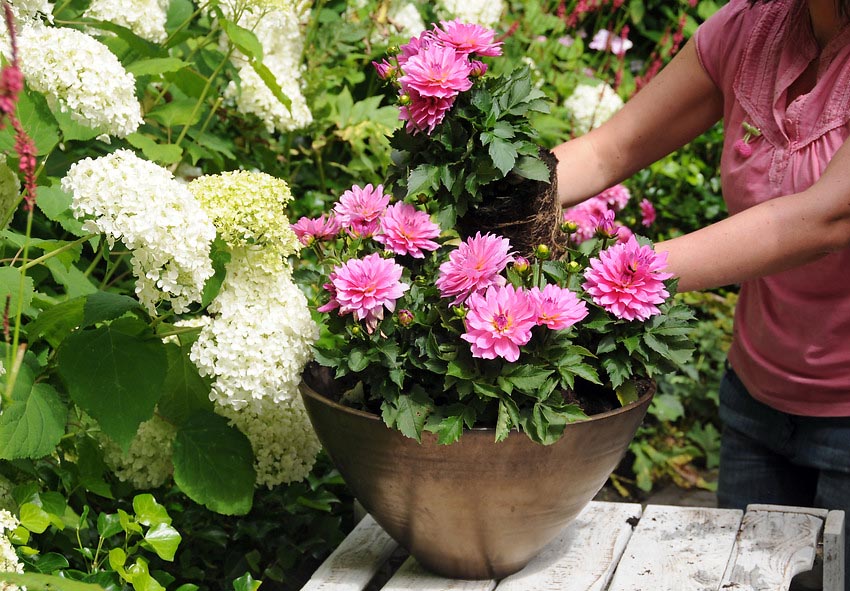
Once planted, dahlias need steady attention to grow into full, healthy plants. Watering, fertilizing, and supporting young stems all contribute to long-term success. Early dahlia care also prevents common growth problems. Here are main tips for you:
- Watering Routine for the First Weeks: Water deeply once or twice a week, depending on rainfall and soil conditions. Keep the soil evenly moist but never soggy. Dahlias respond best to consistent hydration as new roots form.
- Fertilizing and Soil Maintenance: Start fertilizing once sprouts reach 15 cm (6 inches) in height. Choose a low-nitrogen fertilizer to promote abundant flowering rather than leafy growth. Refreshing the soil with organic matter throughout the season keeps your dahlias thriving.
- Mulching for Moisture Retention: A 5–7 cm (2–3 inch) layer of mulch helps retain moisture and suppress weeds. Organic mulch also improves soil structure as it breaks down. Keep mulch slightly away from the stems to prevent rot.
- Staking and Plant Support Tips: Stake tall dahlias at planting time to avoid disturbing tubers later. Use soft ties to secure stems as they grow. Proper support ensures upright blooms and reduces the risk of breakage in strong winds.
Conclusion
Transplanting dahlias is a rewarding process that helps keep your plants vigorous, productive, and beautifully blooming year after year. With the right timing, careful preparation, and proper aftercare, your dahlia tubers will adapt quickly to their new growing space. By understanding common mistakes and providing consistent care, you’ll enjoy healthier plants and more abundant flowers throughout the season. Whether you’re dividing tubers, refreshing soil, or relocating your blooms, these steps ensure your dahlias continue to thrive and impress in your garden!
Frequently Asked Questions (FAQs) about Transplanting Dahlias
1. Can you move dahlias while they are blooming?
Yes, but it’s not ideal. Transplanting blooming dahlias puts extra stress on the plant and may cause wilting or reduced flowering. If you must move them, cut back the blooms and keep the root ball intact to minimize shock. Water well after transplanting and provide partial shade for a few days.
2. How long do dahlias take to recover after transplanting?
Most dahlias recover within two to three weeks, depending on soil warmth and moisture. During this time, they focus on rebuilding their root system. Consistent watering and nutrient-rich soil help speed recovery. Avoid fertilizing too early, as it may overwhelm the plant before roots establish.
3. Should you cut back dahlias before transplanting?
Cutting back dahlias makes transplanting easier and reduces stress on the plant. Removing excess foliage directs energy toward root development. If transplanting in fall, wait until frost kills the foliage before cutting back. In spring, trim stems to about 10 cm (4 inches).
4. How can I order Holland dahlias from your online store?
Ordering Holland dahlias from our online store Dutch-bulbs.com is simple and convenient. Visit our website and browse our selection of dahlia varieties, including those sourced from Holland. Our team will carefully pack and ship your bulbs, ensuring they arrive fresh and ready for planting.
5. Can you grow dahlias in pots after transplanting?
Absolutely — dahlias thrive in large containers with good drainage. Choose pots at least 30–40 cm (12–16 inches) wide to allow room for tuber growth. Container dahlias require more frequent watering but offer excellent control over soil quality, sunlight, and mobility.
Published: 12.12.2025